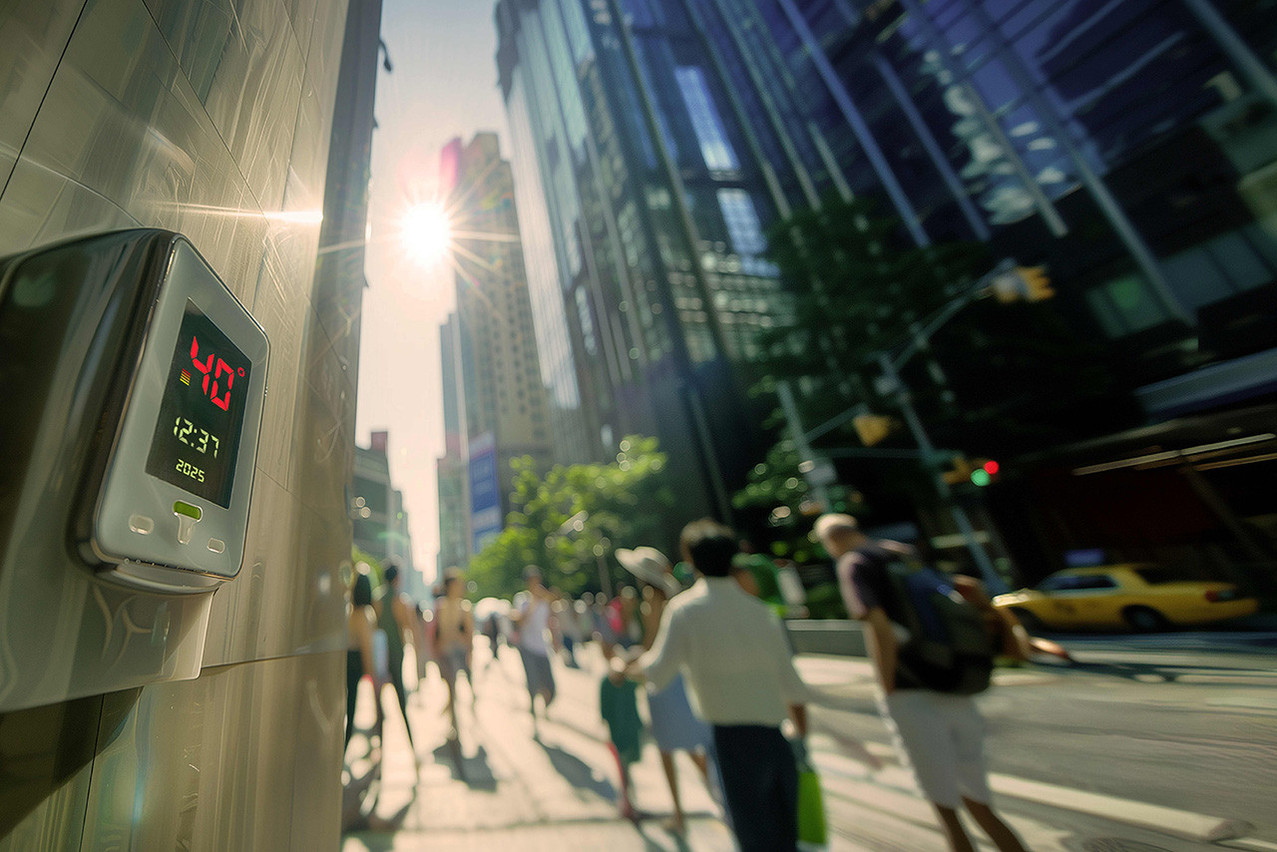
Urban green spaces are not enough to regulate the accumulated heat. Gregor Grassl, associate partner and head of Green Urban Development at Drees & Sommer emphasises the importance of passive cooling strategies such as external shading and building materials with a high storage capacity.
The oppressive heat in large cities is detrimental to the urban climate and quality of life. However, targeted measures can reduce urban heat and strengthen resilience in the face of the climate crisis. The cities of Düren, Dormagen and Rastatt in Germany, accompanied by Drees & Sommer, show how to adapt effectively.
Here are some recommendations for combating urban heat islands:
Create shady areas: shady trees and features protect streets from the heat. In Rastatt, 1,000 trees have been planted to cool the air and improve air quality.
Cooling with plants: greening facades and removing waterproofing from the ground improve the microclimate. In Dormagen, free drinking water fountains help prevent heat-related illnesses.
Use reflective materials: light-coloured materials reduce heat radiation. The albedo effect is effective in densely built-up areas.
Night-time cooling solutions: air conditioners exacerbate the heat island effect. Low-tech systems cool buildings at night using outside air.
Building high: high-rise buildings shade each other and improve neighbourhood ventilation.
Adapting to climate change is becoming a priority in Europe. European initiatives such as the EU's climate change adaptation strategy and financial support from the cohesion funds are bringing forward concrete projects. Successful projects, such as the “oasis schoolyards” in Paris, show that adaptation is a reality in European cities. Drees & Sommer is working with platforms such as BABLE Smart Cities to accelerate the delivery of innovative solutions.
Further information can be found in the full press release here.
A full version of this article is also available in French.