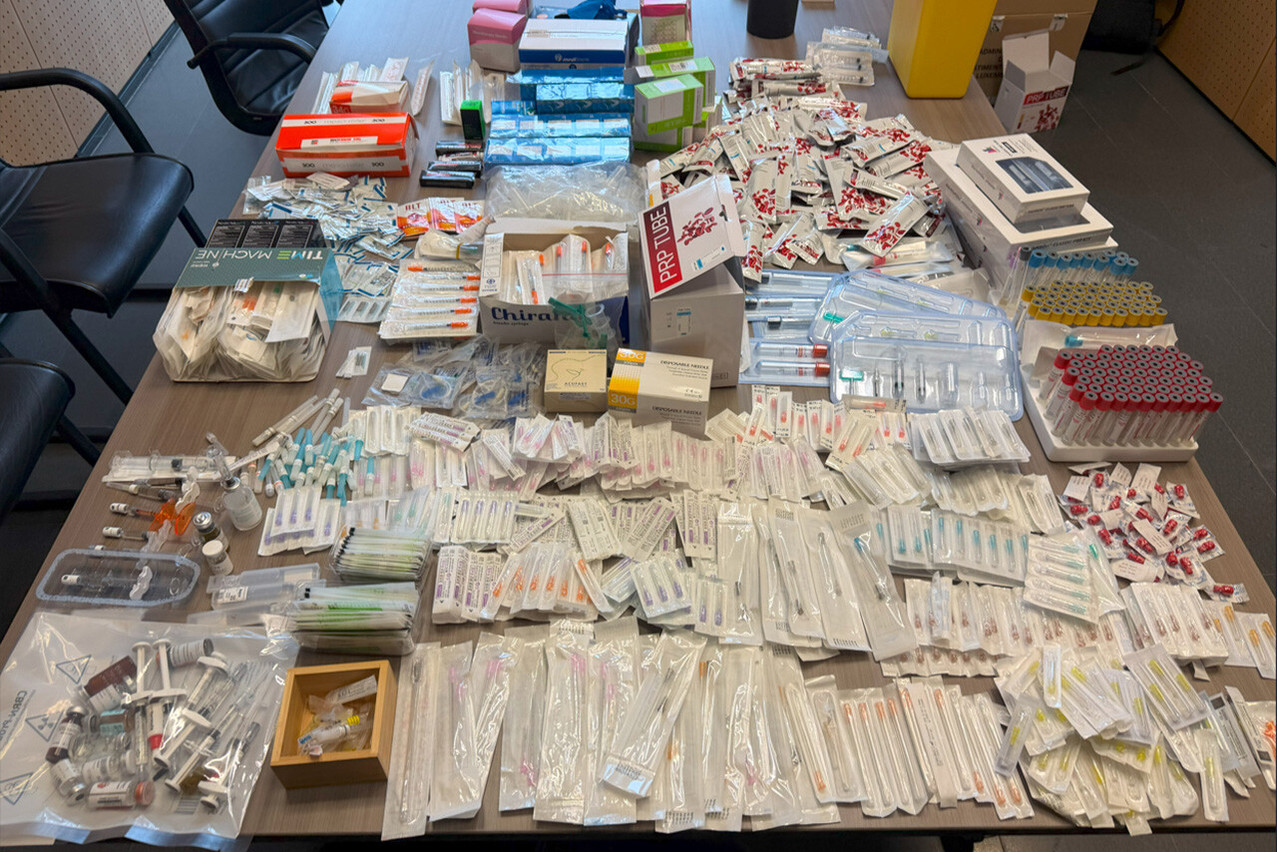
A syringe, a vial, a promise of instant youth. In Luxembourg, this familiar scene from aesthetic medicine is now receiving increased attention from authorities. The Luxembourg public prosecutor’s office and the Directorate of Health announced, this Wednesday 18 March, a series of inspections conducted across the country in practices offering aesthetic procedures, against a backdrop of growing popularity for such treatments.
On the ground, operations are led by the Grand Ducal Police, supported by experts from the Directorate of Health. The approach is far from routine: unannounced visits, administrative checks and, where appropriate, judicial searches. The stated objective remains standard for authorities, but takes on particular significance here: ensuring that medical acts—or those akin to medical acts—are performed only by duly authorized professionals.
Behind the polished image of “Botox” or hyaluronic acid injections, authorities point to practices that legally fall within the scope of medicine. Inspections notably target injections of botulinum toxin type A, dermal fillers, injection lipolysis, and platelet-rich plasma (PRP) treatments. While these procedures promise subtle results, they remain invasive.
The contrast is striking: procedures often perceived as quick and almost trivial, yet governed by a strict legal framework. “The practice of a healthcare profession or the injection of pharmaceutical products without authorization constitutes a criminal offence,” authorities reiterate, referring to the laws of 29 April 1983 and 26 March 1992. In the most serious cases, equipment and products may be seized, with criminal proceedings to follow.
Implicitly, these operations reveal a more nuanced reality of the aesthetics market. Between duly established medical practices and more informal offerings—sometimes promoted via social media—the boundary can appear blurred to the general public. It is precisely this grey area that the inspections seek to clarify.
The risks, however, are very real. Infections, complications, long-term consequences: when performed outside a medical framework, such procedures can turn a quest for aesthetic improvement into a significant medical ordeal. An irony not explicitly stated by authorities, but suggested by the situation: attempting to correct a minor detail may lead to far more visible consequences.
Beyond enforcement, the message is also educational. Authorities urge patients to systematically verify the practitioner’s authorization to practice before undergoing any procedure. A simple but essential precaution in a sector where demand continues to grow.
Inspections are set to continue in the coming weeks. Behind closed doors, this is less a crackdown on wrinkles than a public health operation, with a clear objective: to remind that, even when it appears minor, medicine is not something to be improvised.