In Luxembourg, there is no regulatory obligation to carry out a performance review... with the exception of the more than 32,000 civil servants. Until now, civil servants have had to undergo the exercise once every three years. The law has now changed. At the beginning of December, Members of parliament voted in favour of a text requiring these meetings to be scheduled every year. The change was included in the civil service pay agreement signed in 2022.
"These meetings are important because they allow staff to give feedback on their workload and the atmosphere within their team. The interviews thus contribute to a positive working climate", said the minister for the civil service, 
For Lauriane Marlier, founder and CEO of HR Lab, an outsourcing consultancy, they are a tool that companies would be wrong not to use. Provided they are used wisely.
Pierre Théobald: What about annual appraisal interviews in the private sector?
Lauriane Marlier: The appraisal meeting should not be annual, it should be continuous. When it comes to feedback and follow-up, why wait until a given date to monitor objectives and ensure that they are achievable? Having said that, I think it would be interesting and useful if this tool could be regulated by law in the future.
Are companies ready for this?
Many companies still avoid the exercise because it's so time-consuming. But it's a very good investment. But this investment is only worthwhile if the meetings cover the entire workforce, and not just the jobs in one part of the organisation chart, as is often the case. Objectives are supposed to be set first at the top of the pyramid, on the basis of the strategic vision established by management, before being deployed in the departments and thus 'cascaded' to all staff.
How do you prepare for an annual review meeting?
Preparation time is vital for the person called upon to 'drive' the interview. As part of an appraisal meeting, you need to take a constructive look at what has happened over the last twelve months, but also at what is going to be asked of you. Interviews without real indicators (KPIs) in place, maintained and monitored, are meaningless.
Who should be at the table?
The manager, provided that it is in fact the manager who has been working with the employee - which is not always the case. Failing that, the participation of the previous manager is also desirable, to ensure a handoff. No other presence is required, as the situation must not be allowed to create anxiety. The idea behind the meeting is that it should be useful not only for the company's performance, but also for the employee's development, motivation, employability, wellbeing and advancement within the organisation.
It’s essential not to confuse an appraisal meeting with a salary negotiation meeting

I've been with my company for ten years and I think I deserve a raise. Is this the place to discuss it?
In institutions such as the state, the pay scale and salary scale system means that the issue of pay is separate from discussions on monitoring progress. When pay negotiations are incorporated into the appraisal interview, the focus of the discussion changes radically. The employee may have to shape their answers in such a way as not to upset his manager, in order to achieve the salary objective they is seeking. This dynamic diverts the interview from its original purpose: to assess performance, set objectives and orchestrate the professional development plan.
So, it’s essential not to confuse an appraisal meeting with a salary negotiation meeting. Separating the two helps to keep the discussions clear, avoid frustration and focus fully on recognising skills and results.
What other mistakes should be avoided?
I'll come back to unpreparedness. Be careful, too, to consider the employee in front of you. This means being well prepared, but also being on time, having all the figures you need and all the information you need to carry out an assessment. Another mistake often made in the process is the circulation of multi-page forms full of open-ended questions. During the interview, the manager, immersed in their notes, spends their time writing down the answers given by the employee, to the detriment of a qualitative 'one to one' ensuring a real exchange.

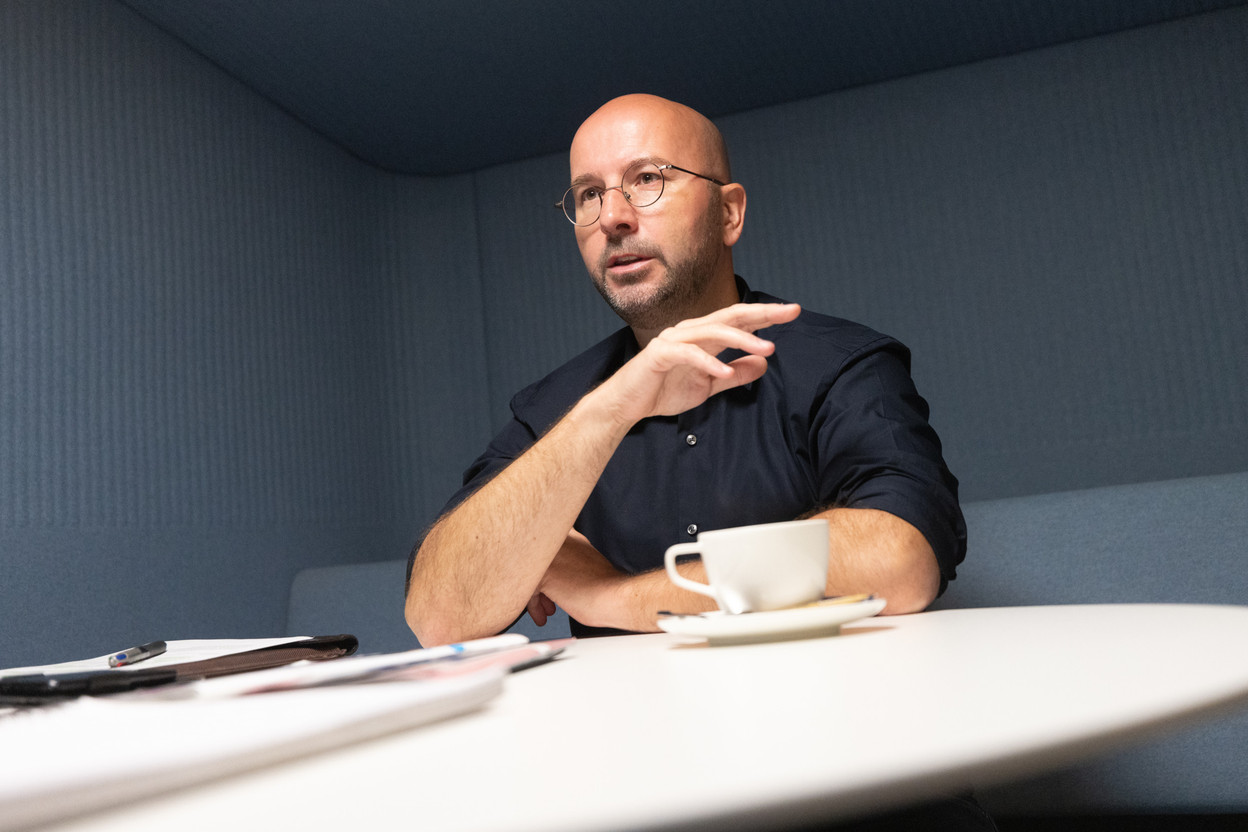
"The priority is to ensure that the interview is as factual as possible and enables the employee's performance over the year to be assessed on the basis of key objectives and concrete results," Lauriane Marlier, CEO of RH Lab, said in an interview. Photo: ericdevillet.com
Are evaluation and criticism the same thing?
It would be another mistake to rehash things that have already been settled or to dwell on the negative feelings of the past year or, worse still, the past few weeks. The priority is to ensure that the interview is as factual as possible and enables the employee's performance over the year to be assessed on the basis of key objectives and concrete results. What was requested? What has been achieved? And what will be asked of them for the coming year? The exchange must be transparent and collaborative.
Should there be a set time for discussion?
It depends on the job. For a job based on five indicators, the interview can last around thirty minutes. For a job with broader objectives and more responsibilities, this is not enough time. This is an important distinction, because it goes to the heart of a criticism often made by employees who are asked to fill in a form that is common to all departments and business lines within the same company. The more personalised, the better.
Can digitisation help?
It can be used to keep a history and traceability of exchanges, but it should not replace the physical interview. Digitalisation is, and should remain, a very useful support for the quality of the exchange.
The primary objective is to create links and maintain an open and constructive dialogue with your line manager and, indirectly, with your team

What happens once the interviews are over?
As an HR professional, we generally write up a report for management. The idea is to highlight all the operational and strategic areas for improvement identified during the interviews. This report can then be used to identify priorities for the coming year and to put in place an action, training and/or career plan.
What about employees? How should they approach this kind of event?
Preparation is important for employees too. Beforehand, they need to think about their objectives and expectations in terms of motivation and fulfilment in their work. An interview can be an opportunity to ask questions that aren't usually asked and to express a desire for development. It's also an opportunity, why not, to stand out from the crowd by coming up with new ideas, demonstrating your commitment to the company and your active involvement. The primary objective is to create links and maintain an open and constructive dialogue with your line manager and, indirectly, with your team.
Can you tell your manager everything in an interview?
Anything can be said if you know how to say it! Some companies include a 360° interview section in their forms. In such cases, it's up to HR to brief those concerned on the fact, for example, that the employee will be giving feedback on the management style used, and that this feedback may lead to questions being asked. Once again, it's a question of preparation.
Are interviews the place to announce the good and bad news in the organisation?
There isn't just one possible answer, it's a question of timing. But in theory, this kind of information should be part of a company's usual communication, which is ongoing throughout the year. The annual appraisal is first and foremost a performance appraisal.