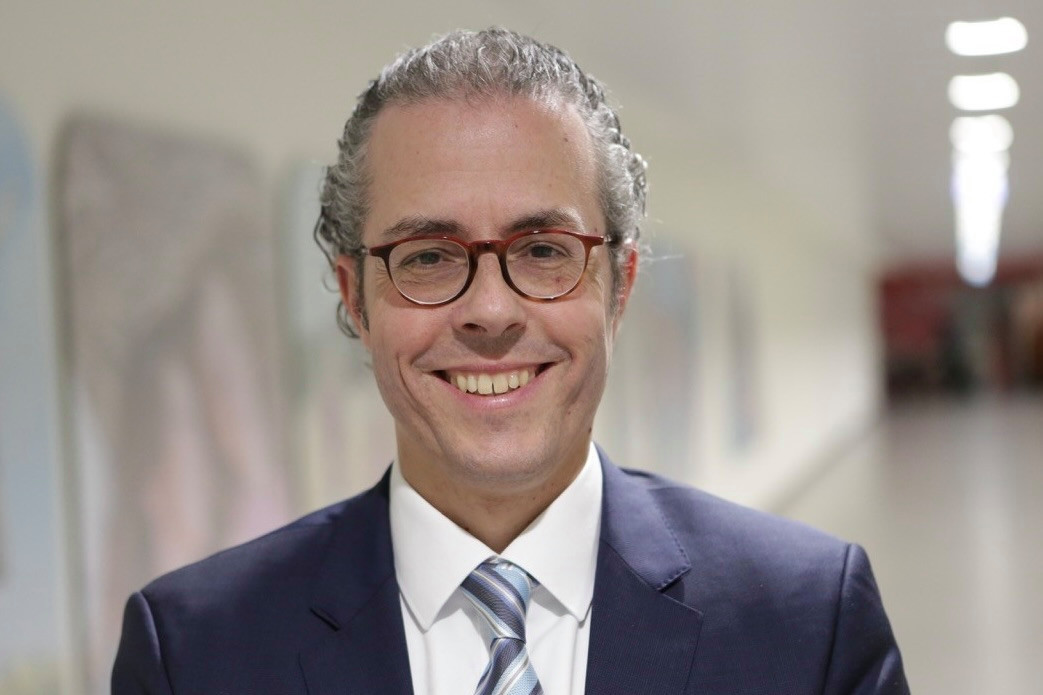
Parkinson’s disease is a progressive neurological disorder, primarily affecting older adults, that impairs movement, balance and coordination. Rejko Krüger, professor at the University of Luxembourg and director of Transversal Translational Medicine at the Luxembourg Institute of Health, has been instrumental in shaping ParkinsonNet Luxembourg--coordinated by Luxembourg Hospital Center (CHL) and in collaboration with LIH--into a nationwide network of more than 140 specialists delivering multidisciplinary, patient-centred care. He describes how the initiative has evolved to provide more personalised and better coordinated support for people living with the condition across the country, driven by current research and clinical expertise.
Kangkan Halder: What motivated the creation of ParkinsonNet in Luxembourg back in 2018?
Rejko Krüger: Luxembourg has a long-standing tradition of research into Parkinson’s, and people living with the disease have participated in it with strong dedication. Many of these volunteers donated clinical data or biosamples; however, they believed that the results “might rather help future generations.”
In order to provide an immediate return to society, we decided that people living with Parkinson’s should already benefit from the best treatments based on the latest scientific findings.
That is why, in 2017 multidisciplinary group of health professionals took the decision to give something back to patients. It is important to note that the original ParkinsonNet model was first established in the Netherlands. There it has proven highly effective in improving care for people with Parkinson’s by fostering collaboration among specialised healthcare professionals.
In 2018, this concept was subsequently adapted to the specific Luxembourg environment addressing hurdles and challenges, and creating synergies based on interdisciplinary collaboration.
People living with Parkinson’s require specialised, multidisciplinary care, delivered through the coordinated efforts of experts from up to 19 different disciplines

What gaps in care were you aiming to address at the time?
People living with Parkinson’s require specialised, multidisciplinary care, delivered through the coordinated efforts of experts from up to 19 different disciplines, working together like an orchestra to provide the necessary support. Moreover, each specialised healthcare professional in this field not only requires specific training but must also gain experience by treating a sufficient number of people with Parkinson’s.
For example, if people with Parkinson’s visit a physiotherapist, they need tailored exercises designed to meet their particular needs. To address this, all our healthcare professionals undergo specialised training to ensure they can provide the appropriate level of care and gain growing expertise.
Parkinson’s disease affects many aspects of the person’s life. As the disease progresses, the treatment becomes more complex and may include advanced therapeutic options like deep brain stimulation or pump therapies. The care management offered by ParkinsonNet aims to help patients find appropriate support and solutions for their specific situations, and to coordinate therapeutic decisions within a multidisciplinary team.
How many professionals are currently part of ParkinsonNet, and what roles do they represent?
ParkinsonNet is a “neurodegenerative disease skills network,” indicating that specifically trained professionals are working within institutions, but--the majority--is spread across the country in their private practices.
Currently we count more than 140 professional members from different disciplines: neurologists, physiotherapists, occupational therapists, speech and language therapists, dietitians, psychologists and nurses. They work in different settings such as private practices, hospitals, nursing homes, home care providers. Their contact details can be found on our website, where it is possible to search by profession or by location.
The coordination of the care network is performed by a multidisciplinary team consisting of a medical coordinator, a care management coordinator and Parkinson nurses at four different hospitals across the country. In order to sustain our integrated care network, we continuously train all health care professionals as members of ParkinsonNet.
How is the network integrated into Luxembourg’s national healthcare system?
ParkinsonNet is fully integrated into the Luxembourgish national healthcare system as the neurodegenerative disease skills network. There are no additional costs for people with Parkinson’s who are seen by one of the ParkinsonNet specialists.
People with Parkinson’s now have better access to treatments and improved support for the various aspects of their condition

Could you share the main outcomes ParkinsonNet has achieved in its last seven years?
Since 2018, ParkinsonNet has built a nationwide network of more than 140 trained multidisciplinary specialists spread across Luxembourg combining intra- and extra-hospital sector. It brings together professionals from various fields who work closely to provide better, earlier and more personalised care. Results from our internal surveys show an increase in job satisfaction and professional expertise over time among all healthcare professionals following their initial training.
How has patient care improved, in terms of both clinical outcomes and quality of life?
People with Parkinson’s now have better access to treatments and improved support for the various aspects of their condition. Care is more coordinated, based on the latest scientific findings and tailored to each person’s needs. When people with Parkinson’s are enrolled in ParkinsonNet, they receive a membership card allowing direct contact with ParkinsonNet professionals via email and phone.
Importantly, specially trained Parkinson’s nurses provide “therapeutic education” to people with Parkinson’s disease and their relatives. At the same time, patients gain access to novel treatment options, such as subcutaneous medication delivery. This is made possible by specially trained multidisciplinary teams who focus on providing the right medication, at the right time, in the right dose, to the right patient.
What are your main goals for ParkinsonNet over the next five years?
First of all, we would like to invite all people with Parkinson’s in Luxembourg to enrol in our care network, as everyone should have equal access to the best care.
We would also like to expand the network and include additional professions, based on the priorities of people living with Parkinson’s. In response to their feedback, we have recently included dietitians and (neuro)psychologists during the last training.
An important initiative for all integrated care networks in Luxembourg is digitalisation. It is intended to further enhance collaboration among healthcare professionals, provide people with Parkinson’s easier tools to share information with their treating professionals and enable secure data exchange.
But most importantly, we aim to reduce the burden of Parkinson’s disease and other neurodegenerative diseases by gradually integrating prevention into our network.
Already today we can offer interventions on modifiable risk factors for the development of cognitive decline, which can prevent up to 45% of all dementia cases. This is reflected by the Programm Demenz Prävention (pdp) funded by the ministry of health for all people with first cognitive complaints. It offers already today people with Parkinson’s with first cognitive problems an option to actively contribute to slowing disease progression.