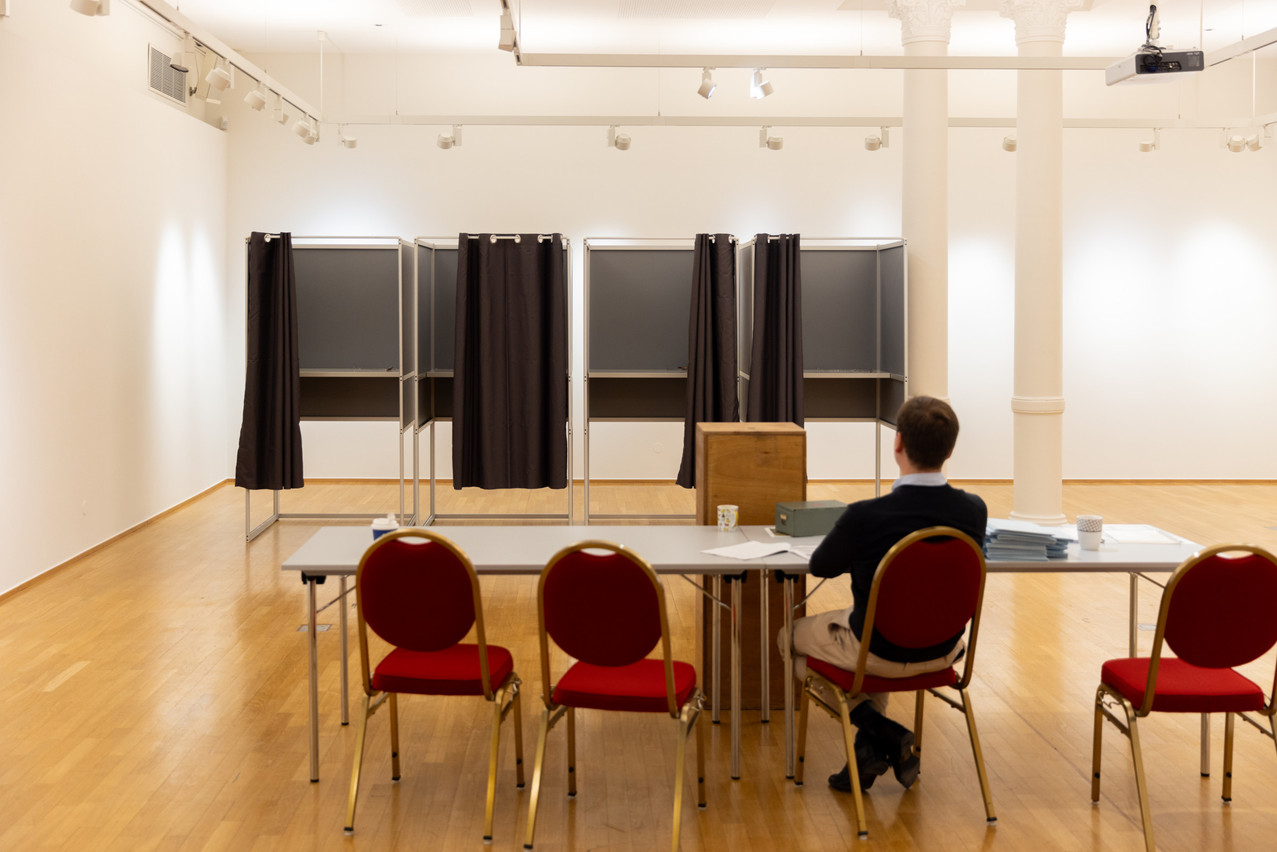
There is one election in Luxembourg where everyone--citizens and non-citizens, residents and non-residents--has the right to vote, on just one condition: that they belong to the world of work. This means an electorate of 600,000 people: 445,600 employees, 153,000 pensioners, 4,000 apprentices and 15,000 jobseekers, i.e., more than double the bloc able to elect MPs (286,739).
It’s called the social election, or really elections in the plural, since there are two in parallel: one to choose your staff delegation (in companies with 15 or more employees), and one to choose your representatives in the Chamber of Employees (CSL), a body of 60 members. Within Europe, such a chamber is found only in Luxembourg, Austria, Saarland and Bremen.
(The next social elections take place on 12 March 2024.)
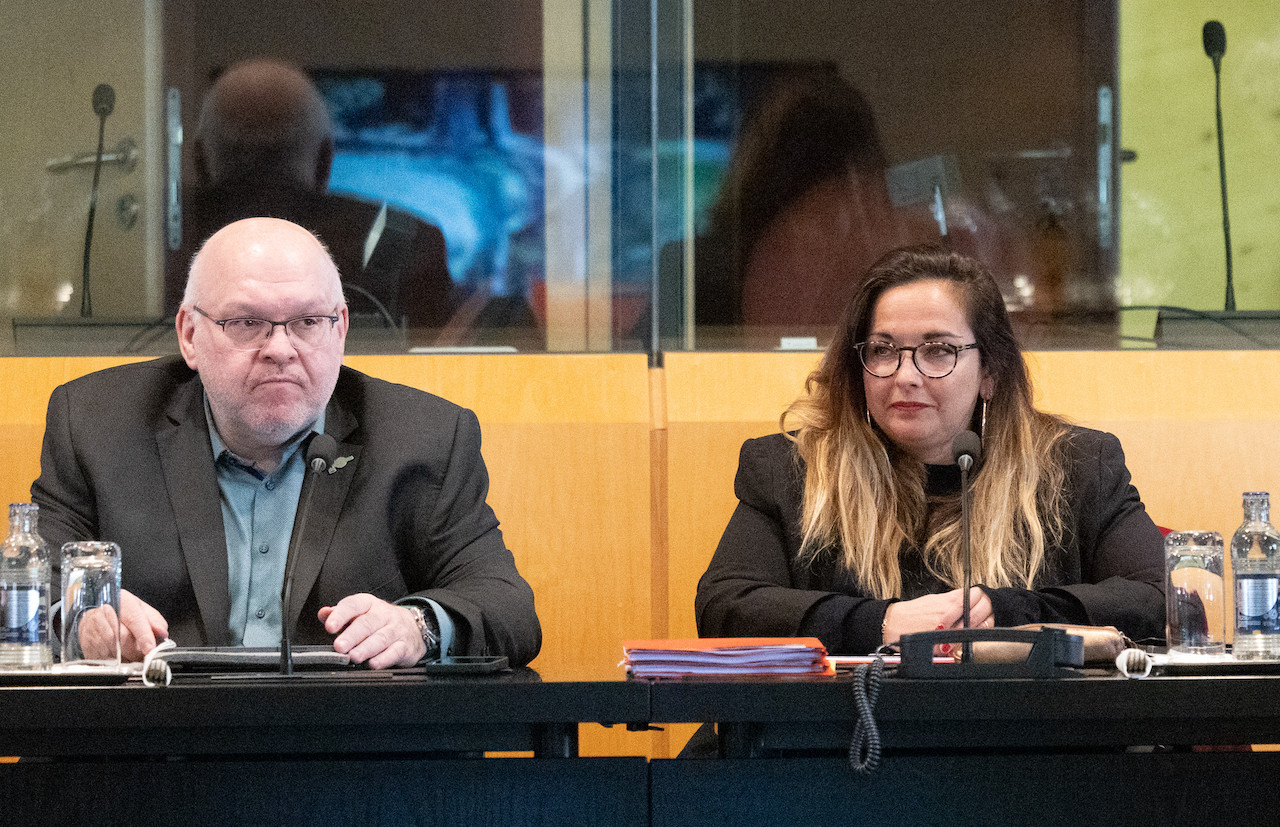
In Luxembourg, an individual’s representation in the world of work comprises two halves: “free” representation, such as trade unions and employer organisations; and “compulsory” representation, i.e., the five professional chambers (which includes the CSL). The latter are formally part of the law-making process: when a legislative text draft is submitted to the Chamber of Deputies, the professional chambers concerned issue opinions. “These opinions give rise to in-depth work, which is then validated by the elected representatives,” says 
Back explains that the Chamber of Employees’ political role goes beyond the drafting of opinions, however: it kickstarts change by producing ideas and advancing conversations. “Via the conferences we organise--to which we invite well-known speakers, leading economists and European Commissioners on budgetary, political, monetary, economic and social issues--we shine the spotlight on subjects often ignored by politicians.”
She continues with an example: “Everyone is talking about poverty and inequality these days. We should not forget that it is thanks to Social Panorama, our annual study, that this has become a subject of political debate. We fuel public debate on issues that are concrete for workers. When MPs ask parliamentary questions on inequalities, it’s often on the basis of Social Panorama findings. It’s the same with the Quality Work Index on issues such as wellbeing, mental health, work-related illnesses… possibly we’re not quite recognised for our true worth in this area.”
Abstention and de-unionisation
Against a backdrop of debate about the representativeness of MPs elected by a small half of the resident population, one might imagine that those “excluded” from the system would mobilise for the social elections--for many, the only one where their voice is heard. But this is hardly the case.
Let’s go over the numbers: from 1924 until 1993, voter turnout fluctuated between 75% and 80%.
(Note: these numbers are the average of two turnout rates, i.e., those for the Chamber of Labour and the Chamber of Private Employees, which merged in 2008 to become the Chamber of Employees. In the following paragraph, the same methodology will be followed.)
During those almost 70 years, however, only resident citizens could vote. In 1993, however, eligibility was extended to non-citizens and non-residents, upping the electoral base by about 190% and leading to a turnout of 50%.
It generally continued to fall after that, with the exception of 2008, when pensioners were given the right to vote as well (and did so at a high rate of 49%). In both 2008 and 2013, overall turnout was 36%. But it fell again in 2019 with 32.3%.
For context, this decline follows the plummeting unionisation rate in Luxembourg, which according to the OECD went from 50.4% in 1980 to 31.8% in 2018.
Luxembourgers vote more
Faced with these poor turnout numbers, the Chamber of Employees commissioned a study from the Luxembourg Institute of Socio-Economic Research (Liser) on the subject.
The study found that, in 2019, some 23.7% of cross-border commuters voted versus 40.8% of residents.
It also found that, regardless of age, Luxembourgish residents were the most likely to vote. Some 55.6% of them did so, versus 25.6% of non-Luxembourgish residents and 21.8% of cross-border commuters.
Comparing foreign residents by nationality, Germans turned out in much bigger numbers (32.8%) than the French (20.1%) or other Europeans (16.4%).
For cross-border commuters, the highest rates were Belgian (27.0%) and German (26.4%).
And agewise, people 45 and over outvoted younger generations, with turnout rates of 36.8% and 25.4%, respectively. This trend held up across both resident and non-resident demographics.
Image problem
Why such a lack of interest, despite the information campaigns conducted every year?

Firstly, due to bad timing: “We’ve been preparing for these elections for many months, but the work has been overshadowed by the municipal and legislative elections. For the press, it’s the legislative elections that count.” And that’s unlikely to change, given that in the coming weeks the political parties are due to start unveiling their programmes and candidates for the European elections on 9 June.
And secondly comes the nature of the CSL and its uniqueness. Historically, Luxembourg’s employees had more in common with each other due to the economy’s monolithic nature (i.e., its dominance by the steel industry), which means the CSL has undergone big changes related to its modernisation. And neighbouring countries don’t have that cultural memory, let alone (for the most part) a Chamber of Employees at all.
“At the time,” explains Dury, “[steel] shareholdings [in Luxembourg] were in the region of 80%. Today, our economy is more diversified and our workforce comes from a wide variety of backgrounds. For me, that’s a strength, but it’s also the reason for the lack of participation. The employee chamber model is not very widespread in Europe. It’s complicated to explain to a Belgian or French colleague the role of such a chamber. Even if it’s not very obvious because the subject is so dry, you have to keep explaining it over and over again and make a commitment.”
Avenues of reform
For Aleba president 
Back--who besides the CSL president is also general secretary of the OGBL--comments that the Chamber of Employees’ visibility problem is the main factor in the poor turnout. The role of the CSL is badly understood and is often reduced to its training activities, she says. “[This is] a poor image that blinds nationals, residents and cross-border commuters alike… We’re trying so hard. I don’t know what to do anymore.”
Another explanation may be that, unlike legislative (and other) elections, the social elections are not personalised, meaning you don’t vote for an individual. “That could be a solution, but it’s contrary to our values,” says Back. “We defend values, not people. I myself do not head a list. And our candidates in our brochures and on the ballot papers are listed in alphabetical order.”
This article was originally published in Paperjam. It has been translated and edited for Delano.