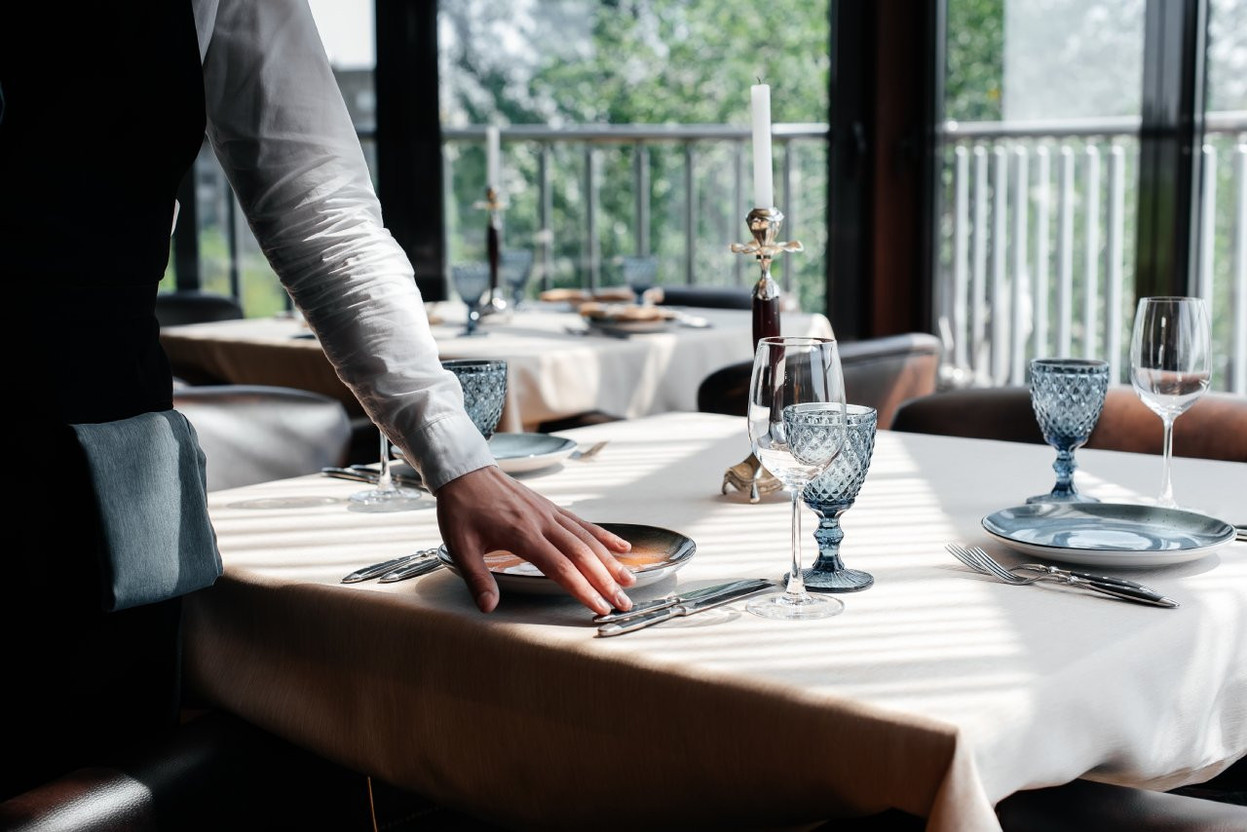
Released on Monday morning during a joint press conference by the ministry of the economy, Horesca and the Luxembourg Confederation, a new Ilres study highlights changes in consumer behaviour. One figure in particular attracted attention during the presentation of the study: 49% of respondents say they have cut back on their restaurant spending over the past two years. This is one of the key findings of the survey, commissioned as part of the fifth SME Action Plan and the Pacte pro Commerce.
This decline is reflected by going out to fewer restaurants (30%), but also in a reduction in the number of dishes ordered (16%)--fewer starters, desserts or aperitifs--and even in a choice of more affordable addresses (11%).
Quality-price ratio also emerges as one of the weak points in terms of service quality, with more than a quarter of respondents saying they were dissatisfied. Conversely, the service, atmosphere, diversity of the offer and hygiene are among the most positively perceived aspects. These findings apply to all types of restaurant.
“It’s confirmation in figures of what professionals have been telling us for some time,” commented 
Another notable finding: online reviews and social networks still have little influence on the choice of a restaurant, being mentioned by only 15% of those questioned. Finally, the study reveals that residents mainly visit restaurants and cafés during weekend evenings.
Local commerce is holding up well
The study also looks at where consumers shop. Local shops in the commune of residence remain the most popular (70% shop there at least once a week). This is followed by shopping centres, then town centres, which often suffer from accessibility problems.
“Town centres and shopping centres are now seen as complementary, rather than competing,” stressed Théodore Biewer, chief of staff at the Luxembourg Confederation. “In good weather, we tend to go into town. In bad weather, you go to a shopping centre. The essential thing is to continue to support the commercial offer, and that's what many municipalities are doing, with city managers, policies on vacant cells or even actions to support local consumption.”
One of the striking trends in the study is the rise in popularity of regional products. While 21% of households say they play an important role in their diet, over 90% eat them regularly. Price, variety and availability at points of sale are identified as key levers.
Half of Luxembourg residents still look forward to the sales period, much more than cross-border commuters. The gap widens even further among 18-34 year-olds: three-quarters of them say they look forward to this period to do their shopping. Conversely, traditional events such as the Mantelsonndeg and shopping nights seem to be marking time, with demand falling. Black Friday and Cyber Monday, on the other hand, are gaining ground and increasingly encroaching on the Christmas period.
When it comes to online shopping, a quarter of residents remain reluctant. But among 18-34 year olds, the trend is clearly reversed: over 85% buy on the internet, mainly clothes, books and electronic products.

More than half of residents say they make at least 25% of their purchases via the internet. Photo: Emilio Naud/Maison Moderne
Very satisfied customers, especially abroad
When asked about their satisfaction with Luxembourg trade, residents generally have a positive opinion, with high satisfaction rates for waiting time (84%) and product availability (80%).
On the other hand, several points are considered more problematic:
- flexibility in terms of delivery or after-sales service;
- responsiveness and advice to customers;
- professional competence; and
- linguistic competence of staff.
This last concern is largely mitigated among visitors to the Greater Region, who--on the contrary--see the country’s multilingualism as a strong point. They also praise the diversity of the offer, the quality of the products and the flexibility of the opening hours, which are sometimes more advantageous than in their country of origin.
On this last point, the minister for the economy, SMEs, energy and tourism, 
Residents of neighbouring countries come to Luxembourg first and foremost to fill up on petrol or diesel, a reason cited by 70% of them. But their visit doesn’t stop there: buying consumer goods is also an important motivation, particularly for Belgian cross-border commuters. More than nine out of ten of them say they regularly shop in Luxembourg.
In addition, 78% of the most affluent households in Germany, France and Belgium also make purchases in Luxembourg, underlining the country’s appeal beyond the simple price advantage on fuel.
This article was originally published in French.