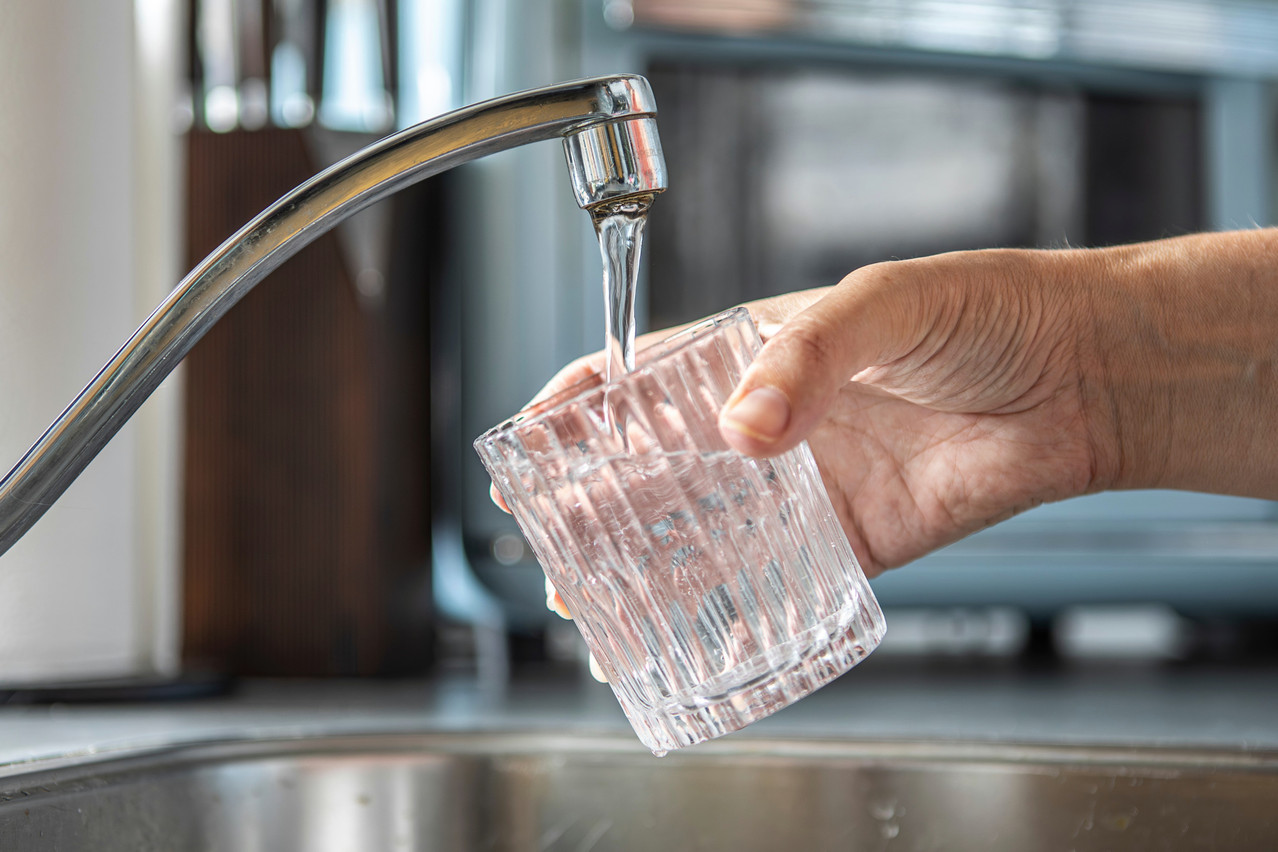
Tap water, yes, but not necessarily free. This was the demand of the signatories of a petition launched in 2019, which led to a debate in government. Subsequently, the Ministry of Economic Affairs and Horesca launched an awareness-raising campaign entitled Drénkwasser. The aim: “to encourage a change in mentality, both among households and customers, restaurant owners and cafe owners, in order to make more consistent use of tap water,” in the words of MP 
Some 280 businesses are currently taking part in the initiative, said economy minister 
However, tap water does not necessarily rhyme with free. “We have always defended the idea that customers should have to pay for the service, in order to cover costs and guarantee company margins,” says the Horesca Federation. By taking part in this campaign, each restaurant operator remains free to set a price for tap water. “It should be noted that serving tap water also generates costs for the business, particularly for the service and cleaning of containers,” the minister pointed out, adding that “the ecological contribution of the measure takes precedence over the free service.”
Some restaurants have chosen to offer these tap water carafes free of charge, while others charge less than a bottle of mineral water, up to €2.99 for 0.75 litres. The list of establishments playing the game is published on the Horesca website.
The ecological impact is in fact not negligible, since bottled mineral water, which is often imported or at least delivered, involves road transport that is a source of CO2. Using tap water reduces emissions. As for its quality, the Horesca points out that it is “the most controlled food product and subject to multiple analyses.”
This article was originally published in French.