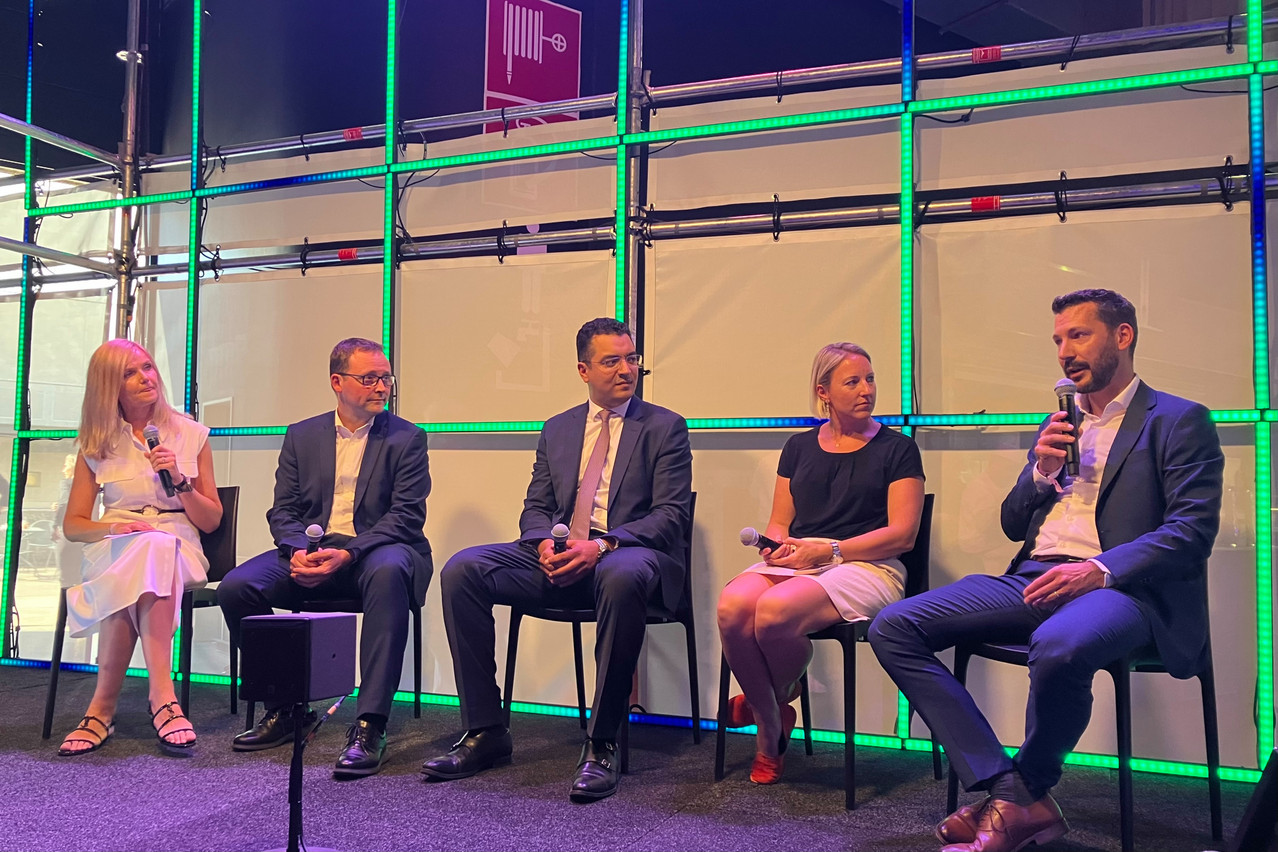
Major challenges facing the financial sector today are regulation and the speed at which it comes, began Sinan Sar, managing director at United International Management, during a panel on mutualisation at the Nexus2050 tech conference at Luxexpo on 26 June 2024. That makes it tough--especially for smaller players--to adapt quickly enough. It isn’t all just gloom though, he added, because regulation can be seen as an opportunity to create a good customer experience.
Staying on top of and implementing regulation are challenges, said Cara Browne, head of relationship management and provider oversight, but streamlining processes can help. This is an opportunity to collaborate and drive the market forward as “trailblazers,” she argued.
Competition is healthy, but compete where it matters
While Luxembourg might be a small country, added Abderrahmane Saber, partner in advisory & consulting at Deloitte, there’s a giant number of players in the financial sector. This “concentration” can lead to competition and players have to find a way to differentiate themselves.
Indeed, besides the weight of regulation, entities in the grand duchy are also facing cost pressures, said Serge Munten, head of operations at Banque Internationale à Luxembourg, making it key for them to find ways to differentiate themselves with clients. But it’s also an opportunity to develop shared services, he noted. Six Luxembourg banks, for instance, announced in November 2023 a shared ATM network. The next challenge is how to make processes even more efficient.
At the end of the day, with regulation, cost pressure and the need for more efficiency, we’re all in the same boat, said Sar. Luxembourg’s competitiveness as a country has dropped, but mutualisation is “a very powerful tool” that can help bring it back.
Read also
“Competition is healthy,” said Browne. “It keeps us all heading in the right direction and I think that’s what we want in the marketplace.” We need to find ways to do things better and smarter, instead of getting bogged down in administrative burden, which in turn will help drive the industry forward. Players in Luxembourg do talk to each other, something she described as a “unique atmosphere” where people can collaborate to find solutions that are in everybody’s interest. It’s important to be sure that we’re being smart about how we use our investors’ money, that we’re keeping the market moving and that we’re enticing people to come, she added.
We have to compete where it matters, argued Saber. Mutualisation is a large-scale efficiency initiative and can help make Luxembourg more attractive.
Use cases for mutualisation
For Browne, finding ways to re-use data is a way to streamline processes. “What we’re really trying to really look at is breaking down those different pieces, where the entry points are for those data elements.” Examples she offered included using “data elements” to feed downstream applications for investor onboarding, due diligence and KYC.
Banks, noted Munten, have to carry out a number of processes: anti-money laundering measures, fraud checks, Iban checks or verification of payees, to name just a few, and banks--individually--spend millions on ensuring they’re compliant with regulatory requirements. Why not put together a single standard that could be used across the industry?
Crystal ball question
Moderator Anna Sobkow, senior programme manager at the Luxembourg House of Financial Technology (Lhoft), concluded the panel with a “crystal ball question”: how do you see mutualisation in the future, and how can financial sector players help make it work?
There are many examples of what work, but we need frameworks to incentivise these kinds of initiatives, replied Saber. “The journey is not easy,” but a framework could help to “catalyse” solutions.
It’s key to involve the regulator, added Sar. We can’t have mutualisation--at this scale--without the regulator being fully aligned.
Munten mentioned three points to keep an eye on when it comes to mutualisation: standardisation; governance; and protection. If you mutualise, you become systemic. So if your system goes down, everything goes down. It will be important to build up cyber-resilience, he said.
Echoing what the other panellists had put forth, Browne noted that it’s about finding a “balance” between making sure we do our due diligence, keeping the regulator happy and ensuring that clients have a “seamless” experience--and all that in a scalable, efficient way. We can find other ways to compete and challenge each other, she said, and it’s about finding that balance, protecting everybody that’s involved and showcasing Luxembourg’s “great financial industry” as an interesting place to do business.