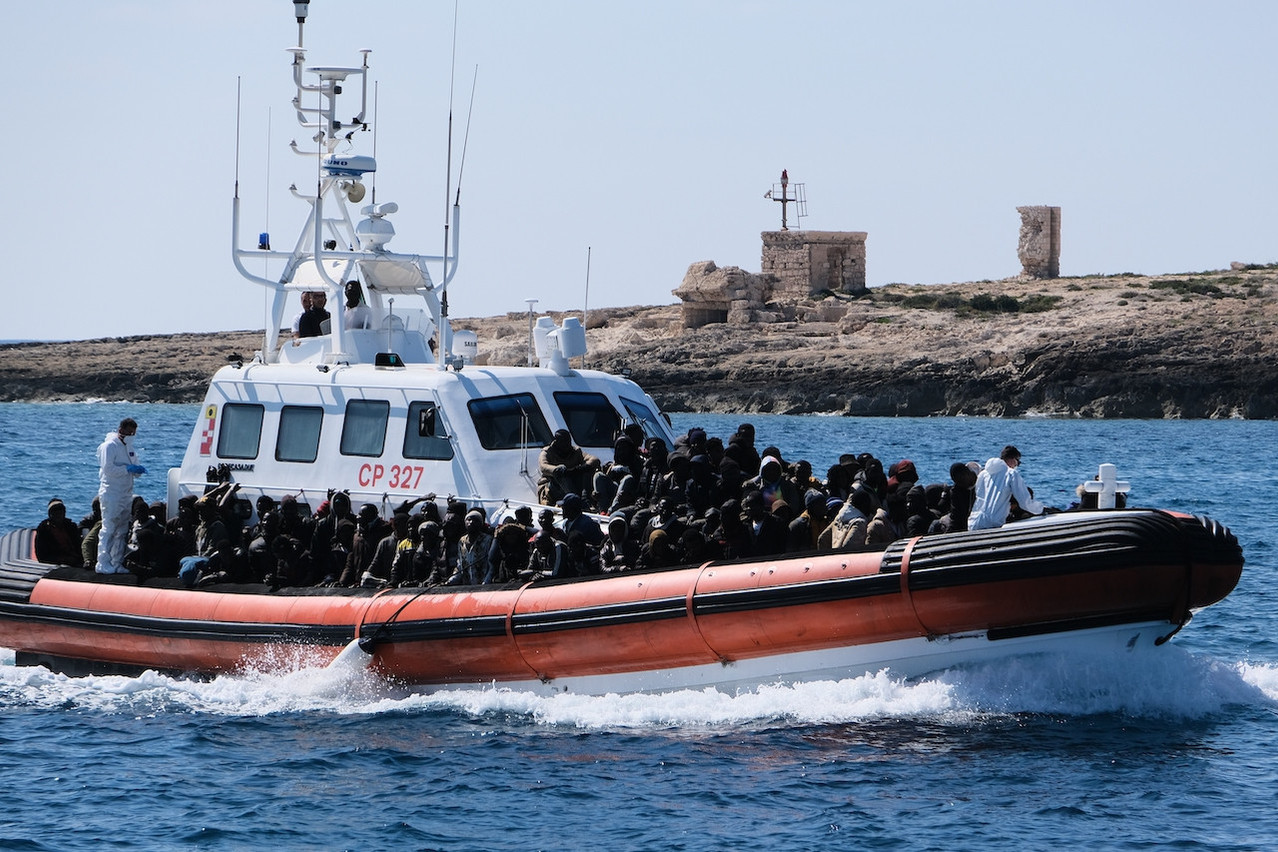
It is no understatement to say that the migration pact has not met with unanimous approval.
But let’s take a step back: the migration pact is the EU’s response to the migrant crisis of 2015, during which the bloc recorded 1.8m arrivals in one year. The text was presented by the European Commission in 2019 and adopted by the European Parliament on 10 April 2024. Despite its having been adopted, however, the debate is far from over: the text has yet to be formally adopted by the Council of the EU, and some of its provisions (contained in a directive) must be transposed per member state into legislation by 2026.
Filtering, cooperation and solidarity
In practical terms, the migration pact comprises ten legislative texts (nine regulations and one directive) designed to strike a balance between border controls and solidarity in the reception of refugees on European soil.
The ten texts revolve around three axes: accelerated border screening (migrants must be given a decision on their fate within a maximum of five days); increased cooperation with countries of origin and transit (in order to limit arrivals and combat networks of smugglers and migrant trafficking); and a more flexible solidarity mechanism.
Under that latter mechanism, relocations--i.e., transfers of asylum seekers between member states--will henceforth be on a voluntary basis, with countries having three options: reception; a financial contribution; or other solidarity measures such as logistical assistance to other countries. The far right has focused its criticism on this last point, while the Greens, the far left and some socialists have criticised the externalisation of Europe’s borders through partnerships with countries that do not share Europe’s “humanist values.”
The migration pact is not a step forward. Its aim is to appease the far right.

Doctors Without Borders is highly critical of this pact in particular, and of the EU’s migration policy in general. 


On the issue of screening migrants, the principle was deemed unacceptable by Angel, Metz--the only MEP present to have voted against the pact--and Semedo.
Semedo and Wiseler-Lima insisted that the pact, however imperfect, could improve the situation of migrants. And that more work needed to be done. Metz disagreed: “This text is not a step forward. Its aim is to appease the far right. The situation will get worse.” Angel--who voted for the pact--added that it was a way of preventing countries from going it alone and concluding agreements with third countries to manage the crisis, “like Meloni’s Italy with Albania.”
To cross a border, you need permission.

On the issue of pushbacks at borders and the violence that ensues, all condemned it in the name of European values and respect for international conventions, and called on the commission to take action. Angel deplored the lack of “search and rescue” missions financed by European funds while Lima spoke of the “instrumentalisation of migrants to polarise European society by autocratic and dictatorial regimes” and tried to defend the principle that “to cross a border, you need permission.” This earned her a full-scale attack from Metz, who accused her of adopting the arguments of the extreme right.
In the end, the fundamental question of the legitimacy of migration was not addressed, nor was that of the migration policy that Europe should adopt. What do the programmes of the parties represented in the Chamber of Deputies say about these issues?
“Heart and reason”
The CSV wants a migration policy that “combines heart and reason,” that opens and protects borders, that “remains humane.” It supports legal immigration “with clear rules.” Says the programme: “The primary objective must be to tackle the root causes of migration. The fight against global poverty, dictatorship, political persecution and climate change are among Europe’s noblest tasks.”
For its part, the DP “will under no circumstances accept the alienation of the right of asylum for people fleeing war, violations and dictatorships.” It goes on: “As for migration not covered by the right of asylum, the DP insists on the absolute duty of the competent authorities to respect human rights standards and humanitarian imperatives in all circumstances, both within the EU and in neighbouring countries involved, directly or indirectly, in the treatment of migrants.” The party calls for “more effective legal channels for skilled workers to enter the EU. Work permits must offer realistic long-term prospects to migrants, thus helping to combat illegal immigration.”
For the LSAP, which has made “Europe from the heart” its campaign slogan, “migration is an opportunity--economic, social and cultural--for our countries. This is why we believe that we must oppose the perception of migrants as a political problem. We call for a common and coordinated migration policy, based on the principle of solidarity between countries and we demand a European migration policy based on human rights, respect and dignity.”
Solidarity and quotas
Déi Gréng defends the principle of “respect for the fundamental rights of asylum seekers and open borders” and refuses to turn Europe into a fortress. In Metz’s view, the far right has seized on this problem to stir up fear among the electorate. She and her party are calling for greater solidarity and the establishment of reception quotas. And they call for “using the potential of migration in a positive way.”
The Pirate Party, meanwhile, advocates “a common EU agency that would provide adequate assistance to the asylum seekers concerned, regardless of the country they are in. By introducing quotas, each EU country would be obliged to provide structures, financial resources and other support to the common EU agency. Thanks to the EU agency, every asylum seeker would automatically receive authorisation to work in all EU countries.” In this context, the party is also calling for thought to be given to a European basic income, which would help the people concerned to quickly rebuild their lives.
And the déi Lénk programme says: “While combating the causes of involuntary migration, the main ones being poverty, repression, conflict and now climate change, it is essential to dismantle ‘fortress Europe’ and put an end to the inward-looking attitude that feeds the worst political instincts.” It goes on: “The European Union is currently on the wrong track. Not only is it treating immigration primarily as a security problem, but it is also acting contrary to human rights.” The party is in favour of reception quotas, wants to introduce legal and regulated immigration schemes and wants to regularise undocumented workers after six months’ residence.
Secure borders for the ADR
For the ADR, the issue is--unlike in the other parties--apparent from the very first pages of the programme. The language is clear: “The ADR is committed to secure external borders that prevent illegal immigration and cross-border crime. Asylum seekers who are not (or are no longer) entitled to asylum should leave the EU. Asylum matters are a national competence and the EU's external borders must be effectively protected. Asylum applications must, as far as possible, be examined outside the EU’s borders.” The ADR is also opposed to any form of distribution of migrants.
This article was originally published in Paperjam. It has been translated and edited for Delano.