“Often overshadowed by American giants such as Nvidia (market capitalisation of approximately $4.4trn), microcaps represent only 1-2% of global capitalisation (estimated at $134trn) and constitute 50% of all listed companies worldwide,” said Augustin Lecoq, portfolio manager at Mandarine Gestion, during a presentation on 26 November 2025 in Paris. This makes the universe “extremely rich and dense,” allowing investors to find exposure to various niches or markets.
Lecoq explained that the microcap asset class encompasses small- to medium-sized enterprises (PME) listed on stock exchanges. Generally, these are defined as companies with a market capitalisation under €500m, though the largest microcaps within indices (MSCI Microcap) can reach €1bn.
The investment range utilised by Mandarine typically spans from a lower bound of €50m to €1bn for initial investment. Once invested, they hold the position up to a maximum of €2bn. An illustrative example of a microcap transitioning out of this range is Sodastream, which was purchased by Pepsico after reaching €2bn in capitalisation.
Liquidity is key – even for microcaps
For active management in this space, liquidity is a crucial factor, superseding capitalisation size as the primary criterion for the lower investment bound. A microcap is generally required to have at least €100,000 per day in trading volume to be considered liquid, stressed Lecoq.
Active management is the only way
A defining feature of the microcap world is the absence of passive management or ETFs covering the sector. Lecoq remarked that this is primarily due to the complexity of managing liquidity across 1,650 companies in the MSCI Europe Microcap index and over 6,000 firms in the global index. As a result, investors seeking exposure to microcaps must rely on active funds.
This lack of passive flow is responsible for the unique risk profile of the asset class. Although individual microcaps are intrinsically riskier and more volatile than large caps—a fact often cited when cautioning retail investors against concentrating investments in just a few microcaps—"the correlation between microcaps is very low,” stated Lecoq.
Small is Beautiful
“When highly diversified, this low correlation helps the overall portfolio achieve lower volatility than large-cap indices,” added Lecoq. The resulting universe is far less susceptible to systemic market movements (like flows from US buyers/sellers) that cause most large-cap stocks to move in the same direction on any given day.
The market exhibits inefficiency. Compared to the distribution of large caps (see chart 1), microcaps exhibit ‘thick tails,’ with both frequent accidents and standout successes. This creates favourable conditions for active managers and stock pickers
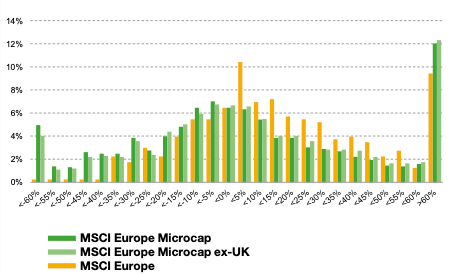
Chart 1: Distribution of component performance over one year Mandarine Gestion
Geographic diversification and market depth
Microcaps offer compelling geographic diversification benefits. Unlike large-cap or even small/mid-cap indices, which are often 60% to 75% dominated by American stocks, the MSCI World Microcap index is approximately one-quarter U.S., one-quarter Europe, one-quarter Japan, and the remainder in developed countries (see chart 2).
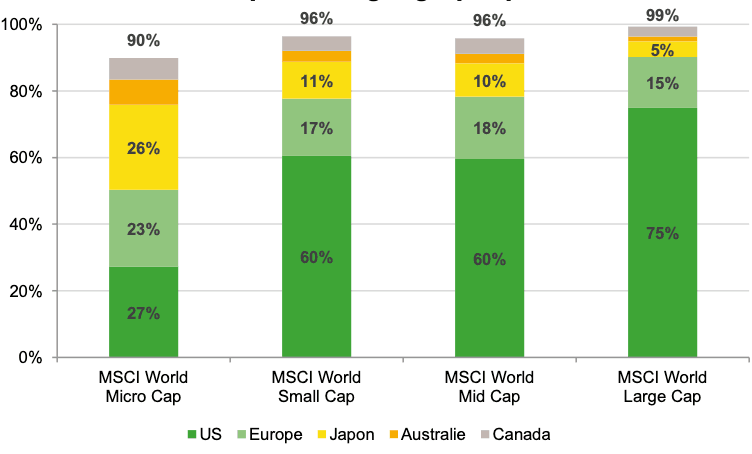
Chart 2: Regional distribution Mandarine Gestion
Japan, with its high weighting (around 27% in the index), is particularly striking. Lecoq noted that such prominence is partly due to differences in corporate culture: “In the U.S., private equity often intercepts startups, meaning they arrive on the public market already as mid- or large caps,” observed Lecoq.
In contrast, listing on the exchange in Japan is a significant step for entrepreneurs. It confers prestige and aids in areas like recruitment, encouraging earlier public listing. Lecoq noted that the Japanese market offers a depth and variety of quoted niche themes that are less accessible in the U.S.
Examples of companies found in this universe include M-Up, a Japanese agency managing fan clubs; Nomura Micro Science, a Japanese firm making ultra-pure water for semiconductors (less than a drop of soya sauce in a Stade de France full of water); and Rosenbauer, an Austrian global leader in fire trucks.
Mandarine’s secret sauce
Lecoq explained that Mandarine’s active management strategy involves a blend of quantitative analysis (to source ideas) and fundamental due diligence. Not surprisingly, it relies on extreme diversification, with its Global Microcap Fund invested in over 300 companies, while the Europe Microcap Fund holds 200 positions. Modern portfolio theories consider a portfolio as diversified with around 30-35 stocks.
Positions are generally equi-weighted (around 0.3% to 0.5% of the portfolio), ensuring that performance relies on progressive, recurring outperformance via stock selection, rather than being determined by a few extraordinary stocks or a sector bias. Mandarine aims for high active share (80-95%).
Beating the benchmarks
Lecoq claimed that the Global Microcap Fund (launched in 2016, +113% vs index at +106%) and the Europe Microcap Fund (launched in 2013, +171% vs index at +107%) have both consistently outperformed their respective indices, net of fees, since inception. In the last three years, both funds exhibited similar volatility compared to their benchmark, and their tracking error stood at around 3.5%.
Sylvain Barrette in Paris
Paperjam was invited by a public relations firm to participate in an asset manager media roadshow organised in Paris on 26 and 27 November 2025. The PR company paid for accommodation and transportation.