In December 2023, Maison Moderne will celebrate its 30th anniversary. What were you doing in December 1993?
This date corresponds to a difficult period in my childhood. I had just turned 11 and started a new school in Paris in the sixth grade, where I was bullied for two years. Fortunately social networks didn't exist at the time! When I read some of the articles on this subject today, I shudder. The subject of school bullying is very close to my heart and I remain vigilant with my three sons. Prevention, detection, supervision, the key remains dialogue.
Which article, magazine cover or Maison Moderne event stood out for you and why?
I am particularly fond of long interviews, which allow us to better understand the way of thinking and what drives the personalities in the marketplace. The choice of vocabulary and the way the answers are given say a lot about each personality. I love looking at them. Unsurprisingly, the Paperjam interview that made the biggest impression on me was that of our Managing Partner, Jean-Marc Ueberecken, who made the cover last February. For me, it is a symbol of what Arendt has become.
Are you more of a digital or print consumer?
To tell the truth, I don't separate my eye as a reader from my eye as an advertiser, and I don't ask myself the question of format either. I consume alternately depending on my attention span and where I am. So it's necessarily a mix of the two. I spend a lot of time every day browsing different media, digital or print, local or international. My personal reading feeds my professional thinking and vice versa. Nothing is segmented in my mind.
What does your office look like and what does it say about you?
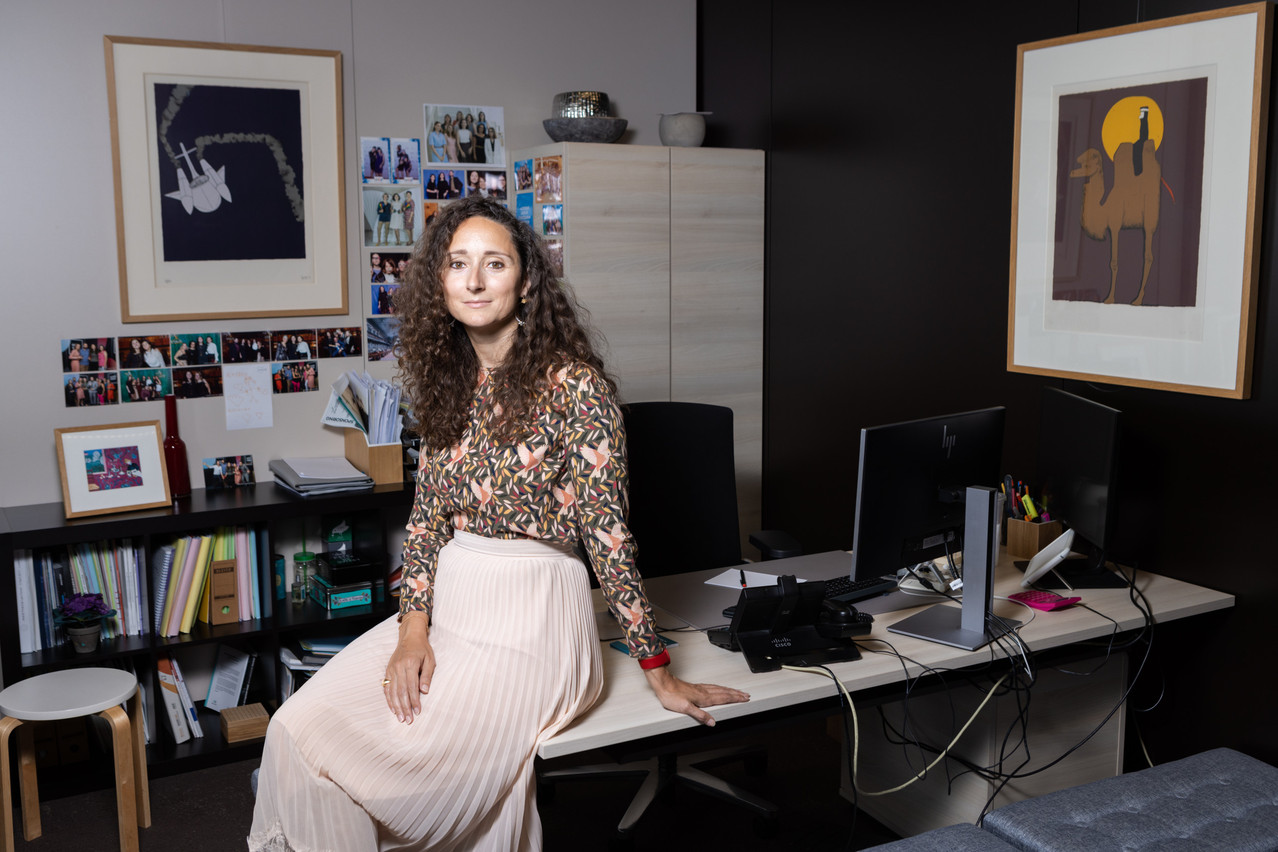
My office is a special place for discussion and I decorated it as such. It was important to me that it was welcoming to my colleagues and allowed for all kinds of discussions to take place there. Chairs, benches or stools, everyone can make themselves comfortable according to their mood or the need of the day.
On my desk, it's a different story. A laptop, two fixed screens, three phones, an iPad... I sometimes feel like I'm at a control tower! Apart from these screens, the most important thing is my paper to-do list, which I continually update with a pen. I also use a digital tracking system, but nothing will replace the satisfaction of crossing off a completed task on paper.
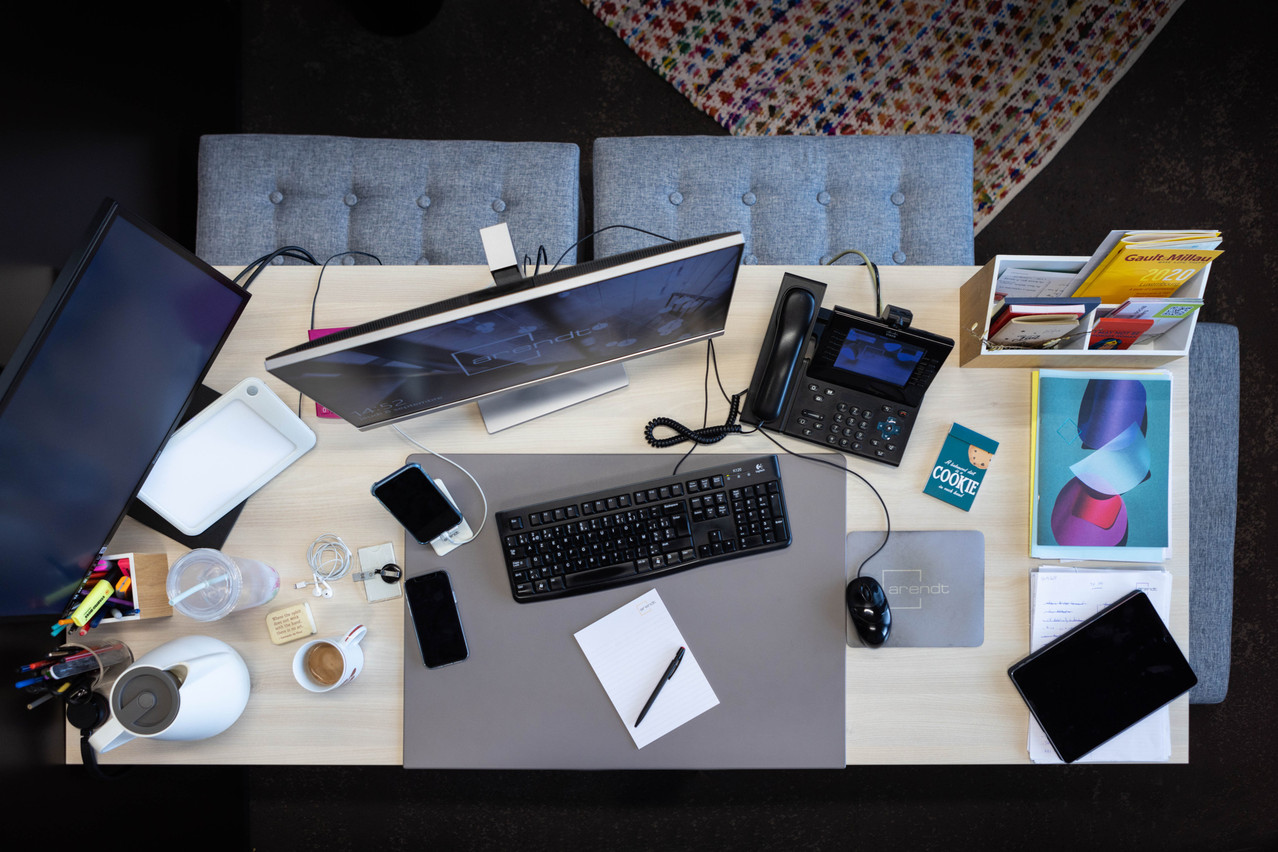
(Maison Moderne / Romain Gamba)
It's all the rage with morning routines, what are your habits and rituals at work?
I think it's essential to start my day by greeting my teams, to take the time to connect with them and to understand their state of mind. That's when the deeper issues usually come out. I miss this moment if I get caught up in meetings as soon as I arrive, which obviously happens. Then, filling up my fuel tank (thermos of tea, water bottle) before rereading my to-do list and working on my inbox (which sometimes seems to be alive...).
And in the evening... what is the current project that keeps you awake?
The good thing about Arendt is that innovation and anticipation are not empty words. In fact, my main preoccupations are substantive, always long-term. Today, what occupies my mind the most on a daily basis is managing to simplify the understanding of what our group offers to the market, while respecting the immense diversity (and novelty) of the services developed by our different entities. This is a huge and never-ending task.
What is the best practice you have learned recently that you would like to share with our readers, your colleagues?
I am passionate about internal communication, which is also one of my prerogatives. This year, more than any other, we have been confronted with subjects where we have voluntarily allowed our emotions to be expressed. And that seems to me to be fundamental. We must not be afraid to put our feelings into the right words, even in the context of official communication. This is not a "good practice" that I have learned recently, but I have experienced it in my flesh on many occasions in recent months. Whether it be with war, pandemic or death.
A CEO who is sensitive to communication and marketing is crucial. How would you rate your CEO on his vision of the strategic role of your department?
Clearly 10/10, for my Managing Partner and my Co-Chairmen. The proof is in the constant growth of my team, which is expanding in line with Arendt's strategic challenges, and the constant dialogue between us. They have clearly understood that communication and marketing are not to be integrated at the end of the decision-making chain, downstream. On the contrary, their dimension is integrated very early on in our strategic decisions. That makes all the difference.
Share with us three favourite campaigns!
Internationally, I particularly liked the "Sista" collective's campaign on gender stereotypes, based on a terribly funny video in which top French bosses are interviewed as if they were women. This campaign demonstrates the power of humour in communication, even on serious issues where denunciations are made. The impact of humour is incomparable. The viral diffusion of this video was very successful via a media campaign. Video: https://www.wearesista.com/campagne
In Luxembourg, it is the feat of the "Net ouni meng Mask" campaign of the Ministry of Health that comes to mind. Obviously without judgement about the tender debate of the last two years. What struck me was the great graphic and iconographic success that was achieved in a very complex and anxiety-provoking context involving urgency, multilingualism and generations. The result is at once highly identifiable, de-dramatising, informative and effective. The predominant use of paper was also key to this campaign.
At Arendt, our campaigns are of course B2B, which is quite different. Some are very targeted and others can reach all sectors. The campaign that I find most exciting is the one dedicated to our Financial Crime services and particularly our Forensic investigations. It's a marathon campaign with a real ramp-up, a very broad marketing mix, very sharp content, an international market and identifiable faces. What more could you ask for?
If you become editor, who do you put on the cover of the next Paperjam or Delano?
My heart beats for everything related to education. And there are so many educational issues in the absolute, and in Luxembourg in particular. If I could choose the cover of the next Paperjam, I would put Liz Kremer-Rauchs, the Director of the UP Foundation. This foundation works actively in the Luxembourg educational field by federating all the necessary actors and by approaching education as a whole, which is very rare. Its different dimensions are addressed: formal, non-formal, informal and wilderness. I have been a member of the Scientific Council of the foundation for two years and the projects I am working on give me faith in the future.