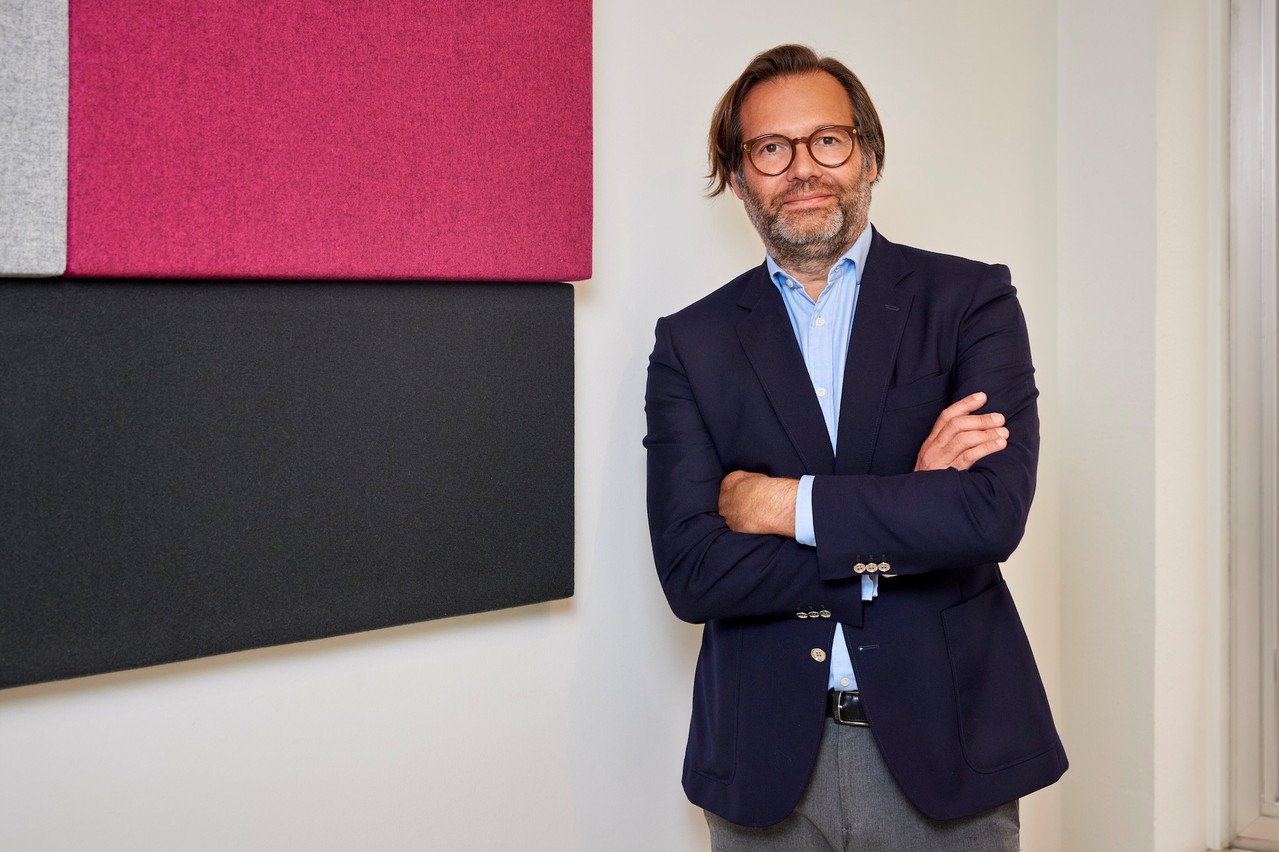
How would you describe the recent evolution of Luxembourg’s financial centre?
Jérôme Carbonnelle: For a long time, Luxembourg was seen as a platform for execution, but it has evolved into a forward-thinking partner in decision-making. People working here know it is no longer just an administrative gateway; it is now a source of tailored solutions, delivered by technical experts who can engage in strategic discussions at peer level with international investment teams.
How does the local context make a difference for international firms?
Our biggest strength is stability: reliable legal frameworks, comprehensible taxation, predictable governance, and close proximity to authorities and European decision-makers. This trust environment - underpinned by our AAA rating and our highly responsive regulators - attracts stakeholders seeking innovation and long-term visibility, giving them the ability to plan their exit without any unpleasant surprises and even develop several scenarios.
We have moved from operational excellence to strategic partnership: we now anticipate, engage, and act in line with the real needs of international investors.
What defines Luxembourg’s financial ecosystem today?
One aspect is that, within one territory, all required expertise is concentrated: lawyers, asset managers, depositaries, legal experts, auditors, fintechs, and consultants collaborate directly to accelerate complex investment strategies. Nearly half the population is international, with English now the working language, creating a melting pot of specialists who go far beyond traditional back-office functions. Another aspect is the consolidation challenges facing players in the financial industry, which are leading to increased cost pressure and greater complexity.
Has Luxembourg moved closer to front-office roles?
There’s a clear rise in local investment teams and the launch of global centres of excellence. International groups are creating truly strategic bases in Luxembourg, where innovation, security, and operational facilitation are handled directly in close coordination with the authorities. Today, establishing just a subsidiary isn’t enough: one must immerse in a culture of advice, ongoing dialogue, and adaptation. This facilitator role implies teams that are already very familiar with the local ecosystem in order to make better decisions.
What has been the impact on the talent market?
The recruitment market has become niche, focused on specialist profiles able to support transformation cycles and work close to the real action and decision making, the old days of mass hiring are gone. Tax incentives for impatriates and carried interest mechanisms only add to Luxembourg’s attractiveness compared to other European hubs, alongside high operational standards. We have moved from a focus on ‘substance’ to a search for strategic ‘purpose’, made possible by the market knowledge of local teams.
What makes Luxembourg’s approach unique for investors?
Here, value is not just about cost or speed, it’s about the ability to anticipate, structure, and bring together those shaping the industry to deliver real strategies. We understand business, what’s at stake, and actively support the evolution from back to front office. Luxembourg is far more than a traditional hub: it’s a centre of action where operational understanding truly sets you apart.
How does GOTOfreedom support companies in their growth?
Our core expertise lies in the legal and financial industries in the broadest sense. We operate across an integrated value chain that begins with law firms and extends to investor services and fintech, encompassing asset managers, family offices, custodians, credit institutions, and more.
We often describe three main categories of roles for which companies recruit. The first drive revenue generation; the second focus on transformation and efficiency; and the third ensure internal control, safeguarding the organization. Our mission is to ensure that every individual we introduce aligns with this framework, whether they are senior managers, executives, or board members.
Acknowledgements
With thanks to Benoît Theunissen, Alexandre Vanhee, Laurent Nittler, Réphaël Havrenne, Sabrina El Abbadi, and Aurélie Comptour for their valuable insights, which have enriched the reflections shared in this article.