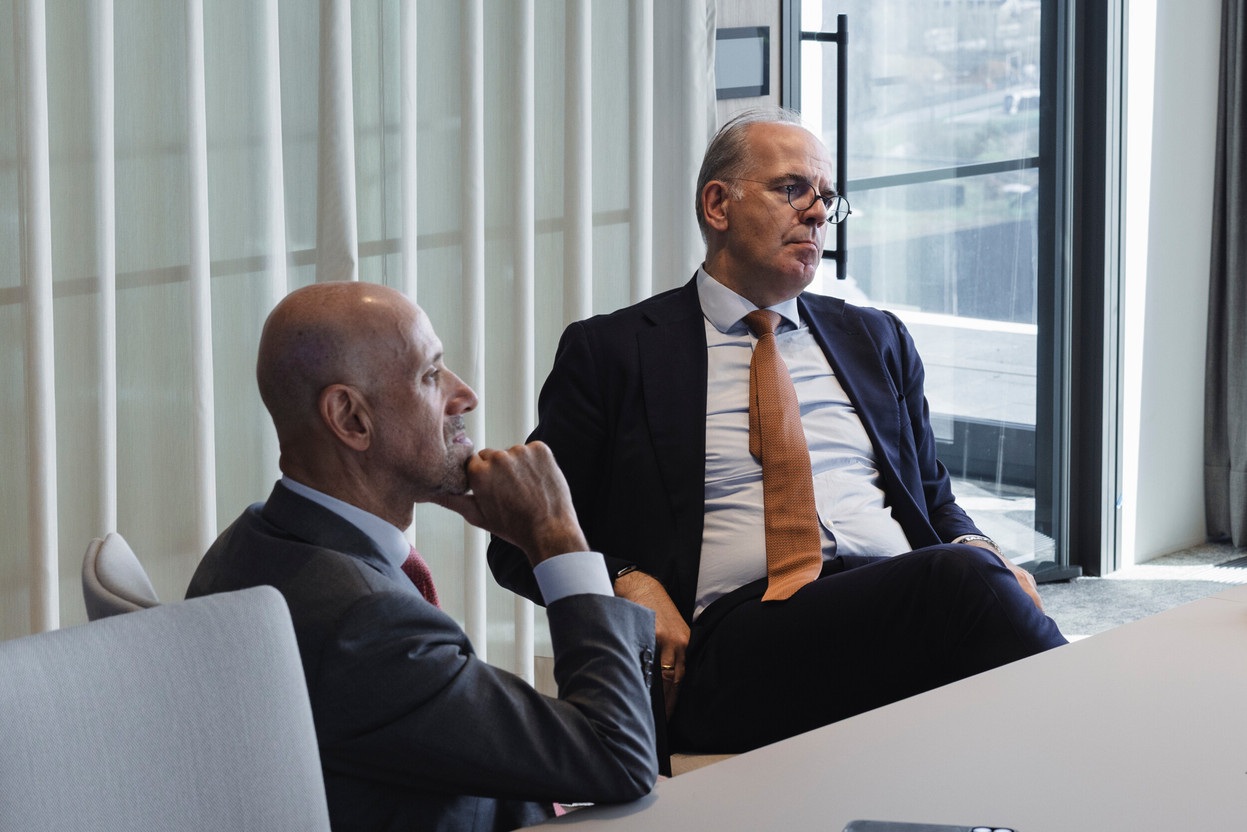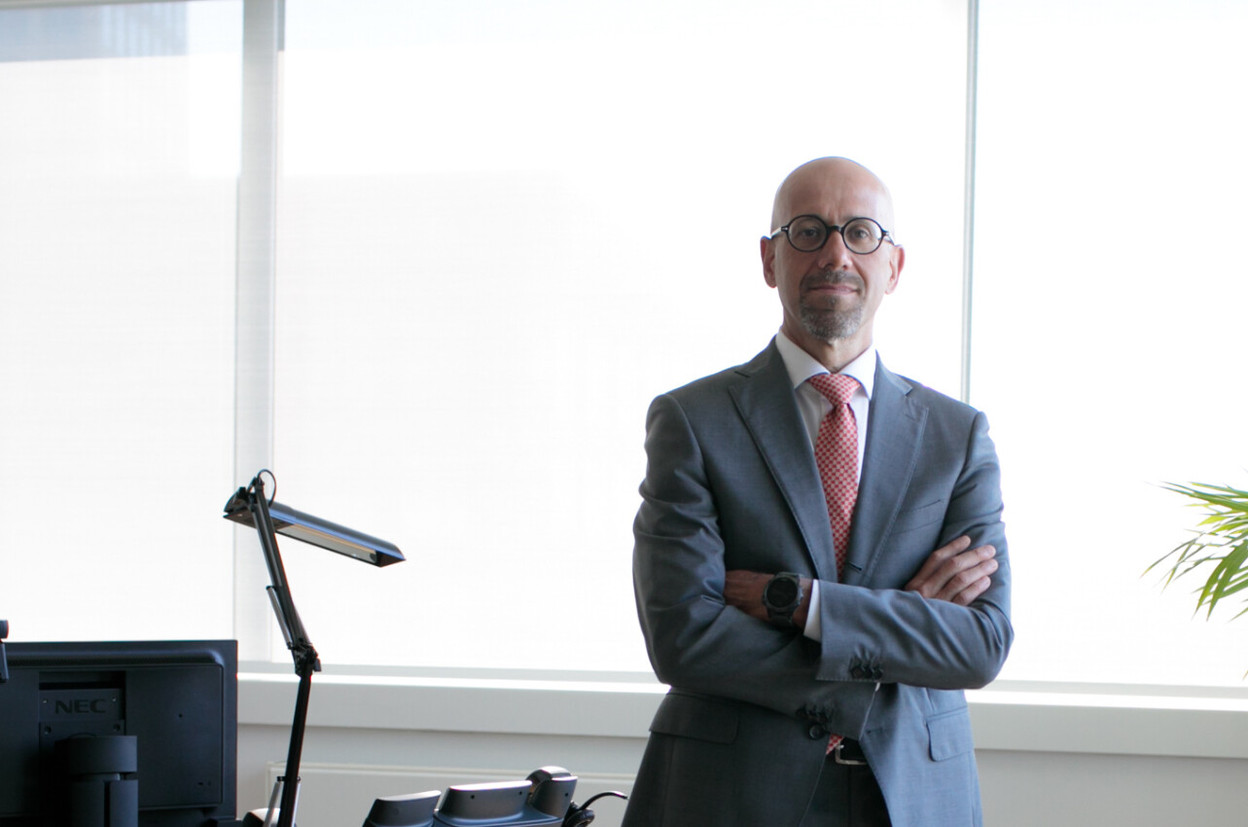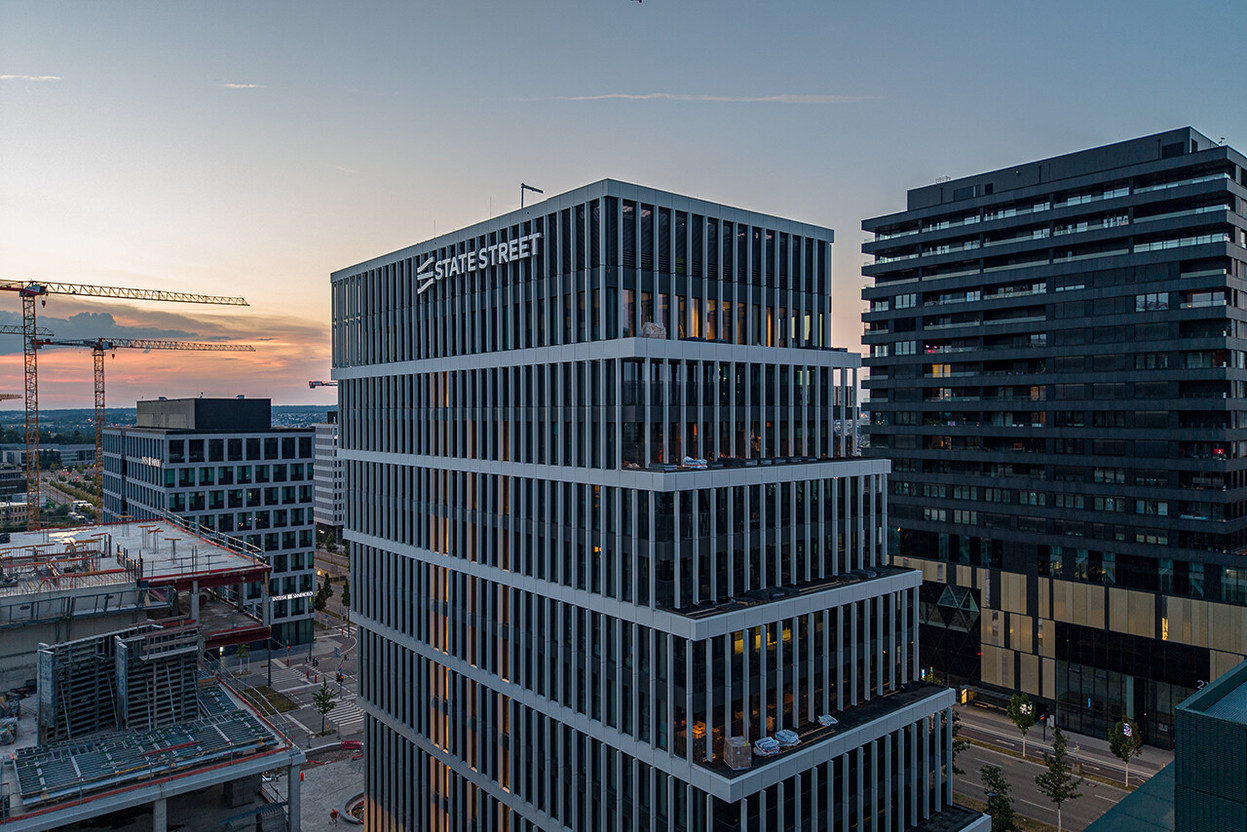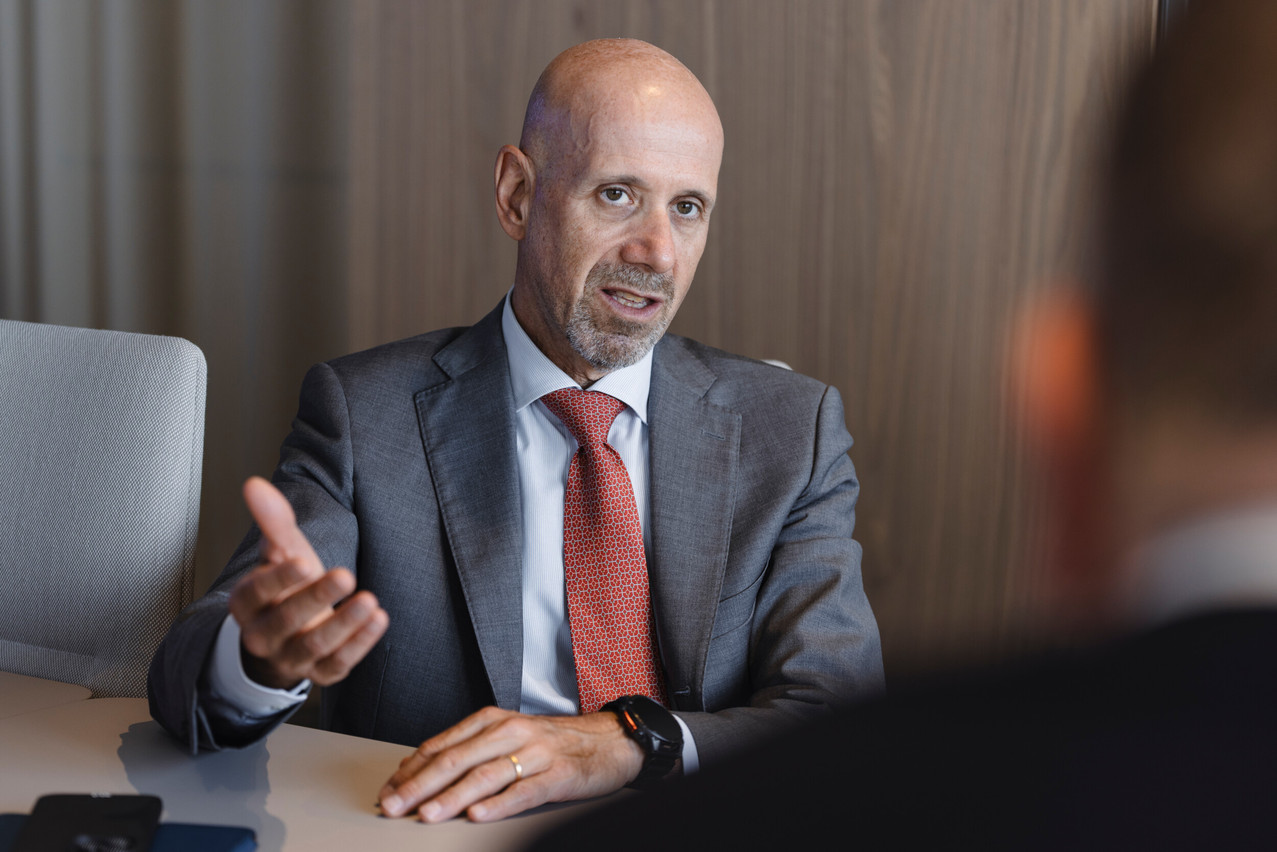
We are meeting today on the 11th floor of your new Cloche d’Or building, which you moved into this summer and where nearly 900 people work. Beyond the physical premises, what is the intention? What message do you want to send to the ecosystem? Is it that you are here to stay?
Joerg Ambrosius. – “That’s one of a number of objectives for us. On a global basis, we are looking to create the workspace of the future. To succeed in our business, especially given where it is heading, you must be able to attract, develop and retain future talent. A competitive workspace is an essential element of that.
We have been in Luxembourg for a long time – 36 years, since 1990 – and in all fairness, our previous facility was no longer suited to what comes next. We needed a very modern workplace.
Naturally, there is also a symbolic dimension. We made a deliberate decision to own this building because we are here for the long term. Over the past decades, Luxembourg has emerged globally as one of the most important investment hubs. We are in the fortunate position of being the market leader in supporting global investment managers who choose Luxembourg. We feel deeply integrated into this ecosystem and have actively helped build the Luxembourg brand abroad. When you look at our client base and the initiators of the funds we service, it represents the ‘who’s who’ of the European, US and international investment industry.
Luxembourg has reinvented itself multiple times throughout our presence here, remaining extremely competitive. We intend to continue being the market leader while actively contributing to this ongoing evolution.
The true competitive threat to Luxembourg is not Paris; it is the major financial centres emerging across the Americas, the Middle East, and Asia.

Regarding European financial oversight: proposals to centralise supervisory powers under Esma are frequently debated. Would moving supervision away from Luxembourg weaken its competitive advantage, or strengthen the Single Market?
Joerg Ambrosius. – “Regulatory compliance is our non-negotiable license to operate. Looking at the broader European picture, the fragmentation of rules across national borders remains a major structural disadvantage compared to the US or APAC.
Achieving a genuine European Capital Markets Union is an absolute necessity if Europe wants to compete globally at scale. The true competitive threat to Luxembourg is not Paris; it is the major financial centers emerging across the Americas, the Middle East and Asia. European integration should not be viewed as a threat to Luxembourg, but as a prerequisite for European relevance on the world stage.
Wage indexation, “a topic” for business
What policy priorities should Luxembourg focus on to maintain its attractiveness and support business growth?
Joerg Ambrosius. – “Luxembourg offers exceptional proximity to policymakers and regulators, coupled with sophisticated industry dialogue that is rare elsewhere.
However, the primary limiting factor for future growth is talent. We need stronger ties between universities and business, more aggressive talent recruitment into the country, and smoother frameworks for cross-border commuters. We are all competing for the same finite pool of specialised professionals.
Riccardo Lamanna: «An important topic for businesses is wage indexation. While social peace and economic stability are vital components of Luxembourg's success, automatic wage indexation of 6% to 7% across the board in high-inflation years creates severe operational drag, particularly when top-line fee revenues do not grow at that pace. Rebalancing indexation to target lower salary bands—while providing employers flexibility to reward high performers—would make a substantial difference.
Additionally, concluding a revised double taxation treaty with the United States would remove a persistent competitive drag on Luxembourg's ETF franchise.
Following the restructuring of IFDS and the acquisition of Mizuho’s offshore business, what is your current operational footprint and headcount outlook in Luxembourg?
Riccardo Lamanna. – “We currently employ just under 900 people locally. Our modern building is designed around a collaborative, flexible desk-sharing model.
Our headcount is expected to remain broadly stable. We absorbed over 400 people recently following the acquisition of Mizuho’s offshore business and the internal repatriation of our transfer agency activities from the former IFDS joint venture. While technology and automation are absorbing volume growth without requiring linear staffing increases, we continue to hire strategically.
We are expanding our local product development teams, as Luxembourg remains the epicentre for client-driven fund structuring innovations. We are also hiring specialised talent in alternative and digital assets – individuals capable of overseeing and orchestrating global operations from Luxembourg. Under new regulatory frameworks like Dora, operational oversight of external providers and end-to-end resilience are critical.
Riccardo, you are preparing to step down from your role in Luxembourg to lead State Street in Italy. How do you reflect on your time here?
Riccardo Lamanna. – «After more than five years here, I have developed immense admiration for this financial centre. Seen from the outside, critics often misunderstand Luxembourg; once inside, you realise the unmatched depth of its ecosystem, its regulatory sophistication, and the openness of its authorities. It serves as a formidable operational training ground for any financial executive.
Returning to Italy is a welcome move personally and logistically, but it is also an exciting professional mandate. Italy represents a major growth contributor to our Emea franchise, with several key initiatives underway. A smooth transition will take place over the coming months as my successor is appointed, and I look forward to applying the experience gained in Luxembourg to our next phase of growth.”