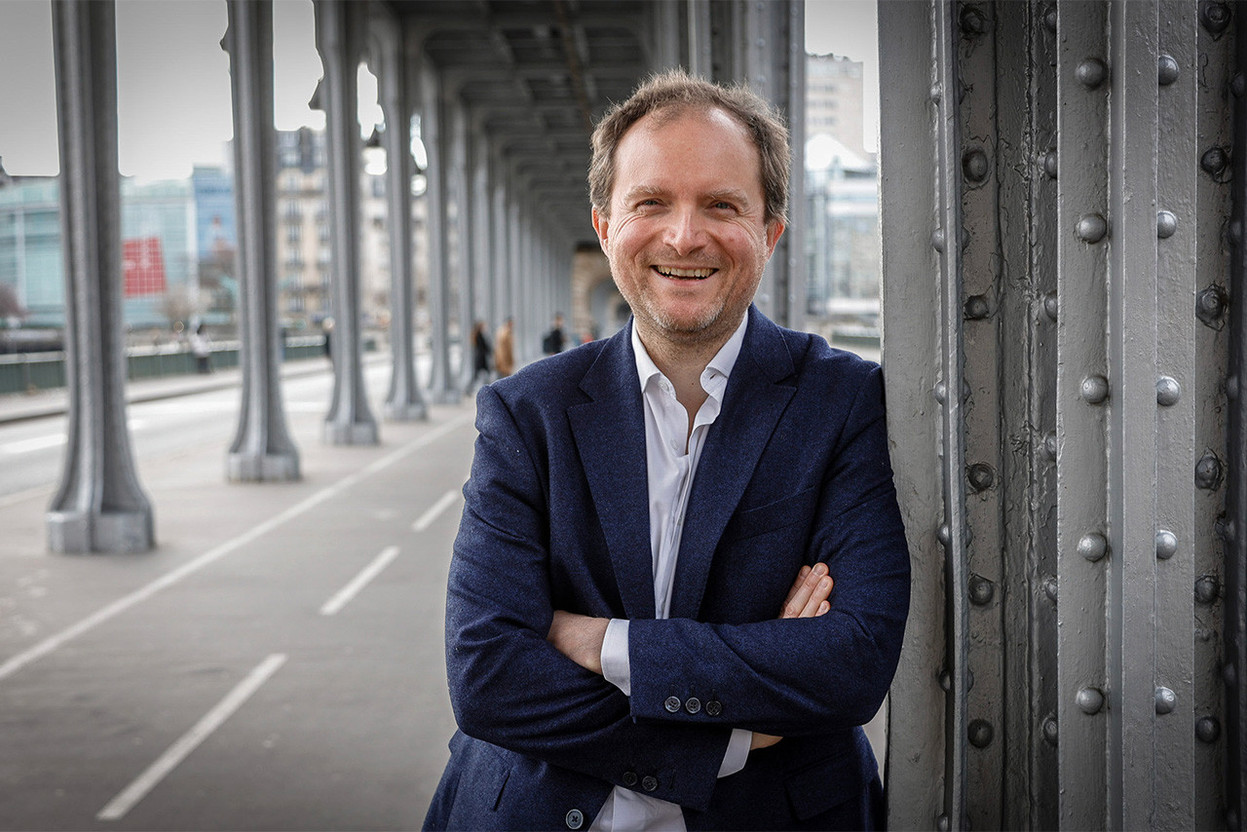
“I haven’t seen much blue sky since I joined the government in February 2020.” Covid, economic rebound and inflation, rising energy prices, Russia’s invasion of Ukraine and even higher inflation: called upon to replace 

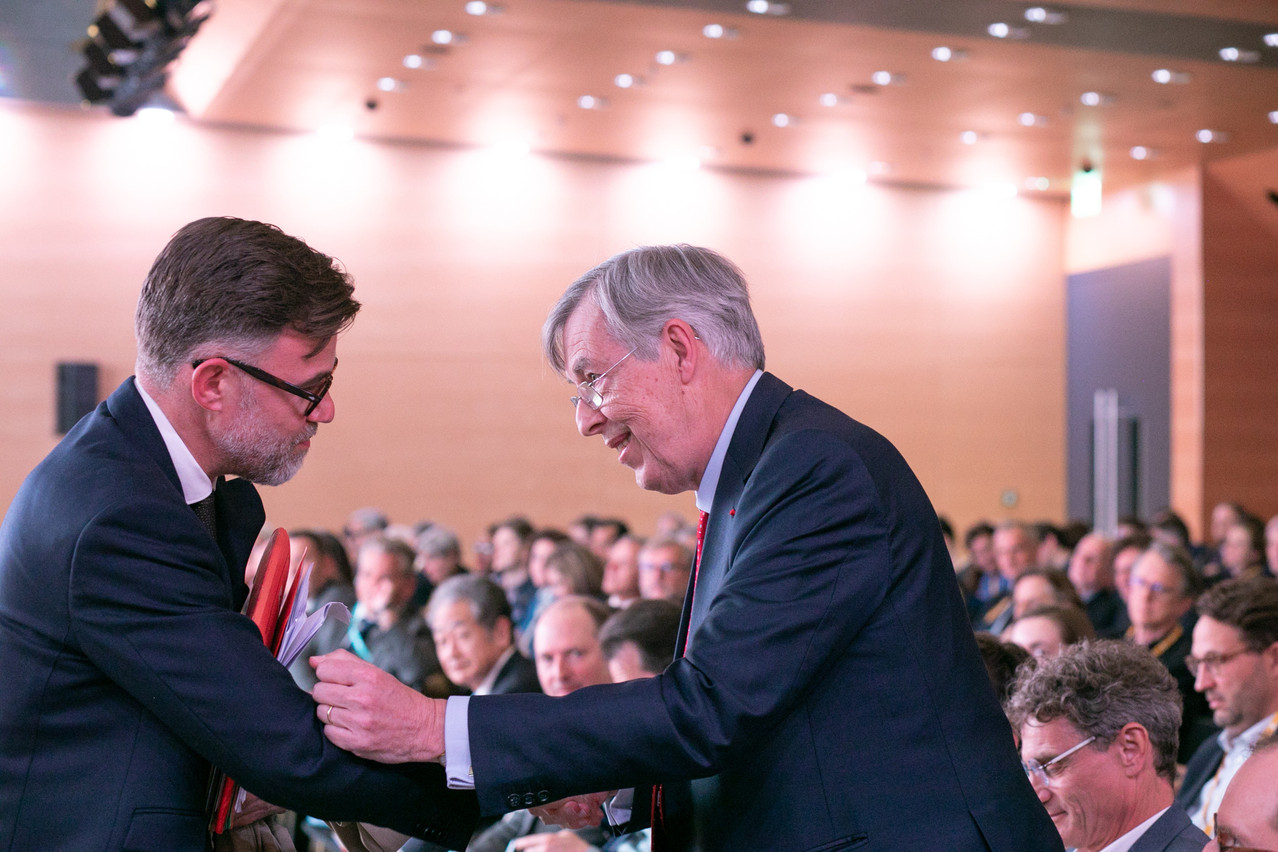
And the climate crisis will not give him any more breathing space. Present at the start of the 16th Economy Day, organised by the ministry of the Economy, the Chamber of Commerce and Luxembourg’s business federation Fedil with the help of PwC, Fayot left the event to join prime minister 


Security no longer guaranteed forever
This did not prevent him from hearing the advisor to the International Institute for Strategic Studies, François Heisbourg, make some recommendations. First, security can no longer be considered a given. Then, almost as an obvious consequence, that Luxembourg should participate properly in Nato expenditure. “0.7% of GDP for defence spending is not enough for Luxembourg's GDP level. It is half of Germany, a third of France and a fifth of Poland,” said the expert, who is still very much in demand in Luxembourg. “I know that this is unpleasant to hear for a minister who is careful about spending taxpayers’ money. There are many ways to increase the defence budget!”
“Small is beautiful, yes, but we must not forget that we are small. Estonia has gone from a Soviet republic to a very modern and technological economy in five years. Luxembourg is in that category. By the way, it is a compliment to Luxembourg that Estonia has decided to put its ultimate data backup in Luxembourg. But being small does not guarantee that you go fast enough or that your choices are relevant enough.”
US or China, you have to choose
“We need to know our partners better. There is the financial dimension that arose from the September 11 attacks, but also another more strategic version, which is less about business than about states. When a space company is accused of having supplied data to the private military group Wagner and this company is based in Luxembourg, and falls under Luxembourg law, it is necessary at least to have a good explanation to give to its allies,” said Heisbourg. “Luxembourg needs to develop its security services more seriously. You cannot afford to be associated with the Wagner group, its kidnappings, violence, torture or rape, the worst forms of war and not only in Ukraine, but also in the Sahel countries.”
At the end of January, the US Treasury had announced that it considered Spacety Luxembourg to be providing satellite imagery to the highly contested Wagner Group.
The strategist had already recommended that the country should know its partners better, just as the financial industry must comply with KYC or Fatca. And that it should not remain on a “balanced” policy. “A balanced policy is not an option. You can’t be balanced between China and the US. Luxembourg is not neutral. It is a founding member of Nato and the European Union. Asked to choose between its Western partners or China, it must choose its Western partners. Luxembourg should not believe that it can escape this choice. Today, it is very different from the last 25 years.”
The Metz-Luxembourg axis, a bad omen
“To preserve its security, Luxembourg must ensure that a series of conditions are met. To accompany the development of new high value-added jobs in sectors such as greentech, biotech and others, you will have to welcome even more people, immigrants and border workers. This means that you have excellent connectivity with the border countries. Anyone who has enjoyed going from Metz to Luxembourg knows exactly what I am talking about! That was pretty bad 25 years ago. It is practically impossible today. The fact that we are not able to return to what existed in this area does not bode well for the future of Luxembourg. And if you can’t move around properly as a frontier worker, you must have access to a healthy real estate market in Luxembourg. Accessible in any case,” concluded Heisbourg.
He was joined by André Sapir, professor of economics at the Solvay Brussels School of Economics and Management and senior fellow at Bruegel, who developed a slightly different vision from that of Heisbourg. In his view, China’s economic and political destiny cannot be separated from a number of countries and, even if the two blocs led by the Americans and the Chinese continued their economic war, they could not ignore each other in solving the climate crisis. “It is inevitable and contradictory,” he said.
Values as an emerging vision
The third speaker invited by the organisers, Augustin Landier, author with David Thesmar of “The price of our values,” barely had time to explain a new emerging vision, which puts our values at the centre of our economic decisions. A good deal, as everyone in the economic world knows, is one that makes both parties feel they have made the right deal. Today, citizens are ready to pay more for higher quality, for responsibly produced products, for not favouring slavery and this changes the game.
“We must have a trade policy based on value,” the minister said in his preamble, stressing that it would be ridiculous to be the only country in the world to reach 1% of its GDP in development aid, to place human rights at the heart of its concerns, without being coherent to the end. “I have strengthened my economic intelligence department precisely to avoid risks,” insisted Fayot.
This story was first published in French on Paperjam. It has been translated and edited for Delano.