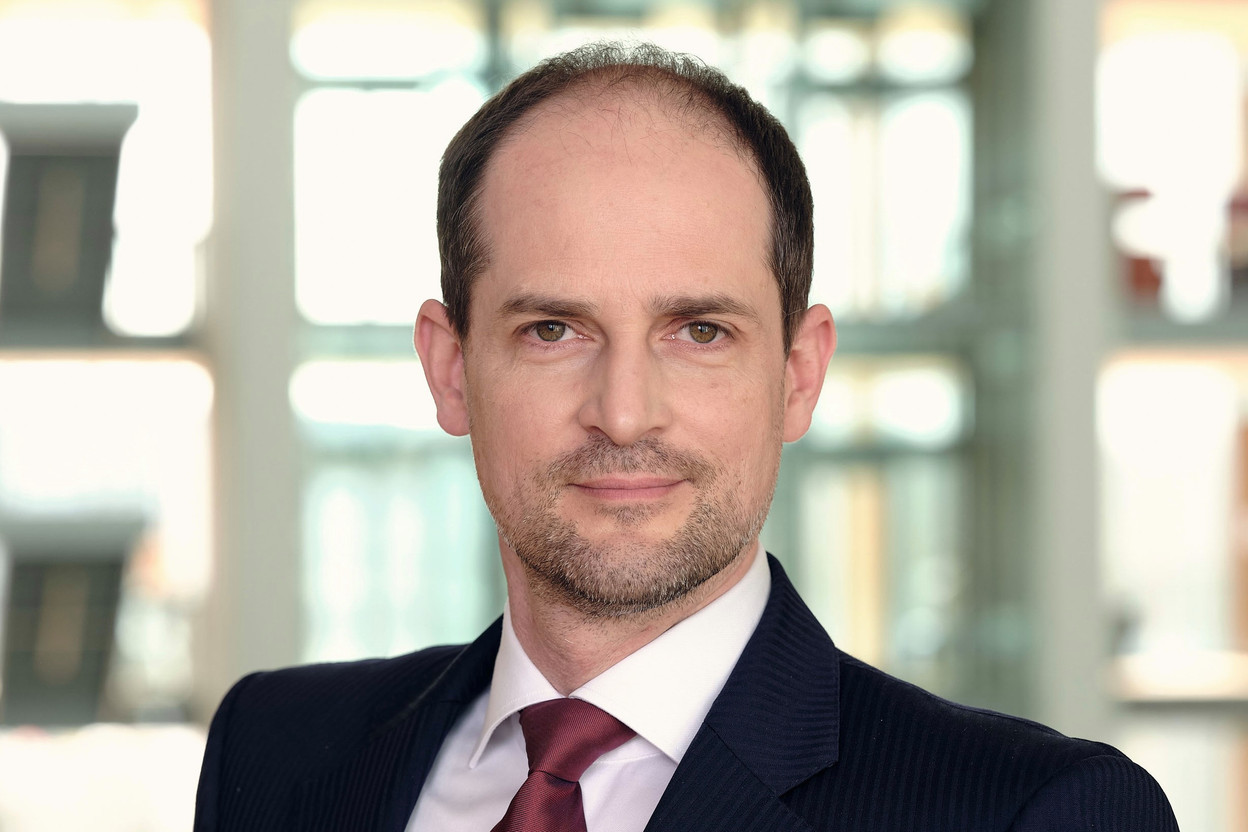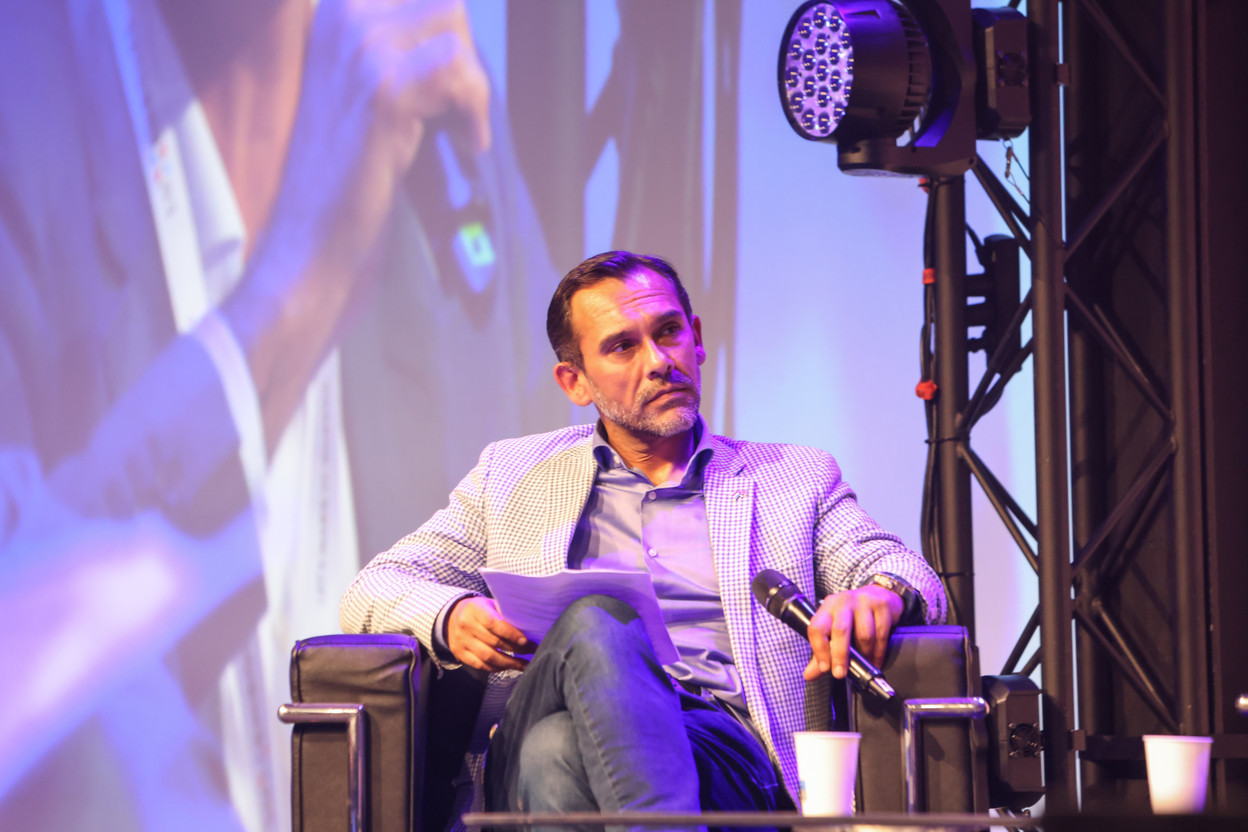
Guillaume Meyer: What is the current state of play in the pooling of know your customer (KYC) procedures in the Swiss financial sector?
Vincent Pignon: Today, the procedures are mutualised for legal entities (know your business or KYB). This was implemented during an initial three-year phase. We are now concentrating on individuals, mainly between private banks. Currently, a dozen private banks, as well as various financial intermediaries such as independent wealth managers, asset managers and family offices, are taking part.
For the time being, we are talking about a B2B2C process, which does not allow the end customer to interact directly: it is the financial intermediaries who enter the information on their behalf.
In concrete terms, what information do we need to exchange?
The information on the onboarding form, which details the customer's situation, whether as an individual or an entire family, as well as the companies in which they are a shareholder or stakeholder. This file includes personal data such as first and last names, as well as all associated documents. This information is then shared with counterparties, who may be other banks, funds, insurers or other financial intermediaries, regardless of their geographical location or internal standards.
We share data, but not the analysis of that data?
Exactly. This is a requirement of the Swiss Financial Market Supervisory Authority, Finma, which asks each bank to assume the risks associated with KYC. So each player retains its own KYC. Our role is to enable the exchange of information between entities that do not necessarily have the same initial data or the same procedures. We act as an intermediary, a 'plumber' who facilitates this exchange without having access to the information itself.
We connect institutions and sometimes third parties, such as outsourced compliance departments that process information, or contract management, digital signature and complete digital onboarding solutions for the end customer.
What puts Switzerland at the forefront is its decentralised, bottom-up approach.

Is Switzerland a pioneer in the pooling of KYC data?
Singapore did it before us. What puts Switzerland at the forefront is its decentralised, bottom-up approach: it's the industry players themselves who are voluntarily coordinating. What is remarkable is the awareness of compliance risks and the banks' initiative to pool the approach with a market utility that can be deployed in all financial centres.
Who took the initiative for this pooling?
Wecan played a catalytic role in bringing the key players together around the same table. It was essential that the key players were involved, otherwise it would not have been possible. The process began with workshops to validate the concept, with KYC as the starting point. We quickly realised that we needed to start with less sensitive data to facilitate sharing and convince the compliance and risk management departments.
Once we had validated this initial approach, we launched a three-month technology pilot, followed by a production launch in which the banks Pictet, Lombard Odier and Edmond de Rothschild played a crucial role in the governance of the project. Alongside them, other major banks were involved in validating the concept, processes and overall vision.
How is the governance of this initiative structured?
Although Wecan is a private company, we have included an independent governance structure, the Blockchain Association for Finance, which defines priorities and market standards. This association works with its members to define and adjust standards, including those for KYC. It monitors Wecan in terms of security, implementation and product prioritisation.
Although Wecan is not a member of the board of this association, which reinforces its independence, there is a strong contractual link between the two, which simplifies the integration of new entities. Each new financial institution wishing to join us must be approved by the association after due diligence.
Isn't it surprising that a governance body created to pool and optimise compliance should be labelled 'blockchain'?
I agree, the bias is very strong. The main topic of discussion is KYC, not blockchain. But it's because we use blockchain that the mutualisation of KYC has been possible. Blockchain is the key to the mutualisation of KYC.
How does one lead to the other?
I founded Wecan in 2015 with the conviction that blockchain would enable everyone to secure their data, reclaim it and share it as they wished - unlike the current situation with the Gafam [big tech firms], where our data is not only out of our control, but also monetised by others.
KYC emerged as an obvious use case, but putting it in place was a challenge. Switzerland offers fertile ground for innovation in this area on two levels. On the one hand, there is a concentration of banking decision-makers and they are easy to access. Secondly, since 2017-2018, Switzerland has positioned itself strongly on the blockchain theme.
So when it comes to shared KYC, blockchain is not only the trigger, but also the distinguishing feature of the Swiss solution?
Absolutely. In Singapore, mutualisation is a government project that is not based on blockchain: the government centralises everything. In Switzerland, on the other hand, each player remains independent and retains control of its data.
The transmission of KYC to a third party is not an option for private banks. By offering a distributed and secure storage of information, blockchain has made it possible to bring together major players, such as Pictet and Lombard Odier, around a common project. From the outset, we established that compliance should not be an area of competition, but rather one where pooling could reduce costs and improve productivity while controlling risks.
What influence has legislation had on this process?
The evolution of regulation has been a major pivot. With the Federal Law on Financial Services (LSFin), financial intermediaries moved from self-regulation to supervision. Anticipating significant changes in requirements for these intermediaries, the banks asked for a ready-to-use solution to support these players. Wecan acted as a 'facilitator' for this transition.
What were the main obstacles to pooling KYC and how did you overcome them?
The first obstacle was cultural. It was a question of convincing competitors to collaborate on a voluntary basis and agree on common standards, particularly in an area as compartmentalised as compliance. I spoke to a head of compliance who manages 35 international subsidiaries: each one has its own KYC! So it was a huge challenge to imagine inter-institutional pooling between competitors. This challenge was overcome thanks to top management's recognition that compliance is not a competitive issue.
The second challenge was technological. In 2017-2018, blockchain was still emerging, with very few institutional use cases. So we had to explore different technologies. It took us six years to reach the maturity of our current solution, now in version 2.
How did you tackle the issue of data responsibility?
This was the most complicated point from a legal point of view. We resolved this issue by ensuring that we had no access to the data. We only manage the encrypted exchange channel. This architecture has been validated and is regularly audited by the board of the Blockchain Association for Finance. In addition, we are subject to security audits, including penetration tests, and we comply with the ISO 27001 standard for data security. These strict procedures have made our partners comfortable with our system, but without these security mechanisms, our project would not have been viable.
Is it fair to say that the regulatory hurdles have been overcome thanks to technology?
It's a fact that blockchain has helped us insofar as we can't access the data, which is encrypted by the user. If each entity retains governance of its data, this solves the problems of managing access and security. This architecture has introduced technological complexity, but has proved essential to our vision of a personal digital safe where each customer can secure and share their data.
What role did Finma play in this project to pool KYC?
Finma has been involved from the earliest stages of the project. It has always encouraged our initiative, as it contributes to better compliance, enables more systematic and real-time data updates, and promotes harmonisation of the level of compliance across the market. Finma has publicly supported the project, while remaining neutral and not becoming directly involved in its execution, unlike the centralised approach adopted in Singapore.
Enabling our customers to use our solutions in the same way as in Switzerland.

Is it possible to quantify the savings achieved through this pooling?
The savings vary depending on the use case, but we are seeing process optimisations of between 30% and 50% compared with historical costs. This is particularly true for periodic KYC reviews, which are traditionally very time-consuming and unstructured.
What are the next steps in the development of this initiative?
The focus remains on improving KYC in Switzerland over the next three years, with the aim of increasing the number of players using our solution. Today, around a hundred players use it, including financial intermediaries, banks and other platforms - such as Luxembourg-based Bitstamp, which uses our solution to onboard institutional clients.
We are also developing the Wecan ecosystem, which brings together partners to cover the entire KYC value chain, including interaction with the end customer, contract generation, digital signature, data collection and sharing. We are also looking at automated data analysis for periodic reviews and sanctions checks.
Do you plan to extend the circle of stakeholders to other sectors or regions?
Absolutely. We are continuing to focus on financial services, but with an increasing diversification of the players involved, such as trustees and certain funds. Geographically, although our initial focus is Switzerland, we are responding to the banks' requests to expand into their international booking centres. Pictet, Lombard Odier and Edmond de Rothschild, which were among the most committed initially, have presences in Luxembourg, Monaco, the Middle East, UK and several Asian jurisdictions. Luxembourg is the next important step in our expansion.
What are your plans for Luxembourg?
We see this as a major area of development. We want to enable our clients to use our solutions in Luxembourg in the same way as in Switzerland. Lombard Odier has been particularly active in this initiative because of the strong demand from its clients. We have also established a partnership with Proximus to facilitate local deployment and integrate complementary services such as digital signature and contract management. This partnership benefits from its significant experience with banking players and the integration of third-party software.
How can Wecan contribute to the mutualisation of KYC in the Luxembourg financial sector?
Our added value lies in facilitating the exchange of KYC information between all the counterparties concerned, whether for account opening, updates, reviews or audits. This exchange capability is cross-cutting and can be applied to any type of entity, including funds, banks and asset managers. The aim is to improve productivity through digitisation, eliminate redundant data entry and reduce processing costs.
Do you have any specific asset management projects?
We plan to be involved in all aspects of infrastructure-related information exchange, which is crucial in asset management as in other sectors. In Switzerland, the asset management sector is a little less affected, but mutualisation with funds is perfectly feasible and is even beginning to be put into practice. There are no real barriers to their inclusion.
What are your plans beyond Luxembourg?
We are in discussions to extend our presence to other locations, including the UK and Monaco. The development of our network is essential because geographical restrictions can limit productivity improvements. A financial institution must be able to trade with counterparties in different jurisdictions, otherwise it loses efficiency. Unlike initiatives such as Singapore's, which are not transferable, our solutions enable global exchanges without regulatory barriers, tailored to each jurisdiction.
Luxembourg takes its time
A recurring theme in the Luxembourg financial centre, the pooling of KYC procedures has not yet gone very far. It is limited to the I-Hub platform, which enables its five shareholder banks (Post, BGL BNP Paribas, Spuerkeess, Banque de Luxembourg and Bil) to exchange KYC information on their retail customers if the client agrees.
What's stopping the rest of the financial community, particularly funds, from jumping on the bandwagon? There are several explanations. No institution, it is said, wants to be the guinea pig. The issue of confidentiality and investor consent raises the question of who, the service provider or the client, should ask for the data to be shared. The division of responsibilities remains unclear, as does the distinction between sharing personal information and just analysing it.
For I-Hub CEO 
Noël sees no competing solutions on the market, even outside our borders: "These are solutions that manage data, and they are not equivalent to I-Hub. With us, in addition to the pooling, the entire administrative management department takes charge of the process. It's outsourcing to an online solution, but it's fully managed, with operators who review the files when necessary."
Swiss regtech Wecan
Wecan is a Swiss company specialising in compliance data management, in particular KYC data. Its aim is to offer a secure and optimised solution for collecting, sharing and distributing this information, thereby reducing costs and standardising processes. Wecan adapts to the specific needs of each institution, without imposing a single model. The company is expanding internationally, with teams in Switzerland, Benelux, France and Portugal.
Integrating software solutions
Banks don't brag about it: they sometimes need much more than software to carry out anti-money laundering/know your customer checks?
Read the original French-language version of this interview in Paperjam’s November 2024 print edition