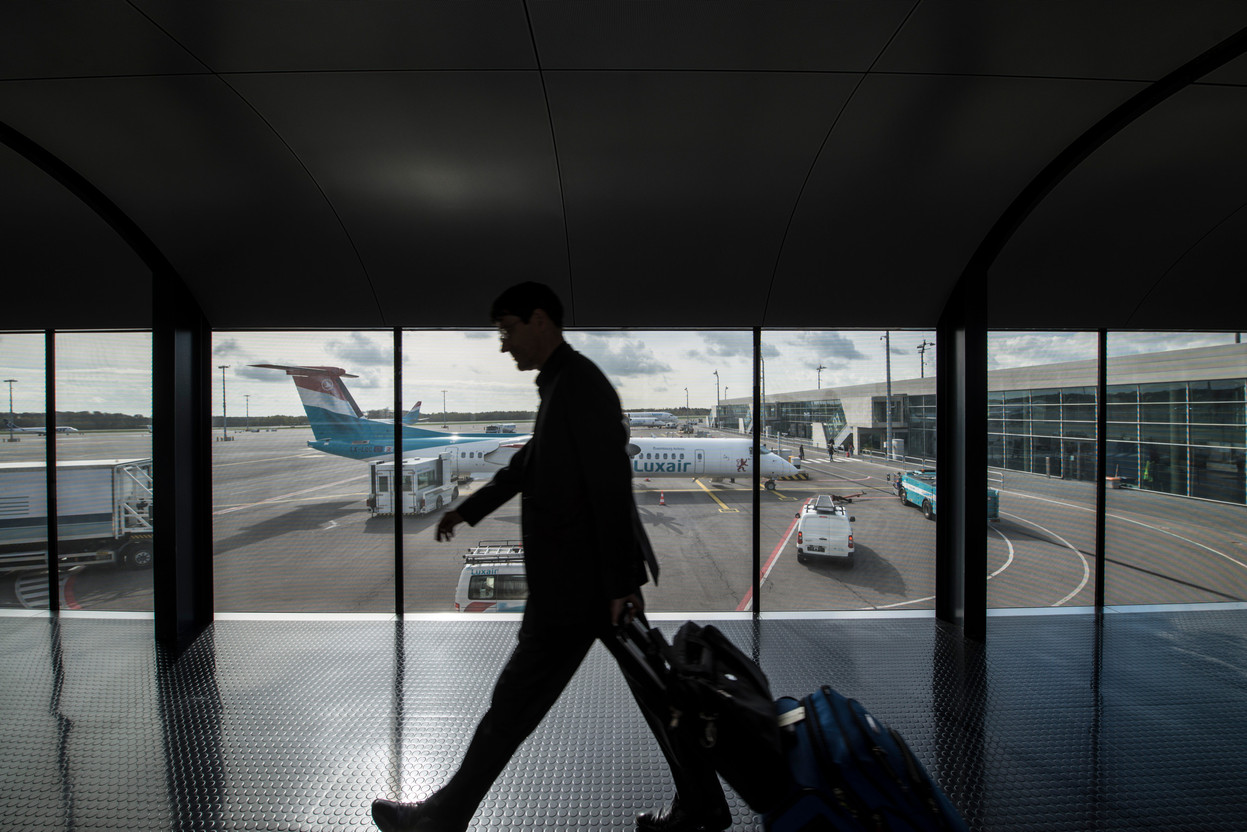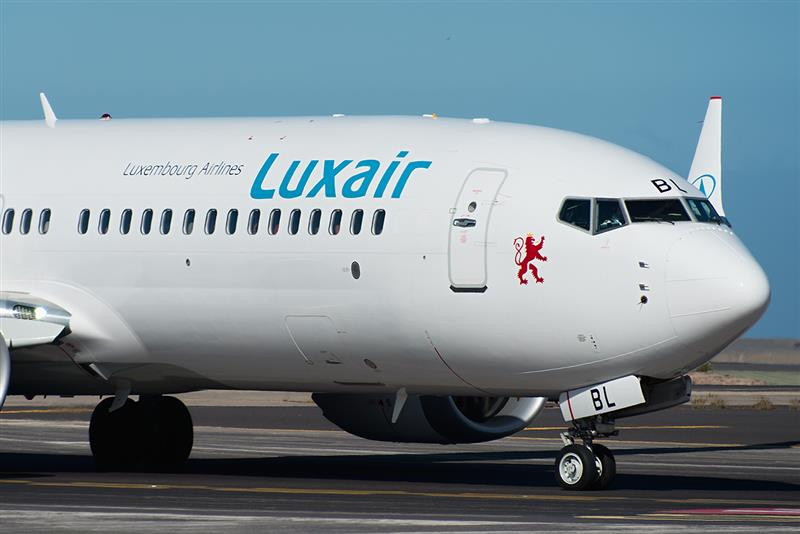
“Due to a planned strike within the air traffic control services in France… Luxair has only been authorised to operate 50% of its scheduled flights to and from Paris CDG and Nice on 3 July. The Luxair flight to and from Bastia has been cancelled in its entirety. The passengers concerned are being contacted individually and offered alternative travel solutions. Luxair is closely monitoring the situation and is taking all possible measures to minimise cancellations and delays.”
That’s the email you will have received if you had booked a flight with Luxair for this Thursday or Friday, 3-4 July, to France. What are your rights in such situations?
Cédric Arnasalon, a legal expert at the European Consumer Centre (ECC), has the answer: “In the event of a strike leading to the cancellation of a journey, your first reflex should always be to contact the carrier concerned directly. In the case of air transport, Regulation (EC) No 261/2004 stipulates that, even in the event of a strike, the airline remains responsible for its passengers. It must therefore provide the necessary assistance, i.e. offer re-routing or reimbursement, and take care of essential needs.”
“The difference mainly depends on the origin of the strike,” Arnasalon continues. “If it is internal to the company, for example if flight staff or pilots go on strike, passengers can claim compensation in addition to assistance. On the other hand, if the strike is due to third parties, such as air traffic controllers, the airline must always offer an alternative solution or a refund, but it may be exempted from paying additional compensation as this is considered an extraordinary circumstance.”
Reimbursement or re-routing
“For rail transport, the principle is the same: the carrier must inform the passenger and offer a reimbursement or re-routing solution. In the event of disruption, the best thing to do is to check the company’s website or app regularly to see how traffic is progressing and what options are available. Finally, if the train arrives late, even without cancellation, passengers can ask for financial compensation. In general, this is 25% of the ticket price for a delay of one to two hours, and 50% if the delay exceeds two hours. However, this compensation is not due if the cancellation or delay is due to exceptional circumstances that the carrier could not avoid, even with all reasonable measures. It should be noted that an internal strike is not always considered to be such a circumstance.”
CEC Luxembourg offers free assistance to consumers in matters of European consumer law. It is part of a network of 29 ECCs in the European Union. “Most of the requests we receive concern air travel: delays, flight cancellations or lost luggage,” says Arnasalon. “And as soon as it concerns a flight departing from Luxembourg, we forward the request to the National Enforcement Bodies (NEBs), which are the national authorities that oversee the application of European regulations concerning delays, cancellations and denied boarding.”
What can a passenger expect if their flight is delayed or cancelled? To better protect passengers, the European Union’s Regulation (EC) No. 261/2004 of 11 February 2004 guarantees a number of rights to air passengers, explains the CEC on its website. The regulation applies in the event of denied boarding, flight delay or cancellation. Under certain conditions, in the event of one of these three issues, you may be entitled to flat-rate compensation of €250 for flights of 1,500 km; €400 for flights between 1,500 and 3,500 km; or €600 for flights of more than 3,500 km.
No valuables in the hold
“If a flight is denied boarding, cancelled or delayed, we advise users to submit their complaint in writing as soon as possible to the airline that operated the flight,” says Arnasalon. “You should always keep a written record of all the information you receive. When you set off, you have to make sure that you have received a booking confirmation and, of course, you have to read the conditions of flight. A wrong first or last name can be grounds for denied boarding, so don’t look at it only when you get at the airport. If you contact the airline beforehand, they will often make the changes, some at an extra cost, but at least you can get on the plane. And here again you should ask for written confirmation that the changes have been made.”
What about lost luggage? “What we can advise--but I would say it's common sense--is not to put valuable or precious items in your hold baggage. And when I say ‘valuable,’ that’s very subjective, but for example an engagement ring, because you’re planning to propose during the holidays: keep it with you. Like your wedding dress, you put it in your hand luggage. And if the flight crew decide that there isn’t enough room in the cabin and that you have to put your bag in the hold at the last minute, you have the right to refuse; you don’t have to accept. And if you accept and you have valuables such as a computer, for example, you must notify us in writing. We can make a declaration of the contents of the suitcase.”
What if, despite all these precautions, your suitcase doesn’t make it onto the baggage conveyor belt on arrival? The Warsaw Convention of 12 October 1929 and the Montreal Convention of 28 May 1999 apply to any problem relating to baggage (delay, loss, destruction or damage), the CEC explains. In particular, the Montreal Convention delimits the air carrier’s liability and sets strict time limits for claiming damage resulting from a baggage incident.
Are AirTags useful?
“The airline’s liability limit is around €1,600 per passenger, even if the suitcase contains five Dior shirts at €2,000 each,” says Arnasalon. “And I would say, it’s very rare for the airline to pay the maximum compensation.” In the event of delayed or lost baggage, you have 21 days from the date of loss or late receipt of the baggage to submit your claim to the airline, preferably by registered letter. In the event of damage to or destruction of baggage, you have seven days from the time the baggage is handed over to submit your claim to the airline. “And you have to go straight to the baggage department to fill in the declaration of loss; you have to act right away and not wait. You’ll get the baggage tracking number so you can follow it in real time.”
Increasingly used, Apple AirTag or equivalents from other brands make it possible to trace your suitcase, but is this really a plus when your luggage is lost? “Yes and no. Let’s just say that, legally, it’s worthless--but it can be used to put pressure on the airport baggage service or to reassure yourself about the visual aspect. It’s good to have one because at least you have proof of where the baggage is.”
“For train and bus travel too,” adds Arnasalon, “you need to label your luggage properly and keep the most precious items with you. In the general conditions of these carriers, their liability is limited to certain thresholds.”
No short layovers
Another subject that can spoil holidays is the rental car. “Often,” says the expert, “you’re happy to arrive on holiday, you’re in a hurry to leave the airport and you barely take the time to check the car--to do the inventory of fixtures. But any problems will be linked to this inventory of fixtures. So picking up the keys is a very important stage. You have to look around the vehicle, take photos and send in your findings.”
“I also know that sometimes, for financial reasons, some people are forced to take the last flight of the day, which arrives 30 minutes before the local car hire agency closes. But if you don’t want a nasty surprise, avoid this kind of situation. All it takes is for your plane to be a little late, for the suitcase to arrive late and the agency will be closed and you won’t be able to collect the car until the next day, and then you’ll have to check in the general terms and conditions of sale whether you need to make a new contract or whether the one provided for still applies.”
Car hire companies generally ask for the flight number and “this is information that many travellers unfortunately don’t give, even though it’s important.” Another point to bear in mind, according to the CEC legal expert, is the time between connections: “You mustn’t be too ambitious. For example, I strongly advise against taking two flights to Frankfurt with only 30 minutes between them. The suitcase will certainly make the connection, but not necessarily the owner.”
This article was originally published in French.