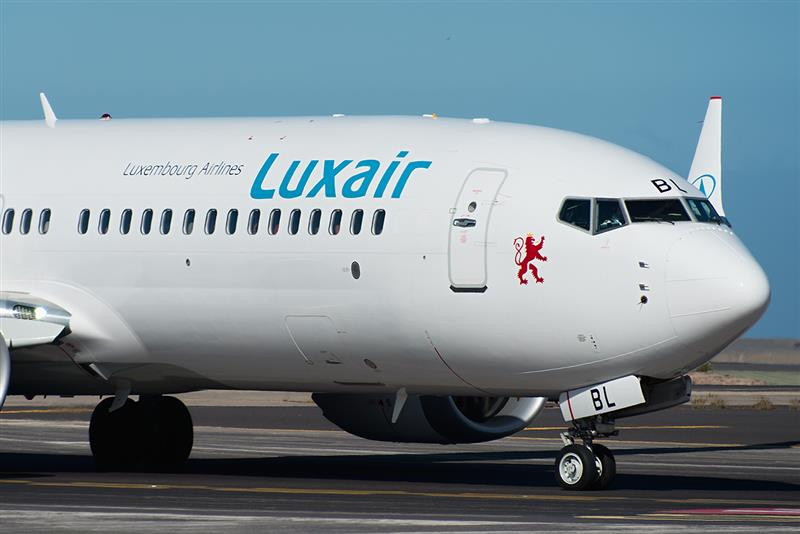
Specifically targeted for remedies by the European Commission in its decision to authorise, subject to conditions, the Lufthansa/ITA merger, Milan Linate (Lin) is not an airport like any other. Lin is ideally located, just a few kilometres from Milan city centre, with fast public transport connections. This makes it the Italian business capital’s main airport, attracting a premium passenger segment, i.e., travellers prepared to pay more for a fast, comfortable and central service. A customer profile that has not escaped Luxair's notice.
Also, Linate is a very attractive airport but one that is heavily congested: classified as level 3 by the International Air Transport Association (IATA), this means that demand far exceeds available capacity. Takeoff and landing slots there are therefore scarce, precious and difficult to obtain.
In order for the Lufthansa-ITA merger--announced for 2023 against the backdrop of the Italian airline’s decades-long deficit--to be accepted, the European Commission has demanded that slots at Linate be ceded to other competing airlines, in order to preserve competition on certain short- and long-haul routes.
On the short-haul side, Easyjet has been designated as the sole buyer of the remedies on ten key routes. To this end, the British airline has been allocated a total of 204 weekly slots during the summer and 192 weekly slots during the winter. Enough to enable Easyjet, according to the European Commission’s documents, to establish a base at Milan Linate, with five Airbus A320s stationed, in order to ensure a continuous offer and achieve sufficient critical size to compete with Lufthansa/ITA on the routes concerned.
Additional slots at Linate are also planned for IAG (British Airways) and Air France-KLM, but as part of the long-haul remedies, aimed at improving connectivity between Milan and Rome to North America. These are separate long-haul slots in addition to those allocated to Easyjet.
Three letters and three arguments
This point was hotly contested by Luxair, expressed in three letters sent to the European Commission between July and October 2024. In them, Luxair complained that the very nature of Linate, which it described as a “premium” airport, was incompatible with Easyjet’s low-cost model; the creation of a duopoly at Linate between Lufthansa/ITA and Easyjet; and its exclusion from the selection process for buyers, even though it was interested in the available slots.
Luxair believes that by allocating all the available slots to Easyjet (short-haul) and the giants IAG and Air France-KLM (long-haul), the European Commission has skewed competition, excluding smaller players like itself, which are struggling to access such critical hubs as Linate. According to Luxair, the lack of diversity among the beneficiaries undermines the promise of “lasting structural change” put forward by Brussels.
For its part, the European Commission argues that the aim is to ensure sufficient scale for new operators to be truly viable. It refutes the idea that Linate is reserved for premium passengers, whilst acknowledging that this clientele is over-represented there.
This article was originally published in French.