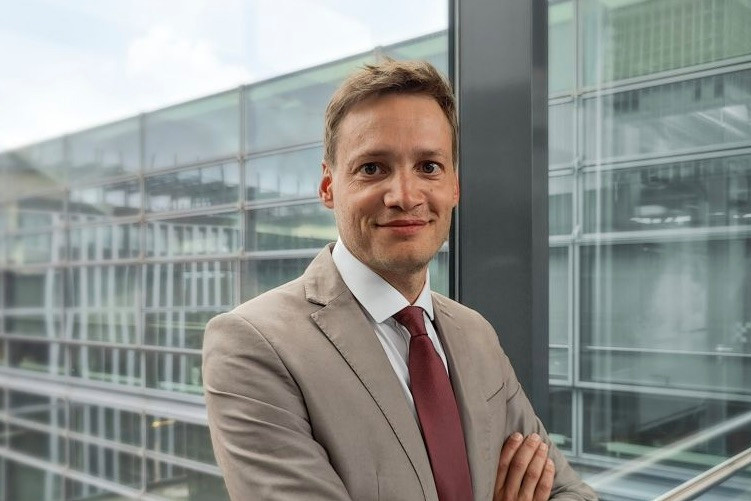

His successor, Tom Haas, will have the onerous task, from 1 November, of consolidating the position of a Statec that has become a key player in public decision-making. “Statec must be reactive, proactive and innovative to help citizens and decision-makers make informed choices,” he said at the time of his appointment.
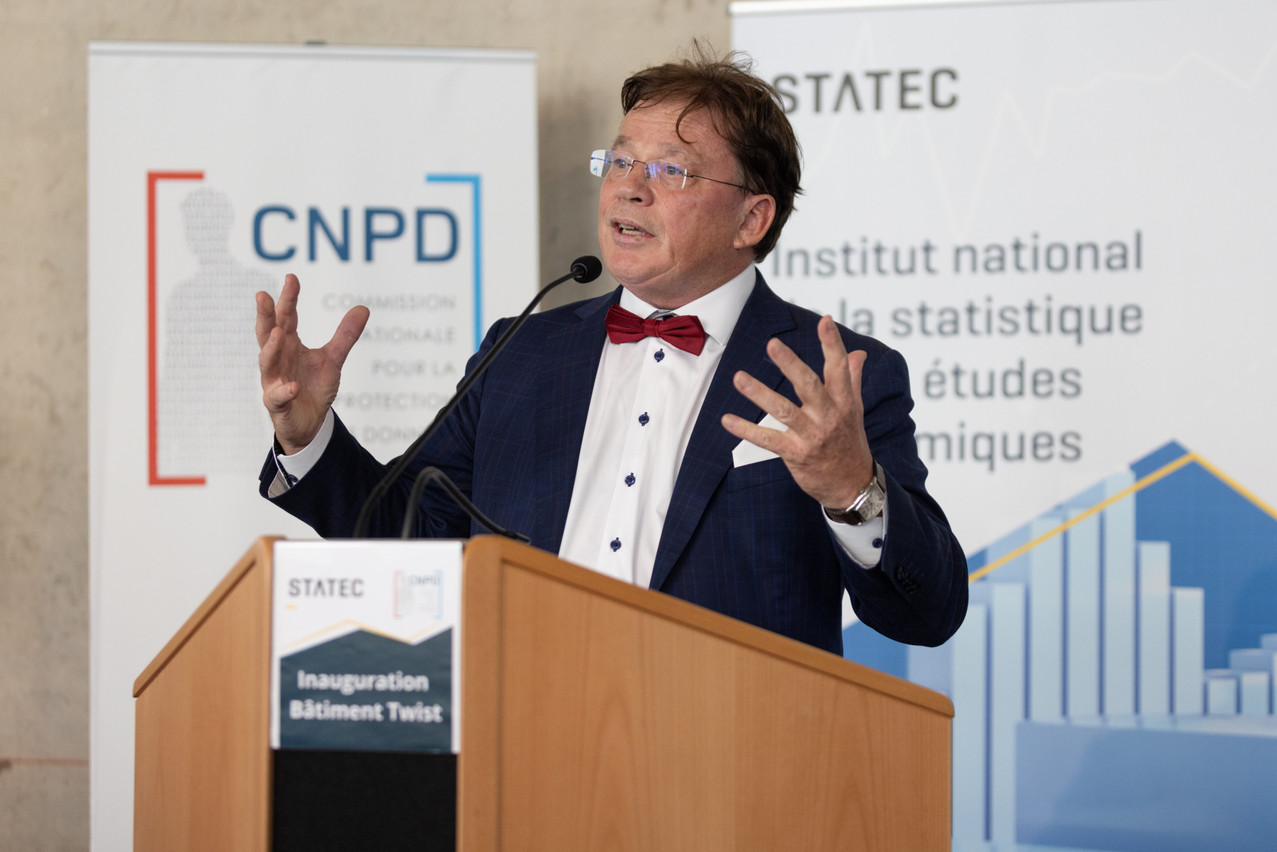
Throughout his career, Allegrezza has held a number of important positions, including president of the Conseil économique et social (CES) from 2009 to 2011, and director of the Observatoire de la compétitivité from 2005 to March 2024. He has been president of the National Productivity Council (CNP) and head of the Luxembourg delegation to the EU’s Economic Policy Committee (EPC) since 2004. He is also chairman of the board of Luxtrust and chairman of the board of Post Luxembourg. Allegrezza was also a member of the board of directors of SES from 2010 until April 2022.
After more than two decades at the head of Statec, you’re starting a new chapter in your life. What is your state of mind?
What has been your greatest satisfaction in these almost two decades at the helm of Statec?
My greatest satisfaction was getting the Statec Act passed in 2011. Even though I had all the political support I needed to bring this reform to a successful conclusion, we had to start over several times. It seemed to take forever. Many interest groups had to be convinced. But, unanimously--and I insist on this--the deputies approved a law that allowed Statec to be modernised. It’s a modern law that I’m quite proud of, a law that has given us access to government data and enabled us to develop.
Before, Statec was the Central Statistical Service. It’s a name reminiscent of the 1950s. Then, suddenly, we became the Institut national de la statistique. We gained our independence and were able to set up a genuine scientific approach which allowed us to attract very good people and to strengthen the level of our analyses and our projections. Thanks to this framework, we have also gradually been able to develop many activities and projects and explore fundamental areas such as the environment and social issues.
Over time, we have become a genuine decision-making institution, above political parties and at the service of all. We demonstrated our expertise during the last tripartite meetings. The social partners couldn’t have done what they did if we had not been behind them, calculating for each proposal what it could cost, what it could bring and for which category of the population it could be interesting. It was an interactive, real-time decision-making exercise. I really felt at that moment how useful we were. It was very satisfying. Yet no one has showered us with praise. No one throws us any flowers.
Is that a regret?
No. In fact, over the past 20 years, I can’t really remember a regret, a moment when I could say that we should have done things differently.
Do you think that Statec’s work is properly recognised in Luxembourg society?
I think so. For some years now we have been conducting surveys on confidence in statistics. And we get a positive score of 65%. That’s very high if we play the little game of international comparisons. We are close to the confidence levels of the police, the benchmark in this area. It’s a level we need to maintain. It’s important to preserve people’s confidence in public figures.
What about the other 35%, you might ask? That’s the challenge. What do we have to do, what do we have to tell them so that they understand that our statistics are useful and that they can make sense of them? We have to rise to this challenge.
In your opinions, you often take positions that don’t go down well with governments and politicians. Do you think that’s why nobody ever tells you that you do a good job?
We’re not consultants and we’re not interested in being seen to be doing the right thing. The fact that we say what we think we need to say when we need to say it, based on the numbers, has earned us a bittersweet reputation.
What you have to bear in mind is that we’re not rocket scientists. As an empiricist, I can’t tell you what tomorrow will bring. What I can do is look at what happened yesterday, what is happening now and, knowing the major trends and expectations, give the probabilities of what can happen at time T+1. We are not visionaries. That’s not our role.
At the dawn of this new chapter in your life, what can we wish you for the years ahead?
To keep an alert mind and the desire to continue working and serving.
This article was originally published in French.