Swiss company Pave Space has announced the closing of a $40m seed funding round, co-led by Visionaries Club and Creandum, with the participation of historical investor Atlantic Labs and Luxembourg fund Ilavska Vuillermoz Capital (IVC), which specialises in seed-stage defence technologies. This round of funding comes as the company prepares to carry out its first orbital mission later this year.
Founded in 2024, Pave is developing an autonomous orbital transfer vehicle designed to deliver payloads to any orbit in less than 24 hours. This capability aims to address what the industry identifies as the space sector’s main bottleneck: the repositioning of satellites after they have been placed in their initial orbit. Today, this transfer can take between six and twelve months via low-thrust electric propulsion systems.
Towards faster space logistics
Pave has its origins in the Gruyère Space Program, a student initiative launched in 2018 at the École Polytechnique Fédérale de Lausanne. The programme has led to the development of Colibri, a 2.5-metre reusable VTVL rocket. In October 2024, it made a free flight of 105 metres, becoming the first reusable rocket designed by students to fly, as well as the first reusable VTVL rocket to fly on the European continent. In total, more than 50 flights have been made with safe landings.
Our DefenceTech thesis is based on sovereignty over the entire value chain.

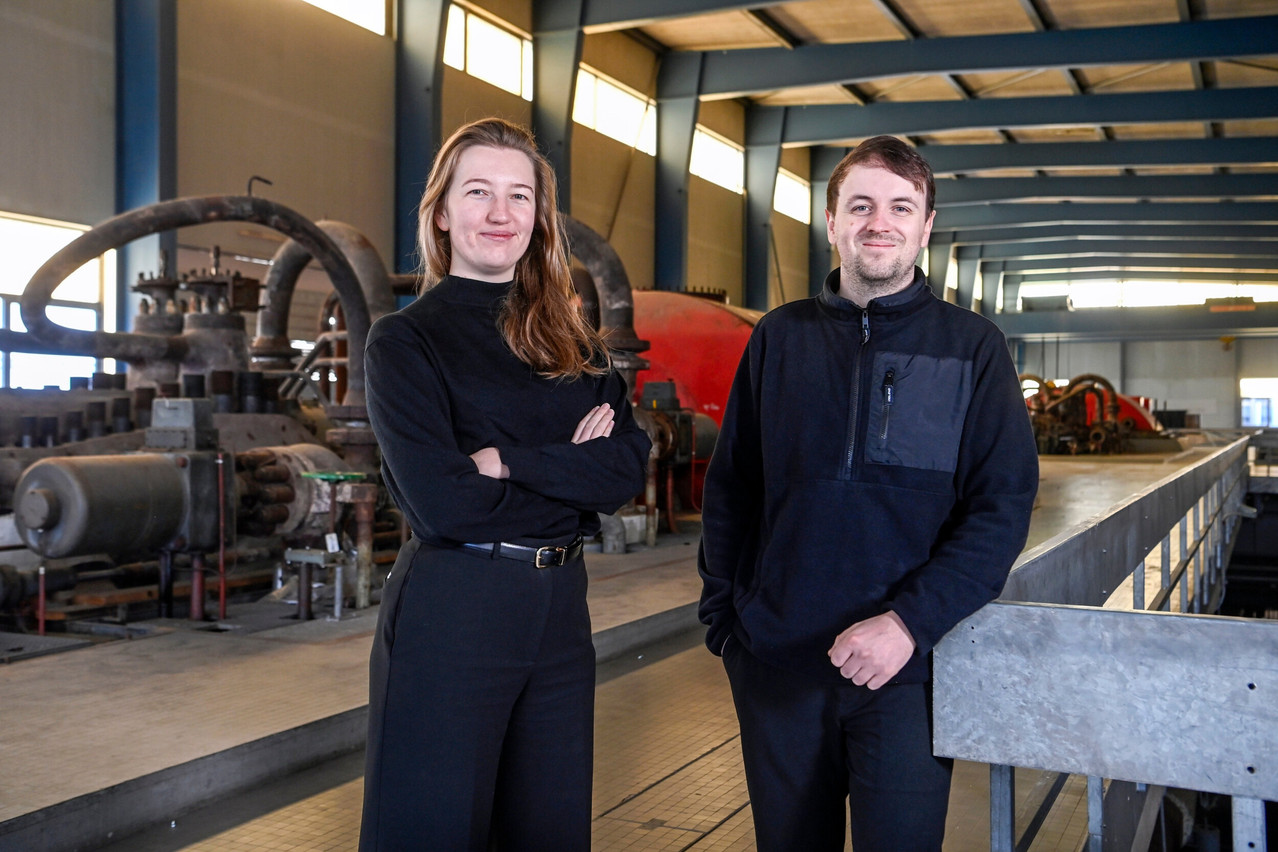
Co-founded by Julie Böhning, managing director, and Jérémy Marciacq, technical director, the company is capitalising on the technologies developed as part of the programme, particularly in the areas of guidance, navigation and control, propulsion and autonomous docking. Since its creation, it has strengthened its teams by attracting profiles from the European space ecosystem. Over and above the commercial stakes, the ability to move satellites rapidly and deploy payloads on demand has a growing strategic dimension. In particular, it makes it possible to reconstitute degraded constellations, deploy reactive space capabilities or carry out in-orbit inspection and maintenance operations. In this context, orbital mobility is emerging as a key element of European space sovereignty.
A strategic challenge for Europe
The entry of IVC is in line with this reading. The Luxembourg fund invests via a vehicle dedicated to defence technologies, supporting companies developing infrastructures critical to security and strategic autonomy in Europe and within Nato partner countries. Its scope covers a broad spectrum from cyber security to maritime surveillance and space capabilities.