1. Raising awareness among all staff
“Ferrero Luxembourg has set up a compulsory one-day training course for all its staff, at all levels, with prior e-learning,” says Priscilia Talbot, project manager at IMS Luxembourg. “The objectives of such training are to ensure understanding of diversity, equality and inclusion, to raise awareness of unconscious prejudice and how it can be mitigated in everyday life, to get familiar with local regulations on discrimination and harassment, or to understand how to report reprehensible behaviour... This example illustrates article 1 of the charter, which calls on organisations to raise awareness, train and involve all employees in the challenges of diversity as a source of enrichment, innovation, progress and social cohesion.”
2. A strategy dedicated to diversity and inclusion
“At IMS Luxembourg, despite our status as an association and our small team of 23 employees, it was important for us to implement our own diversity and inclusion strategy. We wanted to co-create this strategy with our teams, to identify our needs and the main themes to be addressed, and to ensure that we had the right figures, so that we could then assess the impact of our actions. It’s quite a long process. In fact, the creation of the diversity and inclusion action plan is the first practice recommended to our signatories. They have access to a comprehensive e-learning module to help them define their diversity policy and implement practices and action plans that consciously incorporate the management of people’s individual differences.”
3. Rethinking management methods
“Article 3 of the charter invites organisations to apply the principles of equal opportunities and the promotion of diversity both in the company’s decision-making and management processes and in the management of its human resources. With this in mind, Sodexo has introduced a procedure for changing working conditions: any employee can ask to change his or her working conditions, i.e., change working hours, change activity or change site. This procedure is available to everyone, and no justification is required. It can be a double stress, having to talk about it and also having to explain.”
4. Communicating concrete results
“With the charter, we encourage companies to communicate the commitments they have made and the concrete results of the actions they have taken. This is all the more important as the issues of diversity and inclusion are subjects that attract young talent in search of meaning. At Delhaize Luxembourg, for example, with the aim of communicating in an inclusive way, the company has multiplied the channels to reach all staff. For checkout staff, who don’t have a professional email address to receive a newsletter, posters are put up in break rooms and the most important information is shared during team briefings.”
While diversity is a fact of life in Luxembourg businesses and society in general, inclusion remains a choic e .

5. Regular assessment
“When organisations have put measures in place, they then need to be evaluated, asking what can still be improved, based on an analysis of the available data, in relation to the objective set. With this in mind, we have launched Handi-Diag, a tool for examining key processes through the prism of the inclusion of people with disabilities. Despite the progress that has been made, non-adapted working environments and processes still put people with disabilities at a disadvantage. Thanks to the tool, organisations can realise that they are already taking action, sometimes without realising it, and what opportunities there are for improvement. Handi-Diag is accessible to all employers.”
6. Promoting diversity externally
“Article 6 of the charter encourages all partners to work towards non-discrimination and the promotion of diversity. Any company, whatever its size, and even an independent person, can demonstrate its commitment every day in its dealings with partners, suppliers or customers. In each of its actions, it is possible to question the origin of such material, the practices already in place and the subjects to be improved together to build a more inclusive society, in all areas.”
A national charter
The Lëtzebuerg Diversity Charter is a national commitment text available for signature by any organisation wishing to commit to taking action to promote and manage diversity through concrete actions, over and above the legal obligations in force.
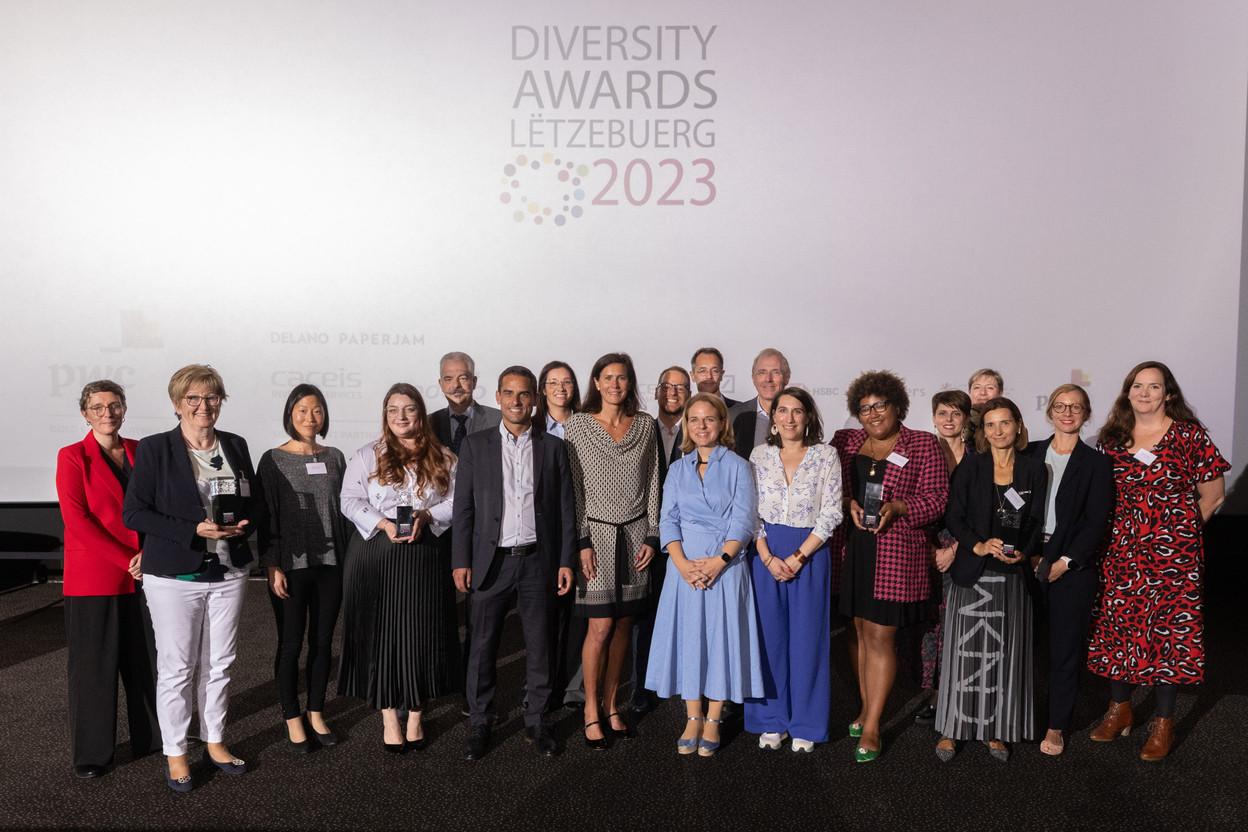
The charter is supported by seven private and public partners (the ministry for gender equality and diversity, Caceis Investor Services Bank, Deutsche Bank, HSBC Luxembourg, Linklaters, PWC, Sodexo) as well as IMS-- Inspiring More Sustainability--Luxembourg, the project sponsor. Structured around 6 articles, it guides organisations in implementing practices that promote social cohesion and equity through dedicated projects and flagship events (Diversity Day, Diversity Awards, conferences, networks, etc.), by involving all its partners and employees.
The Lëtzebuerg Diversity Charter now has more than 330 signatories, representing around 22% of the total payroll in Luxembourg.
This article was first published in French on Paperjam. It has been translated and edited for Delano.
This article was written for the magazine edition of Paperjam of July 2024, published on 19 June. The content of the magazine is produced exclusively for the magazine. It is published on the website as a contribution to the complete Paperjam archive. Click here to subscribe to the magazine.
Is your company a member of the Paperjam+Delano Business Club? You can request a subscription in your name. Let us know via club@paperjam.lu