They don’t speak French or German, let alone Luxembourgish. They often gabble phrases or expressions picked up on their long, uncertain journeys to escape poverty, war or the vagaries of the climate. Faced with a very tight labour market, Luxembourg companies could kill two birds with one stone: find employees and enable dropouts and refugees to break away from situations of extreme vulnerability.
The ministry of family affairs, solidarity, living together and reception of refugees was one of the first two ministries to contact the new Policy Lab at the Luxembourg Institute of Socio-Economic Research (Liser), the day after it was inaugurated on 12 March by the recipient of the 2019 Nobel Prize in economics, the Indian-American Abhijit Banerjee.
“The aim is to make these people more employable, even for low-skilled jobs. It’s not about technical innovation, but about giving them the means to enter the world of work, with basic skills, language, and the right tools to help them express themselves and find their way around,” explains Frédéric Docquier, who’s been deputy director of Liser since last autumn and is the first director of the Policy Lab. “For example, to work in a supermarket or drive a lorry, some very vulnerable refugees don’t even have the basic skills to express themselves. So the idea is to provide them with a functional vocabulary--not a full course of French, but enough so that they can make themselves understood in their professional environment. These are low-skilled jobs, with modest salaries, but it’s a first step towards integration.”
Another example--the first, in fact--according to the Belgian economist and economics professor specialising in economic growth and migration, is the need expressed by the education ministry, especially from the angle of adult education. “It’s a question of finding a methodology to help those who dropped out of the school system at a very early age to get back into the labour market. We don’t want to offer them standardised training, but rather something targeted that takes into account their level of literacy and education at the time they dropped out--and, above all, that corresponds to the real demand in the job market. Here we are completely in touch with businesses: we identify labour shortages in certain sectors using Adem data and try to adjust the training on offer accordingly.”
Companies secretly courted
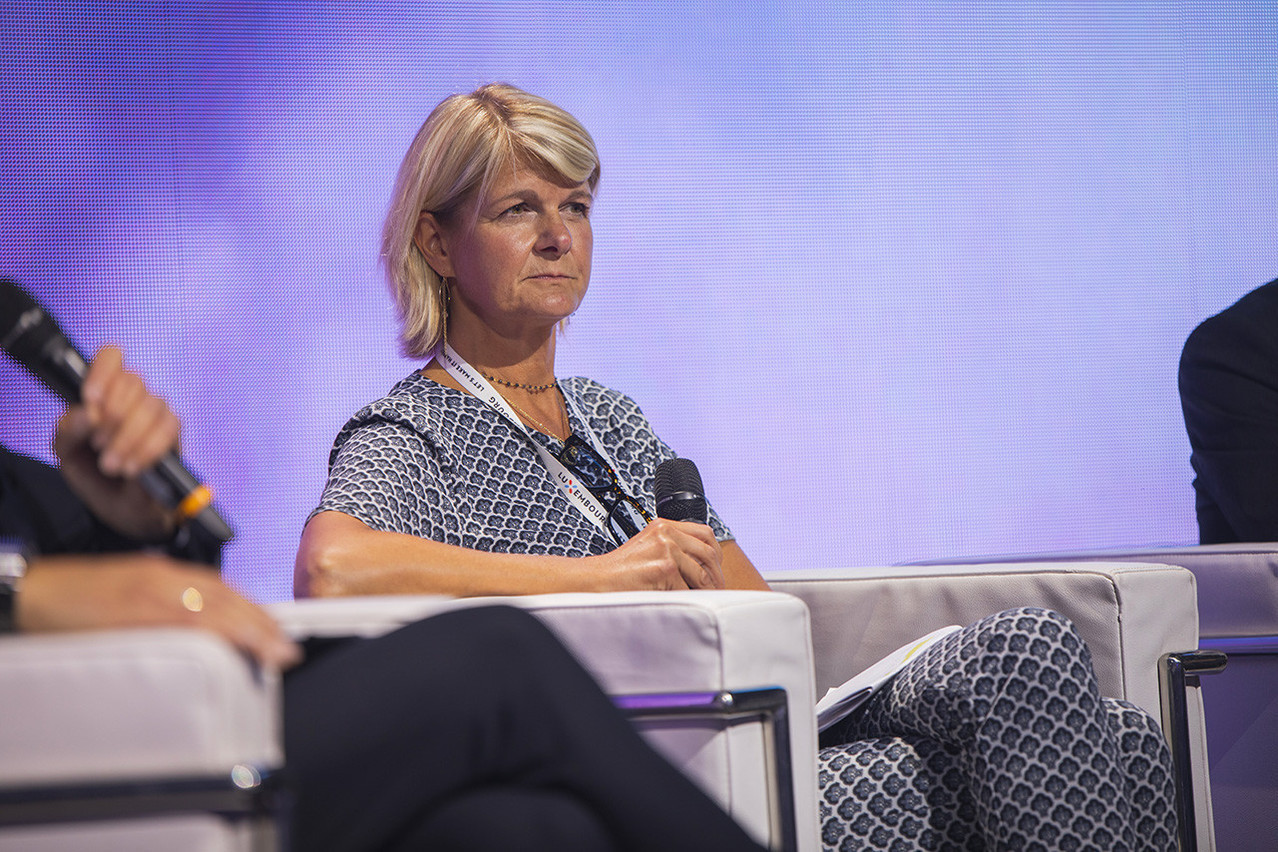
Sitting next to the research centre's CEO Aline Muller, the researcher adds, “the state is not our only ‘client’. We work with all levels of public authority, but also with NGOs such as Médecins du Monde and the Red Cross. We also work with certain companies. Even though it’s not our main sector, we hope it will become more widespread.”
Companies also seek out the expertise of Liser researchers.
“Sometimes they take part in experiments or ask us to take part in European projects. In Luxembourg, we have a large number of consultancy companies and we often say that certain issues are a matter for the private sector, not for public research. But there are also synergies to be built. More and more, we are seeing the emergence of partnerships where we combine our expertise with that of the private sector to respond to European calls for tenders or concrete societal challenges,” says Docquier.
“Impact remains the central measure of our work,” insists Liser CEO Muller. “Policy Lab has two main missions: to produce rigorous scientific research and to inform public policy. The more public policy is based on science, the more our objective will be achieved. We don’t just count our results in terms of the number of studies, but also in terms of awareness. We want every public decision-maker to know that they can rely on us and to be aware of the tools available.”
Politics alone responsible
In the example of school dropouts, she explains, “if a measurable intervention can get 20% of these young people back into the labour market, that’s a measurable impact. But our objective is not just quantitative. It’s about creating more effective policies and better targeting needs.”
“In Luxembourg, compromises linked to the formation of coalitions mean that certain issues are given priority and others are sidelined. We researchers continue to work rigorously, even though we know that our proposals do not always fit into the political agenda. We don’t make the decisions. We help to inform them. But there is a complementary area: that of competitively funded projects. Here, we work on issues that we consider essential, even if they are not priorities at the moment, and sometimes this research then feeds into the political agenda,” Muller explains. “We can also play a role in raising awareness. There was a time when the notion of budgetary efficiency was not at the heart of political concerns in Luxembourg. As a result, a number of schemes were designed for their popularity, not for their actual effectiveness. For example, we tried to help everyone, without targeting. Today, we can provide evidence on what works, what is coherent and what is relevant. But the final decision still rests with policymakers.”
Creating a space where data and results are shared is already, in itself, a game changer!

“Here’s a good example: during the covid crisis, we had a model that we turned into a simulator, with different economic recovery scenarios. We were able to show what would happen if we relaunched such and such a sector, in such and such a testing context. Our model predicted a second wave--like the epidemiologists. But the political leaders, well aware of the risk, decided to relaunch anyway, to protect people’s psychological well-being too. And that’s a legitimate choice, illustrating the complementary nature of research and politics,” explains the director of Policy Lab.
“And even if our subjects are not on the agenda, our work often lasts longer than governments. Ministers come and go, priorities change, but the problems remain. Pensions, for example. Or the integration of refugees. Or attracting talent. These major issues cut across all terms of office. The models we use are simplified representations of reality. They simulate human behaviour based on equations. For example, with climate change, we cannot base our predictions on the past. The effects are going to accelerate. What we do is try to represent reactions to shocks--a loss of productivity, a climatic catastrophe--and simulate the consequences. And these are essential tools for public decision-making.”
Facing social and economic divides
The Policy Lab has an even more strategic scope. “First, Luxembourg and other European countries are facing urgent problems, such as tensions on the housing market, the pressure of an ageing population on public finances, the difficulties of economic integration of immigrants and refugees from culturally distant countries, the strengthening of social cohesion, the need to diversify the economy beyond finance, as well as global trends such as the digital and ecological transitions, the economic erosion of the middle class, the pressures of deglobalisation and geopolitical instability. Successive crises and globalisation have also fuelled public scepticism about democratic institutions and the rise of various forms of populism in many countries. We believe that improving the efficiency, transparency and cost-effectiveness of policies is likely to address some of these challenges and can help restore confidence in democracies,” its director recently explained to Research Luxembourg.
“Second, recent advances in impact assessment--new data collection methods, analysis techniques and implementation protocols--allow for more sophisticated and accurate policy evaluations. So it’s the perfect time for the Policy Lab.”
Even more so because there is technical momentum. “Liser is one of the most important users of administrative data. Exploiting and working on it contributes not only to its improvement, but also to data interconnections and efforts to harmonise the underlying concepts. It’s quite simple: we need to make sure we’re talking about the same things. With the new version of the national data strategy and the transposition of the Data Governance Act into Luxembourg law, we are seeing some promising progress. There is a political will to move towards a more integrated data system. This is essential, both for researchers and for citizens,” says Muller. “Today, there is an enormous amount of open data. When it comes to skills, for example, we now process millions of job offers every month throughout the Greater Region. Just yesterday, this was too cumbersome and complex to analyse. Today, thanks to technical progress, it’s feasible. We’re walking on two legs: administrative data on one side, open and massive data on the other.”
We need policies based on efficiency, not popularity.

“It’s slow going. But it’s making progress!” continues Docquier. “Since 2016, I’ve really been able to see the light at the end of the tunnel. We now want to interconnect social security data between bordering countries--which seems obvious, and yet it’s still impossible to do. If you look at the labour force in Luxembourg, you have ‘holes’: people leave the Luxembourg labour market or come back, but in between, you don’t necessarily know what happened to them. And we are not the only European country facing the problem of cross-border zones. To really understand the dynamics of the labour market and mobility, Europe needs to make progress. And we are much more interested in collecting real data than in creating synthetic data as part of our research. But that sometimes happens.”
“When Nobel Prize winner Abhijit Banerjee came to visit us two years ago--he won the Nobel Prize for his rigorous methods of quantifying the impact of public policies,” recalls Muller, “we realised, whilst working with him, that we needed to better articulate and pool all the work we provide. We were operating on a matrix basis, with cross-disciplinary expertise between programmes and departments, but we hadn’t yet pooled our entire toolbox to inform public policy recommendations and evaluations. On the authorities’ side, there was no real sharing of knowledge about what research produces. What was needed was a common platform for exchanging information about these studies, their methods and their implications. Abhijit Banerjee underlined this at the launch event: the simple fact of looking at the facts together, in a shared infrastructure, can already profoundly change the way a country approaches its public policies.”
Tinkering in the Greater Region
As a small, open economy, what happens in neighbouring countries directly influences the Luxembourg labour market. “Liser is one of the biggest users of administrative data. So, because we use it and work on it, we also contribute to improving them. Even if the road is long, it is moving forward, and we are also participating in efforts to interconnect data and harmonise the underlying concepts,” explains Muller.
“Because in order to harmonise, we need to be talking about the same thing--and very often we find that in different registers, the same concept is not defined in the same way. With the national data strategy, and its forthcoming version 2, we’re getting closer to achieving this. There is also a bill in the pipeline to transpose the Data Governance Act into Luxembourg law, which represents a real opportunity to open up the field of possibilities around the secondary exploitation of administrative data and the ‘only once’ principle.” A huge universe of data has opened up. Today, for example, we process millions of job offers every month in the Greater Region--Belgium, Germany, France, Luxembourg--which gives us continuous information.
“If, for example, we want to anticipate the pensions that the country will have to pay to cross-border workers, then we need to know their career paths before they arrive in Luxembourg. But we don’t always have this data. We recently studied French cross-border commuters to understand why some choose to settle here or commute. We had to merge data from the French ‘labour force’ survey with data from the IGSS in Luxembourg. This kind of ‘bricolage’ is also what makes the work exciting: when the data doesn’t exist, you have to be creative,” laughs the director of Policy Lab.
We now want to interconnect social security data between bordering countries--which seems obvious, and yet it’s still impossible to do.

Liser model wins over the UN
“We are recognised internationally--our methodology is used by the United Nations--but we are still struggling to exist in the collective imagination of people in Luxembourg. Our subjects are complex and don’t generate striking visual content. We don’t have any spectacular labs to show on RTL…” The Policy Lab director’s moment of frustration doesn’t last long, and instead, he explains how Liser is gradually replacing the methodology hitherto used by the UN to model the consequences of global warming on population migration.
“There is a recurring fear: that of a massive influx of climate migrants to the countries of the north. But in reality, the poorer we make already poor countries, the less migration there is. Because even if the reasons for leaving are strong, the means to do so are often lacking. The result is forced immobility,” he explains. These models completely ignored social, economic and cultural inertia. The poorest people can’t move around like pawns. A novel but pragmatic view, Luxembourg-style.
This article was written in French for the Research & Innovation supplement to the June 2025 issue of Paperjam magazine, published on 21 May. The content is produced exclusively for the magazine. It is published on the site to contribute to the full Paperjam archive. Click this link to subscribe to the magazine.
Is your company a member of Paperjam Club? You can request a subscription in your name. Let us know via club@paperjam.lu