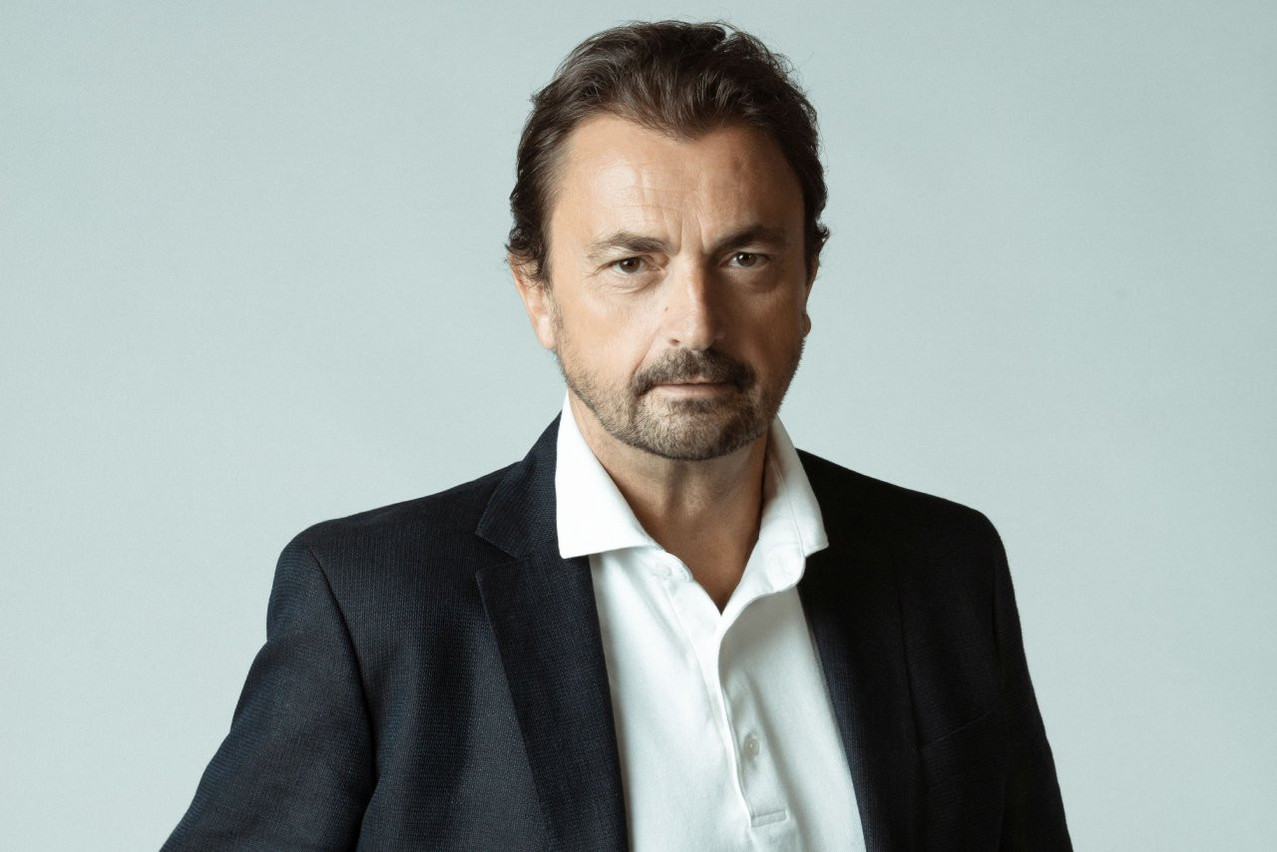
After parking his car to go to his offices in the rue de la Loge, a passer-by slipped him a kind word earlier on the pavement. Henri Leconte savours these ordinary moments when we remember that he was one of the great figures of world tennis in the 1980s–1990s and rival to Yannick Noah for the number one spot in the hearts of the French.
Five years after his pal Noah won the French Open, Leconte would unfortunately get his feet and words tangled in the carpet in 1988, missing his match and then his post-defeat speech. “Well, it was against Wilander, the world number one, after all…”. Lovesickness, back operations, repeated absences, free-falling rankings. The former world number 5 then faced a long tunnel of difficulties. Before “rising from the ashes”.
Davis Cup 1991. Final against the USA, with Agassi and Sampras facing off. Transcendent by the stakes, carried by a public in fusion with his breathtaking level of play, “Riton” became the key man in a feat awaited in France since the 1930s. “Zorro” to some, “The Masked Avenger” to others. A few months earlier, he couldn’t even walk unaided. Resilience before its time, instructions for use. His back problems have cost him “three years of his career”, according to his calculations.
Henri Leconte, now 62, moved to Luxembourg around ten years ago. Here, with his partner Maya, he runs a company called HL&Co, which “does a lot of work on motivation, resilience, surpassing oneself and managing emotions”. The subject is close to his heart: “We talk a lot about the mind, but the mind isn’t what it’s all about. The mind is really about managing your emotions. If I look at the French Open final, I wasn’t able to manage my emotions. In the 1991 final, on the other hand, I managed to transform that. That’s important, because we’re talking about an individual sport that becomes a team sport. And it’s exactly the same for a CEO, whether in Luxembourg, France, England, Germany, wherever we operate,” compares the one who is also an advisor at CBTW, before finding other parallels in his career memories.
I usually start by asking for the first job memory, the first contact with the pro world. What about you? What was your first prize-money in a tournament?
Henri Leconte. —“If I’m not being silly, I was 16. A tournament just outside Paris. It was unreal for me. Being a minor, it was my parents who had to collect the money. We all benefited from it, that’s the good thing.
At 16, you were already aware that tennis would be your livelihood?
“No. In life, I’ve never said to myself: ‘I absolutely need money, I have to find some dough to get by.’ It’s never been that. Tennis is still a game. The fact that I consider myself a player first and foremost, I think that’s what has saved me in every situation. When I was 16 or 17, however, I was aware that I sometimes won more than my father. I knew that. But that money was reused for travel, to take my parents with me, to go to different tournaments. It was all very tightly controlled. My parents were passionate about tennis, not about making money. Quite the contrary.
How did this passion come about?
“The family. My two sisters. Mum was a tennis teacher. In my tummy, I could already hear the balls. In the bassinet, I could see balls flying over the net. I was really born for it.
However, did the champion you were feel like quitting everything in his career?
“Of course. It’s only human. And it allows you to bounce back and go in another direction. In the life of a top-level athlete, you can’t follow a linear path, always the same people. You evolve, you search, you lose, you doubt. After that, it’s your passion and your desire that take you a little further. And then there are the encounters. That’s what I explained in my book ‘Balles neuves’ (published by Marabout, 2023). Encounters… Sometimes they’re good, sometimes they’re bad, but they all help you evolve. Life isn’t a long quiet river, it’s a daily battle. There are times when everything is going smoothly, you don’t even know how, you’re in the right spiral, the right dynamic. And then all of a sudden, a grain of sand, an injury, feelings that go way beyond what you can imagine… and it turns you upside down.
Speaking of encounters, who is the person who has had the most impact for you?
“If I hadn’t met Ion Țiriac, I don’t know if I would have had the same career. He’s my spiritual father. He’s the one who understood how I worked. How I should work. I needed freedom. And he knew that. He’d already had Ilie Năstase, Guillermo Vilas. He had Leconte behind him. He had Boris Becker, who wasn’t easy either. He had Goran Ivanišević, he had Marat Safin. He loved that kind of character. Characters he was able to control, but who also had to be allowed to live.
High-level sportsmen and women are often compared to company directors. You have to make decisions, you have to be well surrounded.

Which early mistake would you rather never have made?
“You should never blame yourself. Every moment of your life serves a purpose. Positive or negative. It’s up to you to analyse it. Of course there are decisions and choices that, at some point, may not have been the right ones. Maybe we could have done things differently. That’s clear. With today’s technology, we could have changed my physical preparation, my back, my three herniated discs, that’s for sure. On the other hand, it’s enabled me to have the career I’ve had. To be reborn. To be the phoenix. But it’s always easy to analyse from the outside and say: ‘He should have done this, he should have done that.’ You have to live it. It’s not easy.
The lessons of a top-level career also apply to everyday life?
“Of course. I do a lot of work in companies. We often compare top-level sportsmen and women to company directors. You have to make decisions, you have to be well surrounded. When you have a problem, you need a shoulder to lean on, someone to confide in, someone to say: ‘Don’t worry, we’re going to help you.’ If I hadn’t had Patrick Chamagne in 1991 [Leconte had another back operation, but was able to rely on the support of this physical trainer, editor’s note]… But man, I’m not even sure I’d be here today. I could have died. I could have fallen into a total depression. It’s the meetings that do it. In the business world, it’s the same. Exactly the same.
In difficult times, what do you do to keep it as short as possible?
“I accept and welcome what happens to me. I’ve done a lot of work with Maya, my partner, who has understood how I function. She’s given me a good idea of what I need to work on myself. Not to be stuck with negative mantras in my head. Our brain works like a computer. When the memory is full, you empty the recycle bin. And all of a sudden, we get our power back. It’s the same for us. We’re light years away from our human potential. I left school at 14. I felt uneducated. Maya used to say to me: ‘You were 5th in the world. Look around you at how many people have been 5th in the world in their field.’ Then: ‘Be proud of yourself. And now, work.’ Today, I am working.
One door closes, another opens, as my girlfriend says. You still have to choose the door.

Which professional achievement are you most proud of?
“Sharing. Resilience. Being able to make people happy. And transmission. Speaking in front of 100 or 120 people, on your own, wasn’t easy at first. After that, passing on and giving all that back takes time. In France, they put a label on you, they put you in a box. I’d never ask Leconte for advice. That’s the way it is. Then you evolve. You do things abroad. You meet certain people. Things start to happen. For 15 years I was president of the Levallois club, a not-for-profit municipal club. Voluntary work. I learned an enormous amount about running an institution. Today, I’m vice-president of the Arquebusiers here [in Belair]. We have 1,300 members, I’m in charge of the sports committee, I give my ideas. We put things in place. And I’m proud of that. Because I know the system, but I also bring out the best in everyone around me. Sharing…
Beyond that, what are the main principles, the great values that serve as your compass?
“Respect. Humility. Listening. How many times do you ask a question and the other person starts answering before it’s even finished?
If you could give one piece of advice to your 20 or 22 year old “you”, what would you say?
“’Henri, stop listening to other people. Stop trying to please everyone. Stop trying to be liked by everyone. A lot of this comes from my upbringing, my past, my parents. Why did I meet a woman ten years older than me [Brigitte, his first wife, with whom he had a much-publicised relationship in the 1980s, editor’s note]? Because I left my mother to have another mother. It wasn’t the best thing I’ve ever done, but it helped me turn a corner. I wanted to be loved. Today, I’d say to myself: ‘Go for it even more. Work harder. Have fun. Go and look for some things that maybe you didn’t go looking for.’
And whoever you were in the beginning, what would they think of who you are today?
“He’d be proud of himself. I remember little Henri, who was sacked from the French Tennis Federation by Jean-Paul Loth [former national technical director in France, editor’s note], walking around with his buddy, his bag and two rackets. Then there’s this big moustachioed guy [Ion Tirias] who comes up to him and asks him to come and train with Guillermo Vilas. And that changed my life. One door closes, another opens, as my girlfriend says. You just have to choose the door.
The past has been extraordinary for me. It has allowed me to be who I am today.
If you could capture a moment to relive, which would you choose?
“1991. The Davis Cup. I’d like to relive the three days, it’s a synergy of friends. Now I’m going to join Yannick [Noah, who was team captain in 1991, editor’s note], I’m off to Cameroon for four days [the interview took place on 17 February, editor’s note]. Yannick invited me to join him. We needed it. We don’t spend enough time together, we each have our own lives. But we’re united. I spoke to Guy [Forget, the other member of the team] ten days ago on video. He was skiing. ‘I miss you, buddy, we need to see each other.’ That’s something you can’t take away from us.
If your career were a book, film or song, what would the title be?
“‘Non, rien de rien, non, je ne regrette rien’, from Edith Piaf. Because that’s really what it is. You can’t live in the past. The past has been extraordinary for me. It has enabled me to be what I am today. Yes, I still have trials to face. But I’ve already had a magnificent first life. Fifth in the world, Davis Cup winner. Give me the French Open, of course, it would have changed my life. But maybe I wouldn’t have won the Davis Cup afterwards. I’m a team player. A man of sharing. I’m not an individualist. I like being with people. There’s nothing worse than being alone with your past and saying: ‘Do you remember when I used to win?’ There are even some who still walk around with their old newspaper articles!”
To read or re-read all the episodes of the #Trajectory series, go here.