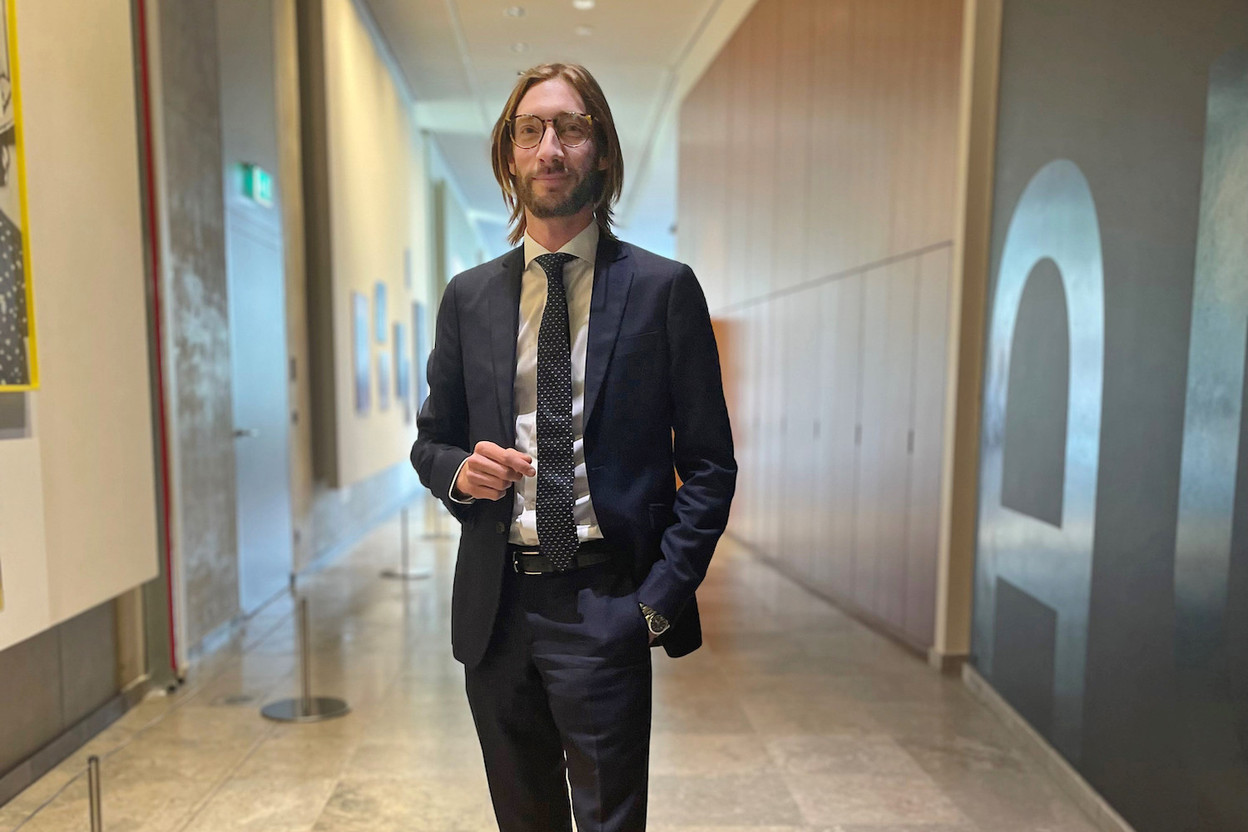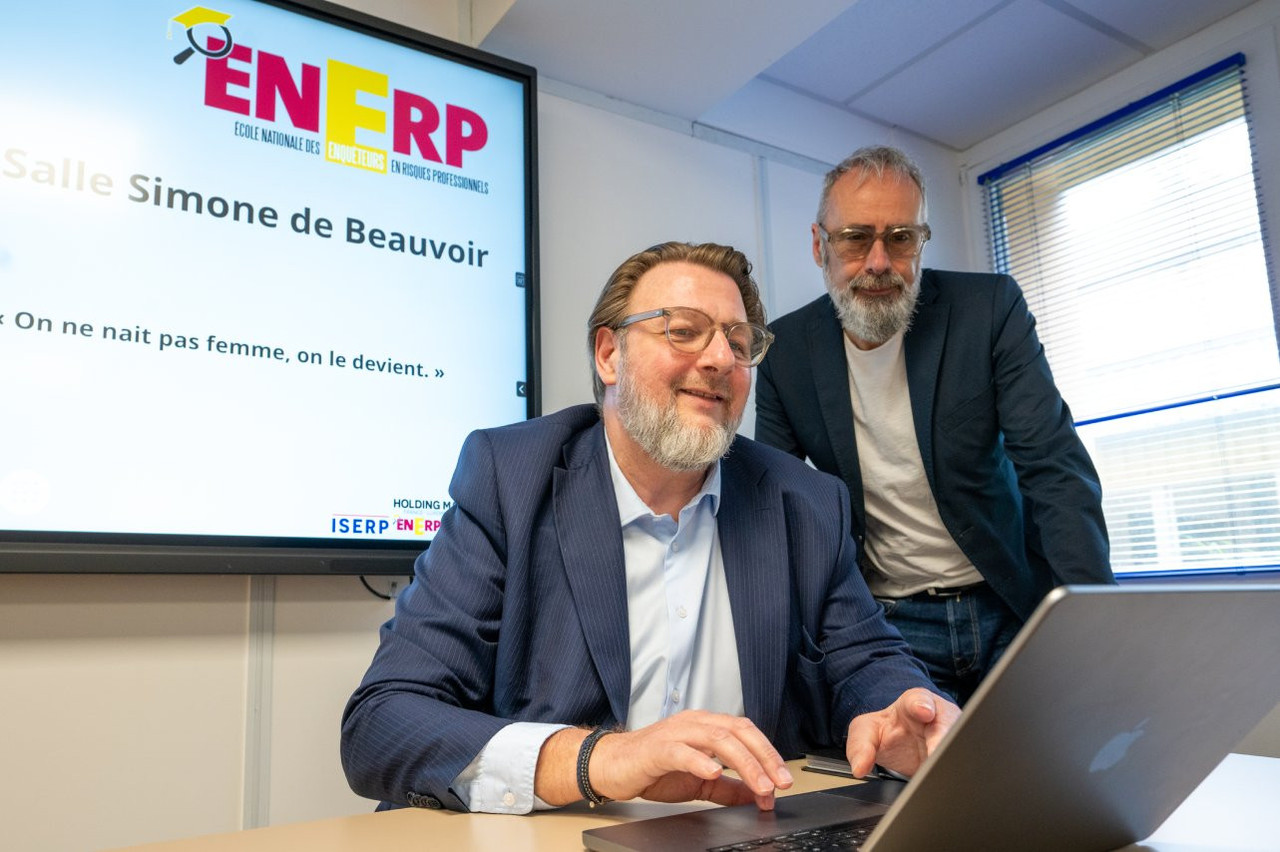
The "Harassment and toxic behaviour investigator" course, whose French version has been offered in Metz since June, is now available in Luxembourg. It is being launched on 13 February 2025 at the Chamber of Skilled Trades and Crafts, headquarters of the European Institute for the Development of Industrial Relations (IEDRS). The first trainees in the country will start the programme in a few days' time.
After serving as a judge in a “chambre sociale”--a French court of appeal in labour law cases--in Metz and accumulating over 20 years' experience in the field of mediation, Christian Bos, CEO of the Maât group and head of the IEDRS, now intends to move up a gear in occupational risk management.
Pierre Théobald: What's so special about the training provided by the IEDRS?

Gendarmes, police officers, judges, psychologists... I’ve gathered experts around me.

How was the training programme developed?
I brought together a group of experts and asked them: 'What tools do you need? And what could you, as a professional, pass on to future investigators?
Harassment is not a new issue, so why didn't we have a similar course before?
Knowing how to investigate, how to investigate, what to say... That already existed, but it was in the form of very short training courses that could be 'sellable' for [taking just one] day. But a complete course, no, that didn't exist anywhere in Europe when I started doing my research. I could only find one example, in Canada. The investment to achieve this was significant. It's hours and hours of work.
Who can become an investigator?
Anyone who is motivated by the idea of seeking truth and justice, who is open to others and able to work on situations of toxic behaviour from a technical point of view--companies, how they operate, etc--from a legal point of view and, above all, from an emotional point of view. By 'emotional aspect', I mean what this person experiences and feels in order to be able to look for factual elements. It's about someone who stands firm, with ethics and a code of conduct.
Who are your target audiences?
There are three positions. Either the trainee wants to become an investigator and make a career out of it. Or they already work for a company and will be trained so that they can then work for that same company. Or the trainee is a student who wants to add an extra skill to his or her academic curriculum.
How does the training break down?
It lasts five months, with 203 hours--140 hours of attendance, 63 hours of personal work--for a fixed cost of €9,500. It's a lot of work and requires a lot of commitment. Seven sessions are open until the end of the year, including four in Luxembourg. Each time, we can accommodate ten to twelve trainees.
In the eyes of the law, employers are not equipped to analyse an alert without having carrying out an investigation.

When should an in-house investigation be launched?
When the alleged victim is in a position to do so, he or she must inform a colleague, a trade union or a designated worker of his or her discomfort and of what he or she interprets as a situation of harassment. As soon as there is a suspicion, the employer is obliged to set up an investigation. In the eyes of the law, the employer is not equipped to analyse an alert without having carried out an investigation.
What criteria are used to judge the reliability of an investigation?
One of the most important elements is the investigation report. I attach a great deal of importance to this. This report must provide the judge, who is by definition outside the company, with an insight. The investigator has to provide all the facts on the ground to enable the court to be certain and firmly convinced that there is a situation. To do this, all the factual elements must be recorded, i.e., times, dates, witnesses, etc. The second important point is the corroborating element.
Who trains IEDRS investigators?
We have three aspects: technical, legal and emotional. Each trainer works within the scope of his or her expertise. A synergologist's job is to give everyone the tools they need to analyse non-verbal behaviour in front of an interviewer. A former police officer will talk about how a [legal] procedure works, how a hearing is conducted and what posture to adopt. A Franco-Luxembourg psychologist works on the victim's aspect. Former cabinet minister Dan Kersch (LSAP) deciphers Luxembourg's institutions. A doctor of law discusses the concept of the legal expert, how to present a report to the courts and how to argue the case in court. I've also been approached by a Luxembourg occupational physician. A whole network of skills has been put in place. Everyone brings their own special skills to the table. For Luxembourg, I would also like the [labour inspectorate] ITM to explain how it works.
How have you been received in Luxembourg?
When I invited the minister of labour, 


Do you feel like a vigilante in your approach?
It's probably excessive, but I love the image, because I can see that things are moving. We are in the process of training people who will put an end to toxic behaviour. I hope that the Luxembourg government will give these trained investigators powers.
Read the original French-language version of this interview here / lire en français