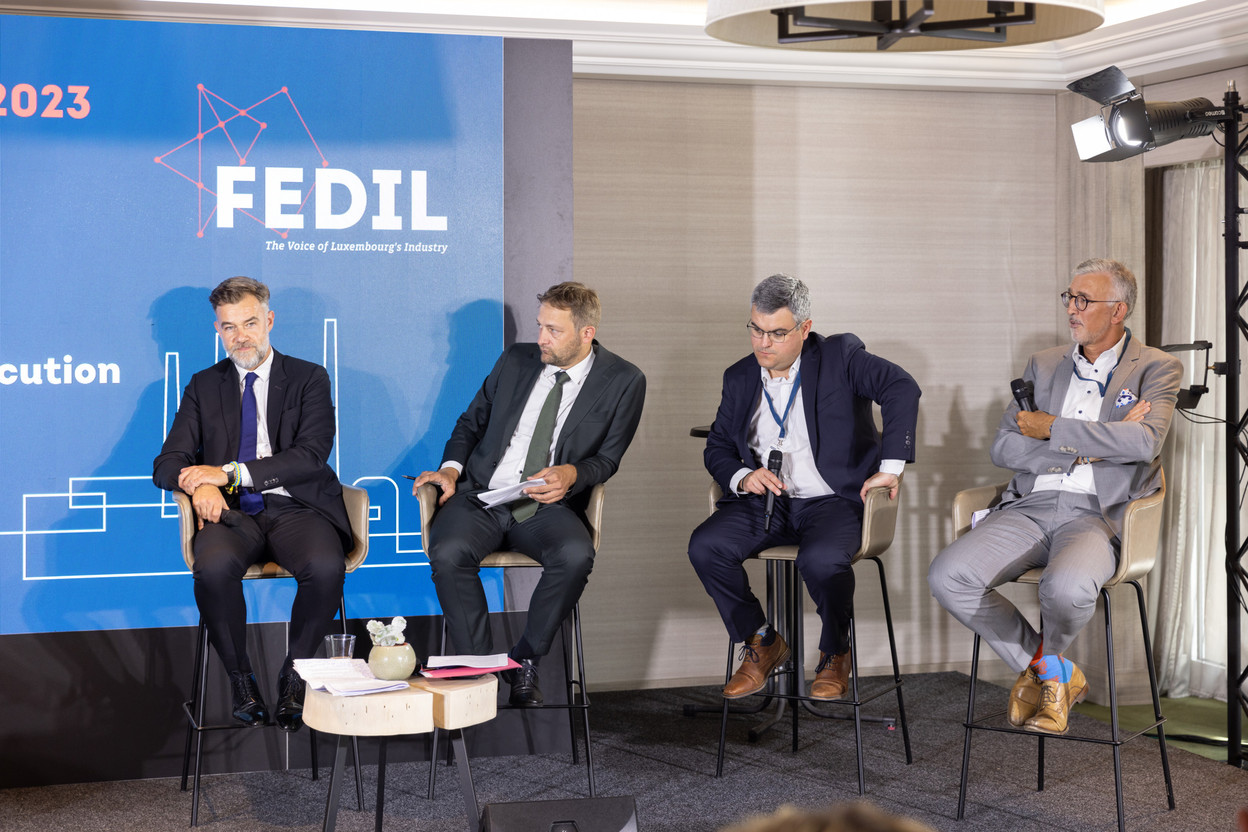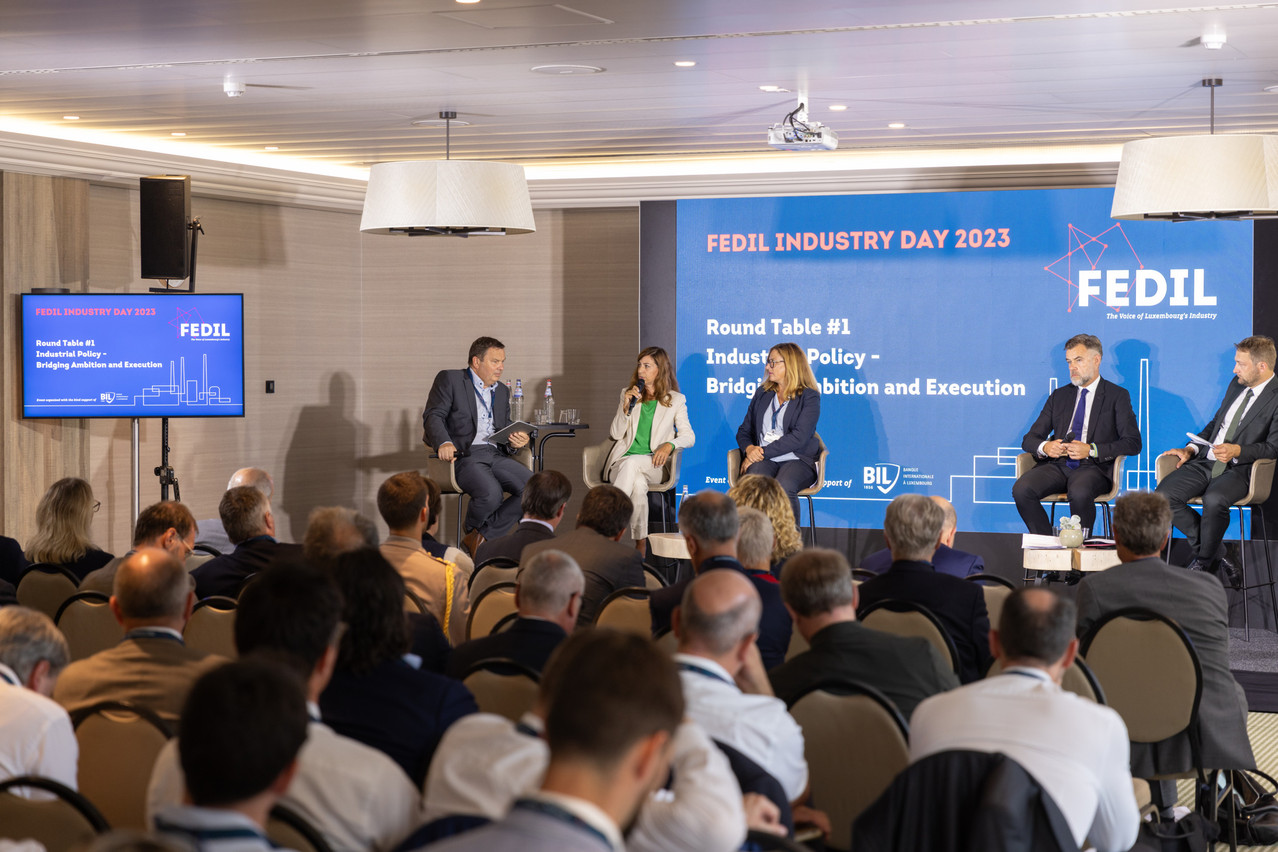
For the second time, Fedil is organising its Industry Day, dedicated to the world of industry, with debates led by industry experts. This year’s event will take place on 11 September, starting at 2pm at the Atelier in Hollerich.
The origins of Fedil Industry Day date back to March 2021. At the time, the event was part of the EU Industry Days, an initiative launched by the European Commission to create a platform to “discuss industrial challenges and jointly develop opportunities and policy responses in an inclusive dialogue with a wide range of partners.” The initiative was taken up in its own name by Fedil in 2023.
The industrial association has kept the objectives while changing the format. Instead of a two-day meeting combining conferences and various discussion panels, the event is now held over half a day alternating debates and exchanges of ideas between representatives of the political world, industry and the associative sector. The whole thing ends with a barbecue.
In focus: decarbonisation and supply chains
After the Mercure Luxembourg Kikuoka Golf in Canach in 2023, this year’s event will take place at the Atelier on Rue de Hollerich in Luxembourg City. “A district that has a strong industrial footprint and is undergoing a complete transformation. Quite a symbol,” explains Laurence Kayl, Fedil’s communications manager.
“The aim is to encourage discussion between industry, politics, associations and other stakeholders--last year, it was the university--on current issues. Last year, we made the choice to address global topics for two reasons. It was the first edition of the event that we organised and we were a few weeks away from the legislative elections,” she adds.
This year, Fedil has chosen two timely themes: decarbonisation and supply chains.
“Decarbonisation is a crucial topic for all companies, not just those that make intensive use of energy. Last year, we discussed climate objectives. This year, we want to focus on the costs and adaptations needed by companies, particularly in their production processes. Not forgetting the infrastructure that will need to be adapted. Companies are concerned, but public authorities will need to be involved at both national and European levels.” The issue of supply chains is also key. Between climate change, persistent--if not worsening--geopolitical tensions and covid, professionals must rethink their ways of working.
A first roundtable will focus on the theme “A carbon-free industry, a strong argument for public spending,” moderated by the global leader of climate and sustainability strategy consulting at Deloitte Deutschland, Bernhard Lorentz. Founder of the Deloitte Center for Sustainable Progress (DCSP), he has dedicated his career to two major challenges: the decarbonisation of industries and the improvement of the quality of public service. He has also founded several leading European think tanks, including the Hertie School of Governance, the Mercator Institute for China Studies (MERICS), Agora Energiewende, the Mercator Research Institute on Global Commons and Climate Change (MCC) and the Climate Neutrality Foundation.
For Lorentz, the energy transition can only be a multi-stakeholder process that includes business and government, but also all market players. Representatives from various industries committed to sustainability will also participate in this roundtable, including the CEO of German cement producer Dyckerhoff, Patrick Klein, the head of climate change at ArcelorMittal, Stéphane Tondo, and the CEO of Creos, 
Read also
A second roundtable will focus on “critical supply chains,” which include the acquisition of raw materials, production, processing, transportation, storage and distribution to the end consumer. It will be moderated by CapitalAtWork analyst from the Foyer group, Arnaud Lanoe, who spoke on a similar topic in April at a Cluster for Logistics conference.
DG Grow’s director of investments, Merete Clausen, will also be speaking. She represents the department of the European Commission that is responsible for policies that concern the single market and industry, among others. This department plays a central role in the management of critical supply chains within the EU, in terms of identifying these supply chains, developing policies and strategies, and supporting businesses and innovation. The vice president of Fedil, 

Read also
For Ferrero, for example, the supply of hazelnuts is a critical component of the production of several of its flagship products. A large proportion of these hazelnuts come from Turkey, the world’s leading producer. But to reduce risks, particularly those related to dependency, Ferrero has adopted several strategies by diversifying its sources of supply and has also launched a Hazelnut Charter. The specialist in sensors for the automotive industry IEE is also dependent on a critical supply chain for its innovative products. Not for hazelnuts, but for electronic components. An area sensitive to market fluctuations and the geopolitical context.
Crown Prince Guillaume and economy minister 
Access to the conference is via a reservation request. The number of places is limited.
This article was originally published in French.