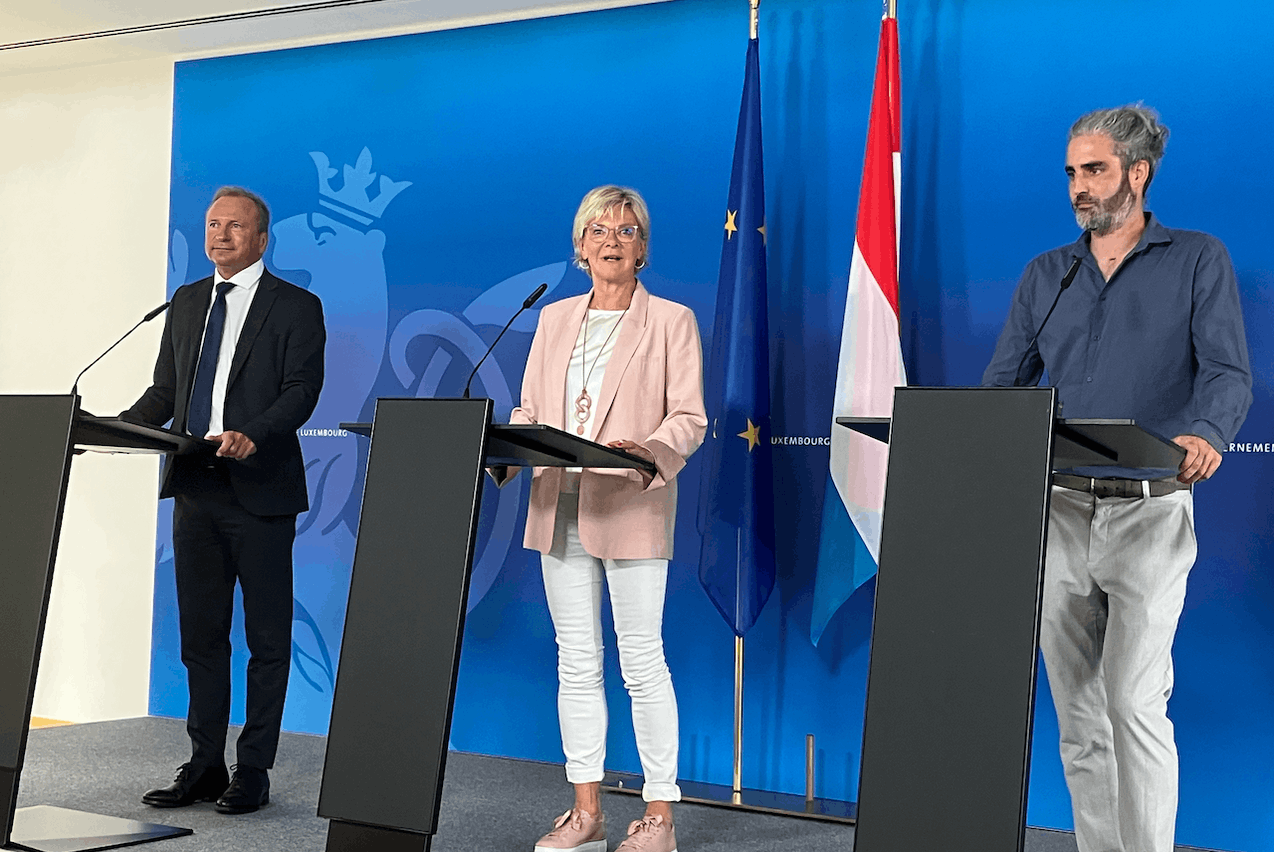
A year ago, the minister for agriculture, food and viticulture, 
The Wäibaudësch focuses more specifically on special crops and winegrowing. At this second event, discussions focused on the economic uncertainties that weigh on the viability of farms, as well as the legal obstacles to their transfer--all major concerns for the new generation of winegrowers.
Favouring the takeover of farms
According to a survey of 172 farms carried out by the Wine Institute (Institut viti-vinicole, or IVV), 61% of farm managers aged over 50 have not yet identified a successor. This is a worrying situation, says the agriculture minister, who emphasised the strategic importance of the sector and announced the development of an action plan to encourage the takeover and creation of wine businesses.
Named Rebflächenbörse & Brachflächenmanagement (Vineyard Exchange and Brownfield Management), this plan aims to bring abandoned vineyards back into cultivation. The plan includes facilitating the exchange of plots of land and increasing aid for the conversion and restructuring of farms, in order to support the revival of the wine industry. The government is also considering introducing a conversion premium, including for converting abandoned plots into fruit orchards--a measure that could feature in the next agrarian law.
Aside from the economic issues, the abandonment of certain plots also represents a health threat for neighbouring vineyards. “Poorly maintained vines encourage the spread of parasites and diseases,” warns Jeff Konsbrück, vice-president of the Association of Private Winegrowers. According to the ministry, around 25 hectares of vines are now in a state of disrepair, representing 2% of the total vineyard area, estimated at 1,247 hectares (based on Statec figures).
The main reasons for this are the ageing of growers and the low profitability of certain grape varieties, such as Elbling, a historic variety with a taste deemed rustic. To support growers, a two-year health premium to combat vine diseases will be included in the action plan. In addition, the government will look into the possibility of forcing the grubbing-up of vines left to decay.
Finally, a reform of the Wine Solidarity Fund will be launched in collaboration with stakeholders, to provide the sector with a modernised management tool that complies with European requirements.
Taste the terroir!
The minister also wants to encourage the promotion and tasting of locally produced wines. In Luxembourg, the annual consumption of wine is 40 litres per inhabitant, of which only nine litres come from a Luxembourg winery.
In 2023, national production amounted to 81,200 hectolitres, including 19,800 hectolitres of Rivaner, the most widespread grape variety in the country. This historically dominant grape variety, however, is now losing ground. Overall, national wine production has been declining since 2021, when 99,700 hectolitres were produced.
One of the avenues being explored to revive and diversify the industry is the development of alcohol-free or low-alcohol wines. This growing segment represents an interesting development relay, but is currently coming up against two major obstacles.
The first is operational: no de-alcoholisation facility currently exists in Luxembourg. Operators have to call on service providers based in Germany, which represents a logistical and financial obstacle. Hansen has promised to look into ways of enabling such facilities to be set up in Luxembourg to support this market development.
The second obstacle is tax. Low-alcohol wines are currently taxed in the same way as “alcopops”--sugary, ready-to-drink drinks with an alcohol content of between 3% and 7%. These are heavily taxed for public health reasons, as they are seen as a gateway to alcohol for young people. This punitive tax regime, while intentional, is currently holding back the development of light alternatives in the wine sector.
Finance minister 
This article was originally published in French.