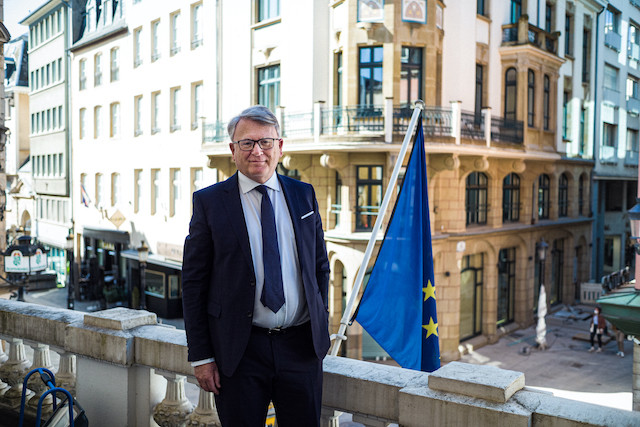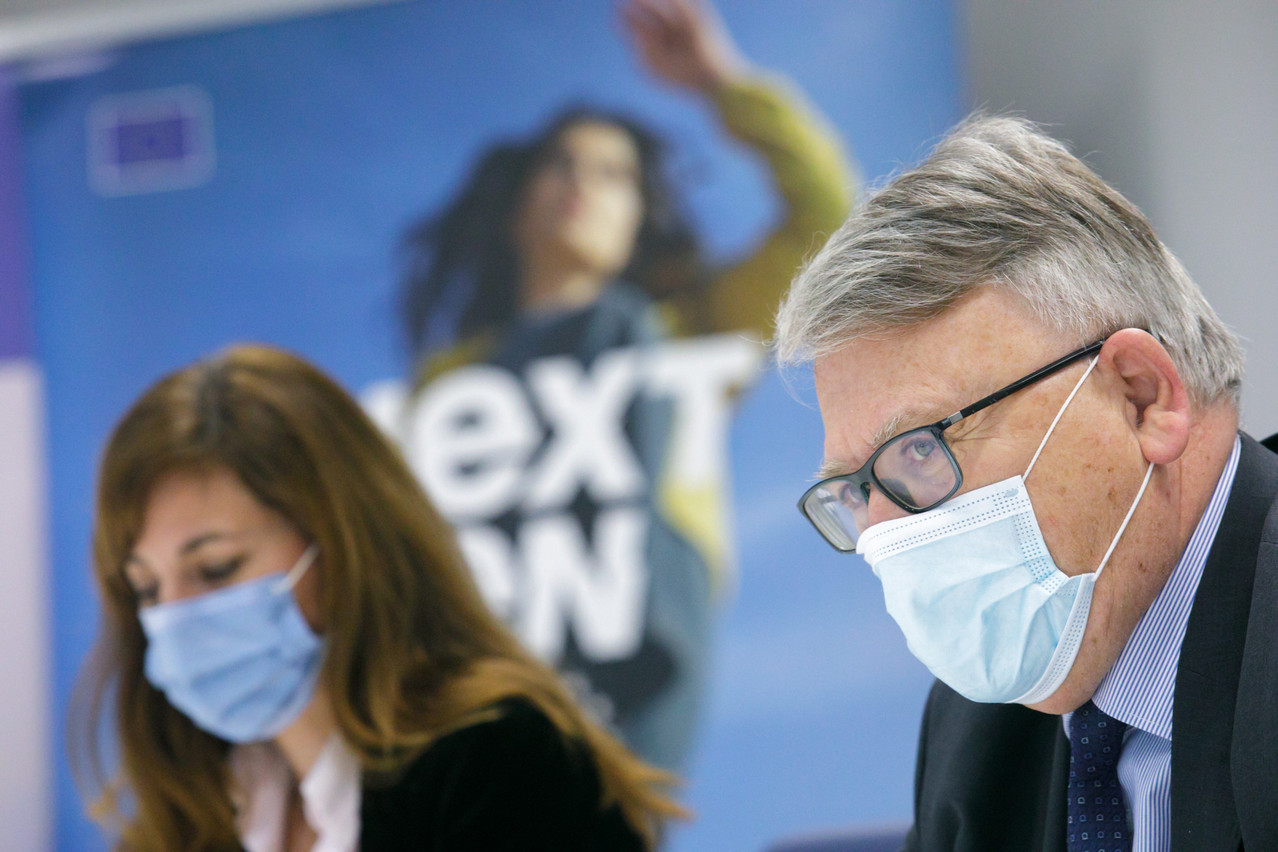
Luxembourg’s EU commissioner Nicolas Schmit and the commission’s representative in the grand duchy, Anne Calteux, on Friday presented the EU executive’s priorities for 2022.
The commission every year adopts a work programme, which sets out priorities for the year ahead, coordinating with the European Parliament to ensure that projects can move through the institutions at speed.
“Europe as a whole mastered the crisis caused by the pandemic exceptionally well,” said Schmit during a press conference. Economies have recovered, unemployment has gone down. “Solutions were made in solidarity,” he said about the recovery and resilience package and the EU’s 7-year budget. “We’re talking about €1.8trn.”
In its work programme, the commission will focus on six headline ambitions:
- the European Green Deal,
- a Europe fit for the digital age
- an economy that works for the people
- a stronger Europe in the world
- promoting our European way of life
- a new push for European democracy
These priorities reflect areas set out by commission president Ursula von der Leyen in her state of the nation speech in September 2021 and the programme for her mandate, which is reaching half-term.
As jobs and social rights commissioner, Schmit will continue pushing for a directive on a convergence of minimum wages in the EU. “The parliament and the council have found an agreement, each on their side.” It’s now up to finding a compromise between the commission, parliament and council he added.
“It’s a change in paradigm,” the commissioner said, adding that in the aftermath of the financial crisis wages shrank but countries are now looking for fairer salaries. A Eurobarometer survey published on 25 January showed that social inequality within the EU ranked highly among citizens’ concerns.
The directive proposals also include plans to regulate 70% of jobs through collective work agreements and support social dialogue with unions.
“Social dimension is central”
The commissioner is also working to protect gig economy workers to ensure that they are guaranteed labour rights in the EU. “It seems that a majority of member states fundamentally agree with the approach chosen by the commission,” Schmit said, adding that the parliament is also in agreement. The gig economy--also known as platform workers--“cannot happen outside social rules.”
This package ties in with the commission’s digitalisation agenda, where it wants to ensure that laws and rights applicable in the analog world also apply in the digital realm. Re-skilling and upskilling of workers will be another priority, which ties in with the Green Deal agenda.
“The social dimension is central,” Schmit said. If people--their jobs and income--aren’t protected, it will be more difficult for them to accept the green transition, he said.
Overall, the Von der Leyen agenda aims to give the EU a more social face, with other projects including work to end child poverty, as 18m children in the bloc are at risk of poverty. “Scandalous,” Schmit said of this number, saying that wealthy countries like Luxembourg must also do more. “Also in rich countries there is child poverty.”
And while the commission doesn’t have authority over healthcare--a member state competence--Schmit wants to see more action to improve working conditions of care workers but also standards of care provided. “We will see an increase in demand,” he said of Europe’s ageing population, adding that the pandemic had shown the need for facilities that work well.
French support
A total of 42 new policy initiative are planned, said Calteux, including 26 projects for regulatory simplification. A new plan for 2022 is a one-in, one-out approach, meaning that every policy initiative that adds administrative burdens, regulation elsewhere will be reviewed to reduce red tape for citizens and businesses.
At the same time as the new work programme comes into action, France has taken over the EU presidency. With this “great ally of Europe” taking the helm of the Council of the European Union for the next six months, Calteux expects several dossiers to be revitalised, including migration.
A new pact on asylum and migration was already tabled in 2020 but progressive EU presidencies--including Germany and Portugal which had both ranked it highly on their agenda--failed to make significant progress.
Global challenges need a “European answer”, said Calteux.