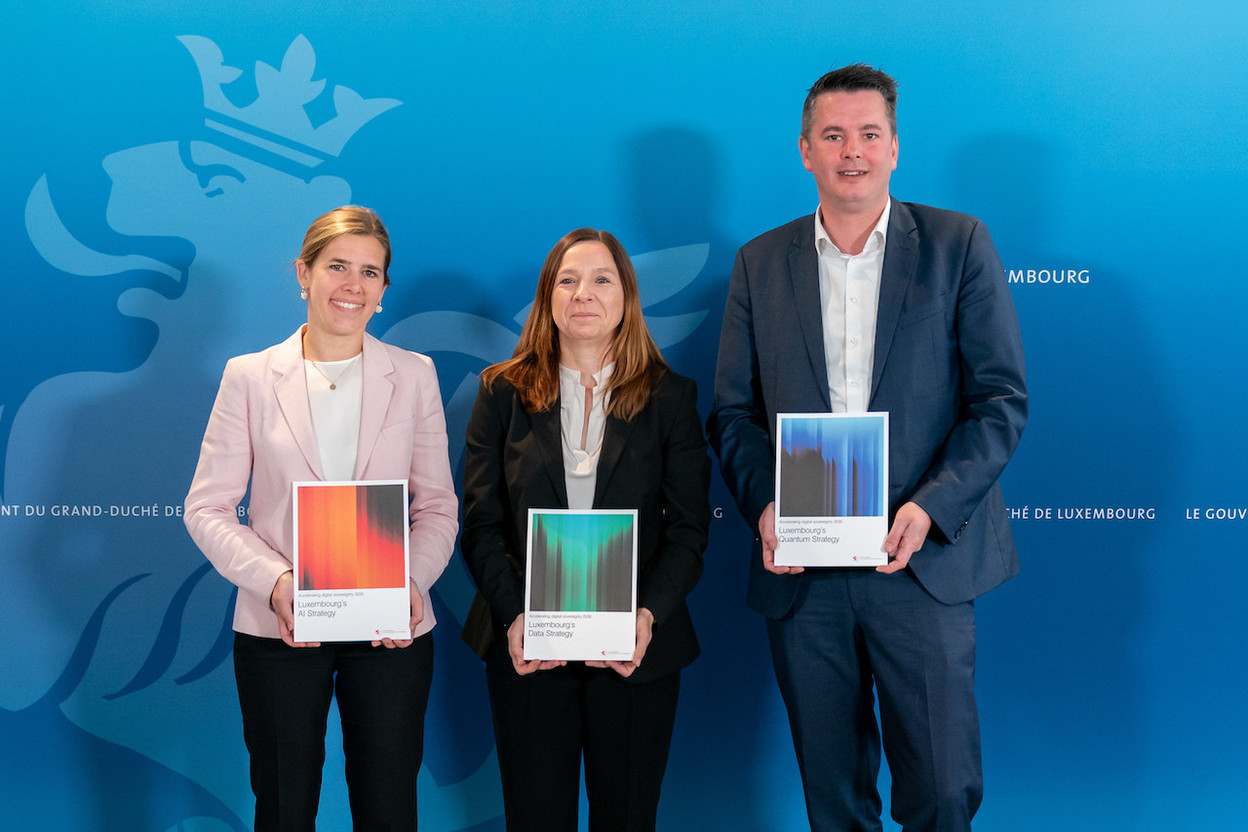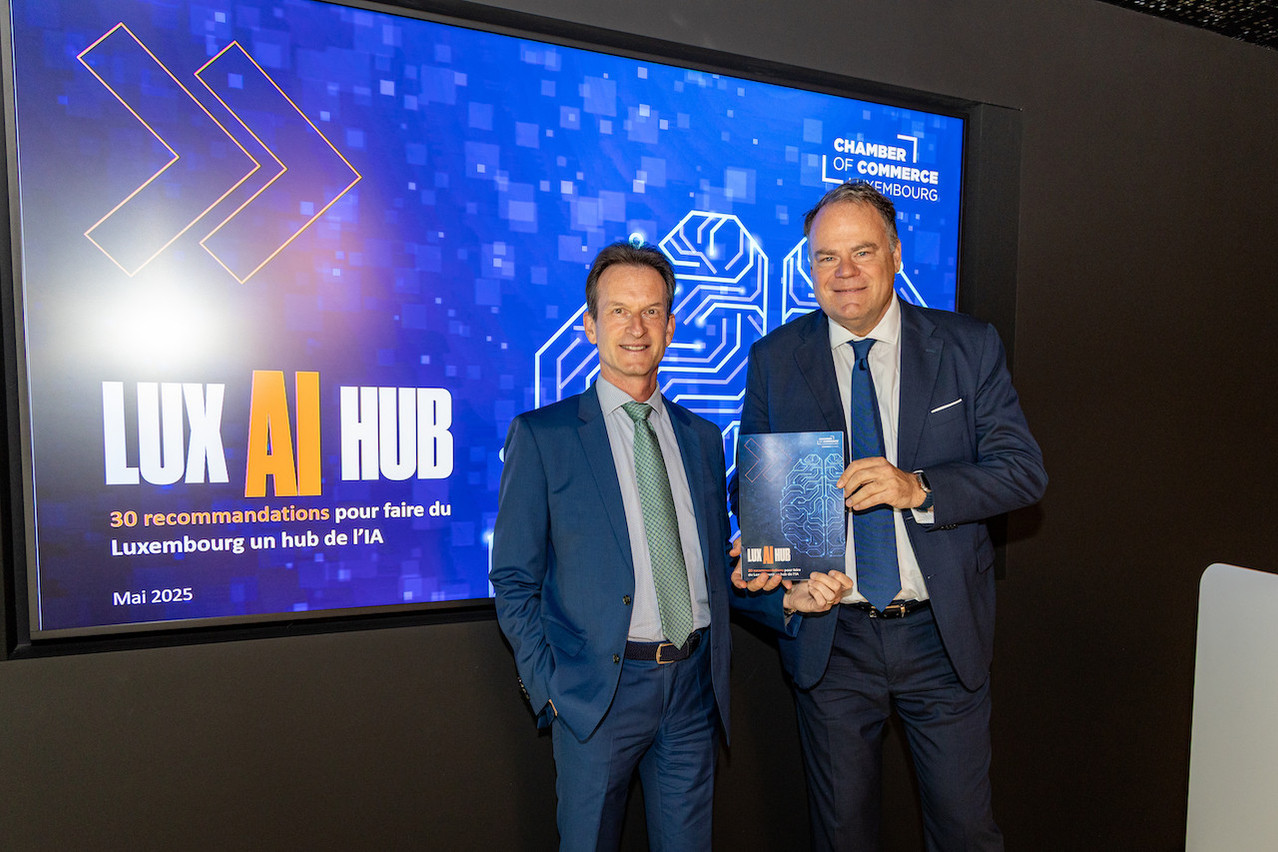
The timing is such that the recommendations made by the Chamber of Commerce’s AI group could have been overshadowed by the announcements made on 19 May by the three ministers in charge of Luxembourg’s digital strategy, 


A lack of coordination was also highlighted by the president of the Chamber of Commerce, 
A platform to federate energies
Hoffmann advocates the establishment of an artificial intelligence platform to connect the various players. “There are a lot of initiatives and projects on the ground, people who are committed and doing remarkable work,” he explains. “We are therefore calling for a better channelling of energies based on strong leadership and on a platform that brings together the players in order to structure a coherent approach in the service of the Luxembourg economy. Today, the dispersal of initiatives and the lack of coordination between the various players involved are hampering collective effectiveness and the clarity of the actions undertaken. He stresses that this is not just another committee, but an agile structure whose composition will be modified according to needs, a structure that must be placed under the patronage of the prime minister. “And given the resources it needs to be effective. What are the platform’s missions? To be a regular forum for discussion on AI, to ensure the coordination of national approaches on the subject and to monitor, implement and evaluate the national strategy.”
“Ideally,” he adds, “this platform should be set up by the end of September 2025.”
Integrating AI into nation branding
First and foremost, the Chamber of Commerce wants AI to be used on a large scale “to ensure a boost in productivity.” In all economic sectors, but as a priority in the financial sector. “The adoption of AI in the financial sector is central. AI tools lend themselves particularly well to handling tasks with a strong administrative connotation, such as in the middle and back office. The difficulty in this sector is that many decision-making centres are located outside our borders. We need to convince the groups that are based in Luxembourg through their subsidiaries to host their AI projects in Luxembourg. We need to create a favourable environment that provides the right incentives.” Alongside the financial sector, the Chamber of Commerce sees the deployment of AI in government as indispensable.
The Chamber of Commerce then wants stronger and diversified funding to support the development of AI, rapid implementation of the AI Act “so as to promote innovation,” better capitalising on existing infrastructures, strengthening access to public data, and promoting integrated research based on collaboration and ambitious communication around the Luxembourg AI ecosystem to strengthen its international recognition. “We need to integrate AI into nation branding,” says Hoffmann, taking as an example what was done with the space sector.
What next for these 30 proposals? “Our work doesn’t stop here,” explains Thelen. “We are going to ask for meetings with the government and we will reiterate our priorities during the legislative procedures that will set this plan to music in our opinions.” The chamber’s 30 proposals can be found here.
This article was originally published in French.