Across Luxembourg, a diverse group of volunteers is working—often quietly—to translate European climate ambitions into local action. They are part of the European Climate Pact, an initiative led by the European Commission to engage citizens in the transition toward climate neutrality by 2050.
At the heart of this initiative are the Climate Pact Ambassadors: individuals from different backgrounds who commit to raising awareness, mobilising communities, and driving concrete initiatives on the ground.
“They are engaged citizens who want to go beyond their own daily lives and take action,” explains Luxembourg’s Climate Pact coordinator, Jennifer Feschuk. She describes them as “self-proclaimed eco stewards”—people who voluntarily take on a role in advancing climate action within their own communities.
What makes the programme unique, she adds, is its hybrid nature: ambassadors operate at the intersection of institutional and grassroots action—connected to European policy, yet rooted in local realities.
From students and youth activists to artists and social entrepreneurs, Luxembourg’s ambassadors reflect a wide spectrum of approaches to climate engagement—each bringing their own lens, priorities, and methods.
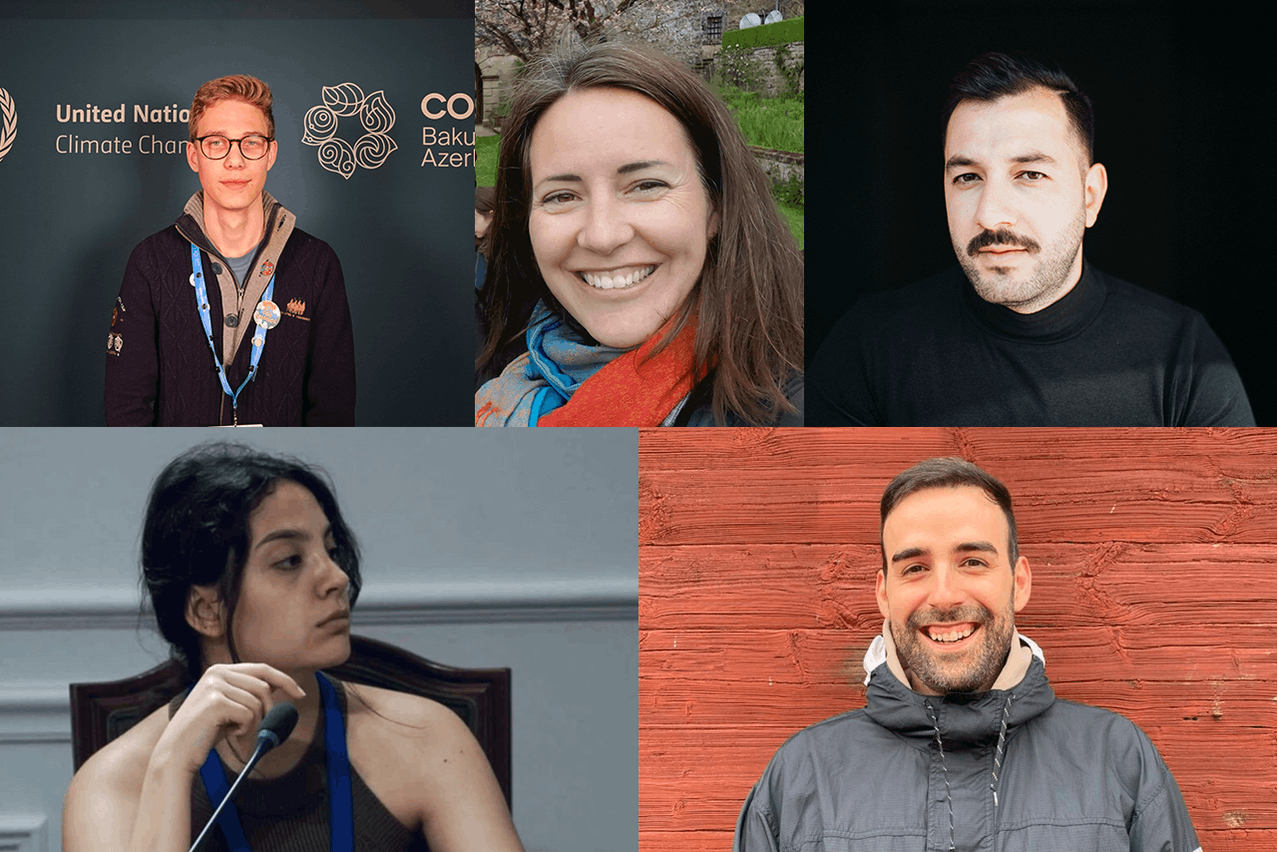
The following profiles offer a snapshot of this diversity, highlighting a selection of ambassadors and the different ways they contribute to the climate transition in Luxembourg.
To become a European Climate Pact Ambassador, candidates must apply through a selection process led by the European Commission, outlining their motivation and proposed actions. Selected for a one-year term, ambassadors commit to at least three concrete initiatives, alongside participating in national and European activities. Their engagement is reviewed annually, with renewal depending on their level of activity.
Sara Gabrielli: linking climate and human rights
At 28, Sara Gabrielli approaches climate action through a legal and human rights lens. Born and raised in Luxembourg with Italian roots, she holds a Bachelor in Law from the University of Luxembourg and is currently pursuing an LL.M. in Public International Law, specialising in Human Rights, at the London School of Economics. Alongside her studies, she serves as Luxembourg’s United Nations Youth Delegate and works as a researcher at the University of Oxford.
Her engagement stems from a broader realisation: climate change is not just an environmental issue, but a matter of fundamental rights. “Over time, I realised how deeply interconnected climate change is with the enjoyment of basic rights—from health and housing to intergenerational justice,” she explains.
Becoming a Climate Pact Ambassador marked a shift from academic work to public engagement. “This is a decisive decade—we cannot afford inaction,” she says. “I wanted to move from reflection to action.”
In practice, her role involves translating complex legal and policy debates into accessible conversations, particularly for younger audiences, while building bridges between institutions and civil society. A key initiative she highlights is the organisation of the Shapeathon, an interdisciplinary event bringing together young people, experts and policymakers to co-develop solutions to societal and climate challenges.
Her main concern lies in the gap between ambitious climate commitments and everyday engagement. “Luxembourg has strong sustainability goals, but there is sometimes a disconnect between policy frameworks and public participation,” she notes.
She also calls for a more balanced narrative around responsibility. While individual behaviour matters, she argues that structural change and corporate accountability must play a central role. “Climate transition must be socially fair, economically realistic and grounded in human rights principles,” she says—placing youth participation and intergenerational equity at the core of the debate.
Julien Lemmer Veloso: giving youth a collective voice
Still in high school, Julien Lemmer Veloso represents a new generation of climate engagement. Vice-president of Luxembourg’s Youth Parliament and Unicef Youth Ambassador, he has already participated in multiple COP conferences as part of youth delegations.
His journey began at 15, when he joined a school-based sustainability initiative—an experience that quickly expanded into broader national and international engagement.
For Julien, the ambassador role is fundamentally collective. “It’s not about one voice, but about a network of ambassadors speaking together,” he explains.
His focus is clear: mobilising young people and turning awareness into action. While climate education is widespread, he observes that engagement remains limited to a small circle. “It’s often the same people who are involved—we need to go beyond that bubble,” he notes.
Ismael Assi: Using culture and design to engage communities
Graphic designer, visual artist, and founder of the non-profit Muse asbl, Ismael Assi brings a cultural dimension to climate engagement.
His work focuses on making environmental topics tangible through art, food, and collective experiences. “Awareness grows when people experience these topics together, rather than only through abstract information,” he explains.
Through projects such as yalla.lu, Assi organises workshops on sustainable food systems, combining environmental awareness with social inclusion.
For him, one of Luxembourg’s key challenges is engaging younger generations in a concrete way. Many are concerned, he notes, but lack clear pathways to participate. His response is to create accessible, community-based formats that translate climate issues into everyday practices.
César González Fernández: making climate action simple and accessible
For César González Fernández, climate action starts with simplicity. Founder of the social impact initiative Clean Something For Nothing, he focuses on lowering barriers to participation.
His platform encourages individuals to take small, measurable actions—such as collecting litter—and share their impact. The initiative has already mobilised participants in 84 countries and led to the collection of more than 900 tonnes of waste.
“Many people care, but don’t know where to start,” he says. His approach is to make engagement easy, visible, and rewarding—turning individual action into collective momentum.
Lana Despotovic: raising awareness in a generation losing focus
At 18, Lana Despotovic is part of a highly engaged but increasingly divided generation. Active in youth politics and climate advocacy, she focuses primarily on education and awareness, particularly around fossil fuels and waste.
Her experience reflects a broader shift: while awareness remains high, climate change is no longer the top concern for many young people. “It has become normalised—we know it’s a crisis, but other issues like war or housing are taking priority,” she says.
She identifies waste—especially food waste—as a major issue in Luxembourg, alongside structural challenges linked to consumption and lifestyle.
Despite this, she remains cautiously optimistic: among engaged youth, motivation is strong. The challenge lies in reaching those who are disengaging.