At the City Breakfast on Wednesday 19 November at the Town Hall, first alderman 
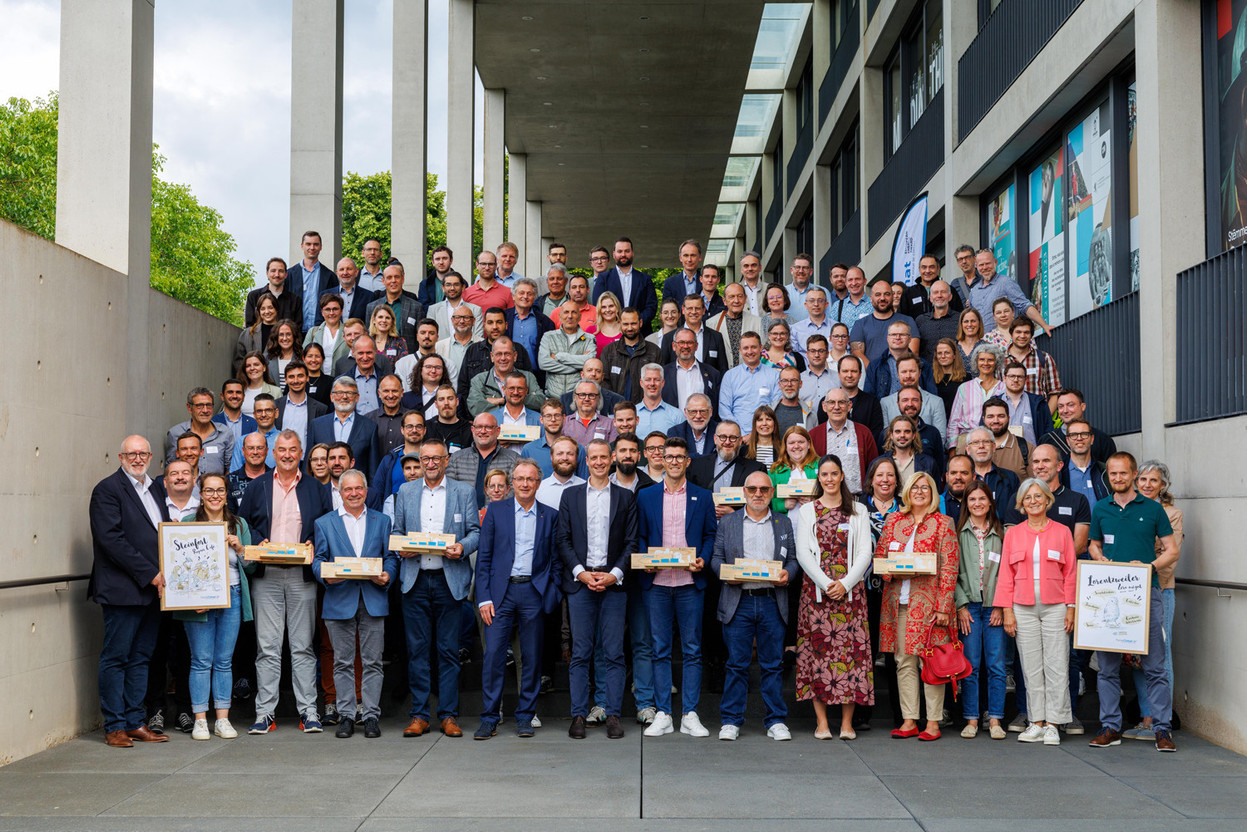
The capital achieves 78.2%, a score that exceeds the 75% threshold, the level at which Gold status is awarded. Maurice Bauer points out that “25 communes in Luxembourg have this Gold standard”, a group that includes the communes with the best results, such as Parc Hosingen with 90%, Clervaux with 89%, Wincrange and Tandel with 87%, and Lintgen with 86%.
The City records 94% in mobility thanks to the complete electrification of its bus fleet. Municipal buildings score 93% thanks to continuous improvements in their energy performance. Communication and cooperation scored 83%, reflecting an internal organisation structured around climate objectives. Maurice Bauer also points to the need to “continue working to confirm the award in four years’ time”, as certification operates on a regular cycle of reassessment.
A system based on a continuous improvement process
The European Energy Award is based on a continuous improvement process that encourages local authorities to progressively improve their energy efficiency, renewable energy production and sustainable mobility practices. Committed municipalities set up an energy and climate team and work with an accredited external advisor who provides technical and organisational support throughout the programme. This structure introduces two decisive elements: specialised guidance and ongoing motivation to progress in a four-year cycle.
The process begins with an energy and climate analysis based on the catalogue of measures and the EMT digital tool, which generates a profile of the municipality’s strengths and weaknesses. The team then draws up a programme of actions that defines the objectives, those responsible, the timetable and the costs of the planned measures. An internal audit is carried out each year to monitor progress, while an external audit is carried out if the municipality uses at least 50% of its potential for action. This audit gives access to the European Energy Award for an implementation rate of more than 50%, or to the Gold level when the municipality exceeds 75%.
The Luxembourg framework of the Climate Pact
In Luxembourg, the Climate Pact structures the participation of local authorities in the European Energy Award. This contract between the State and local authorities aims to reduce dependence on fossil fuels and strengthen territorial resilience. The scheme requires a climate strategy aligned with carbon neutrality, energy accounting for public infrastructure and the application of a set of measures covering planning, energy, mobility, internal organisation and cooperation with residents. The State provides financial and technical support, while local authorities benefit from a structured framework for developing their energy and climate policy.
The capital, which has been a signatory to the Climate Pact since 2012, is accelerating its trajectory towards carbon neutrality by 2050. Its strategy includes reducing CO2 emissions, increasing renewable energy production and building resilience to the effects of climate change. Maurice Bauer stresses that “the City is taking steps to move in the direction of better environmental protection”, a move that comes on top of projects for orchards, tiny forests and planting in several neighbourhoods to increase the area’s ecological capacity.