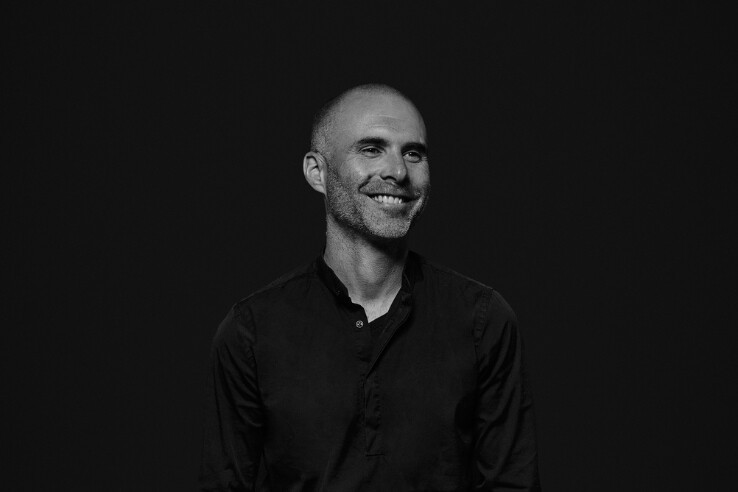
What made you want to become an architect?

As a teenager, my interests gravitated toward political sciences, film, graphic and industrial design, fields that each proposed different ways of reading and/or influencing the world. Architecture presented itself less as a vocation than as an opportunity: a discipline expansive enough to absorb and synthesize all of these trajectories.”
Which project has marked you the most in your career so far?
“In retrospect, every project leaves a residue, a lesson, if not a scar.
Some are social, sharpening one’s reading of human behavior and the fragile negotiations it entails. Others are communicative, exposing how much precision and misinterpretation can shape an outcome. Many are economic, revealing the silent forces that structure decisions. But all of them, indisputably, recalibrate the architect: instinct, reflex, even temperament.
One of our first houses nearly collapsed. Construction methods had neither been respected nor properly verified. The responsibility to detect the fault and to avert a literal disaster fell back on us. It was a brutal initiation. Architectural history is, in many ways, a collection of such (near) failures: moments where discipline is tested not in theory, but in its capacity to prevent collapse or how to become resilient enough to cope with it.”
What inspires you the most when designing a project?
“Context. As much physical as environmental or social, current, restrospective and prospective.
The surroundings of a site, its accumulated past, and the latent roles it can and should assume. Architecture begins by finding and decoding these layers, but refuses to accept them as fixed. The brief is interrogated, expanded, and sometimes contradicted. What appears local reveals wider constellations; ecological, social, political, entangled beyond the site’s and the project’s apparent limits. Out of this expanded field, an attitude should emerge: less a response than a position, calibrated between what is given and what must be invented.”