As political and fiscal uncertainty rattles neighbouring major economies, Luxembourg’s banking sector is positioning itself as one of Europe’s remaining “islands of stability”.
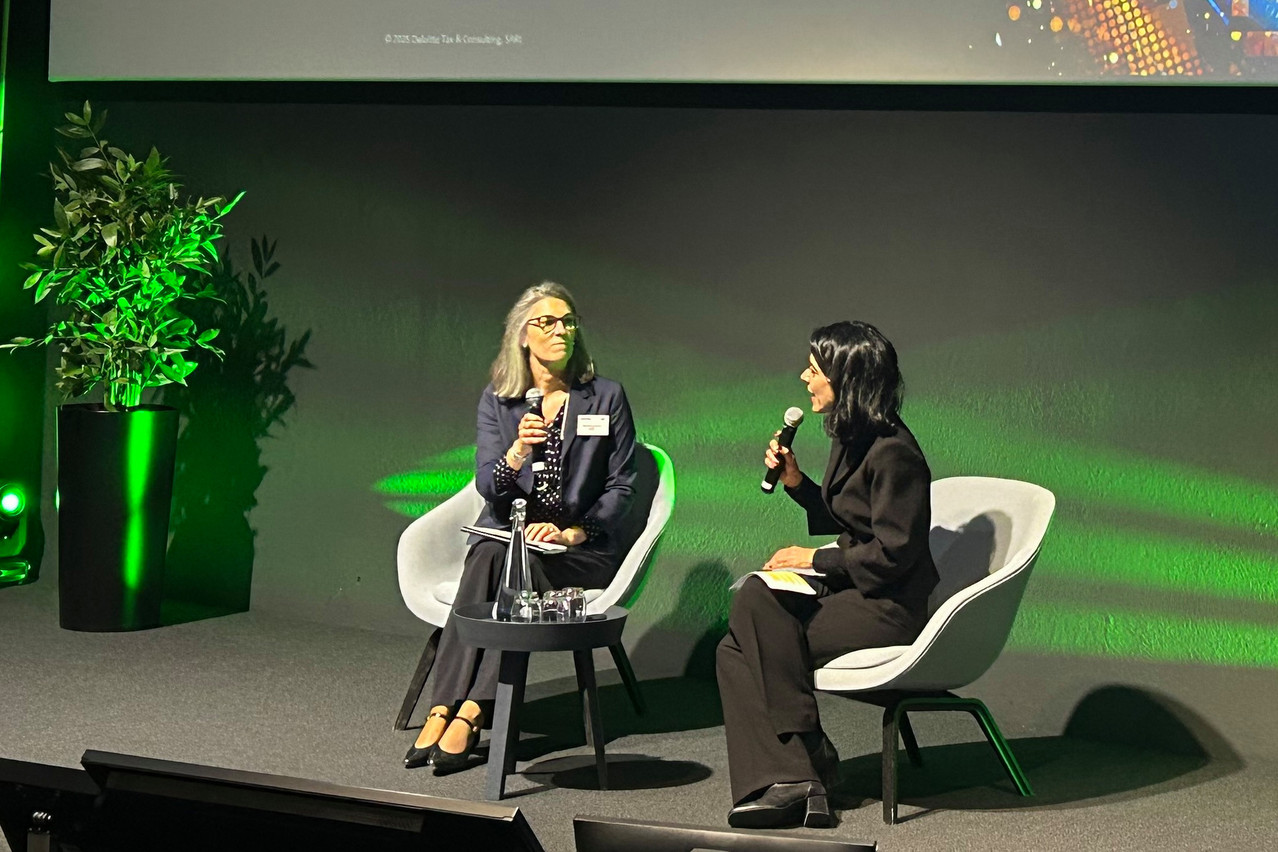
Speaking at the “Banking 360°-The ExCo agenda” conference at Deloitte Luxembourg on Tuesday, Sandrine Roux, general secretary of the Luxembourg Bankers’ Association (ABBL), argued that the Grand Duchy’s comparative advantage is sharpening as tax and legal unpredictability rises in markets such as France.
However, this external confidence contrasts with internal pressure. Industry leaders warned that preserving this sanctuary status will require a hard confrontation with rising costs and “cultural resistance” to digital overhaul.
Cultural resistance
While the sector posted an 11% return on equity in 2024, the “tailwinds” of high interest rates are fading. The discussion shifted to the sector’s largest cost burden: staff.
Deloitte senior managers Marie-Cécile Legrand and Luis Ribeiro presented data-driven diagnostics such as “Job Boost” to identify roles at risk of obsolescence due to AI.
Yet the main obstacle is human rather than technical. A live poll of executives identified “cultural resistance” from line managers and employees as the biggest barrier to cost-saving measures. Banks were urged to adopt a “bend but don’t break” approach, replacing top-down cuts with a more decentralised model in which business owners are empowered to “own their numbers” and judge the viability of their own infrastructure.
Breaking taboos
To offset margin pressure, the ABBL pointed to revenue streams that would have been unthinkable a decade ago. Roux highlighted a “massive push” from the European Commission to finance the defence industry, describing it as a critical growth niche for banks willing to provide lending and account services to a sector once considered taboo.
At the same time, demographics are reshaping strategy. With 50% of European business owners expected to sell or retire within the next decade, Luxembourg is relying on its private banks and wealth-structuring teams to capture an unprecedented transfer of capital.
The 40% burden
Capturing these shifts requires changes in governance. Roux noted that regulatory compliance now consumes more than 40% of total bank investment. As a result, the role of the CFO must evolve from budget-keeper to strategic architect.
She highlighted the Digital Operational Resilience Act (DORA) and AI governance as areas requiring “transversal” leadership that breaks down silos between risk, legal and business lines, using the term to mean a cross-cutting approach that forces teams to work beyond their traditional departmental boundaries.
As ABBL CEO Jerry Grbic closed the session, the message was blunt: the “smooth seas” of high interest rates are over. To navigate the next cycle, Luxembourg’s banks must take advantage of instability in neighbouring markets while aggressively automating their own back offices—focusing on high-volume, manual tasks such as KYC and AML checks, client onboarding and trade settlement.
Urgent transformation
Deloitte’s “2025 Banking Spotlight” report reinforces the call for urgent transformation. The sector generated €9.8 thousand million in profit before tax and posted an 11% return on equity in 2024. But with 59% of revenue still tied to net interest income, margins look vulnerable as rates decline.
As consolidation reduces the market to 117 institutions, the report urges banks to pivot to “ZeroOps” automation to protect profitability. It also highlights a growth opportunity in “democratising” private markets: using ELTIF 2.0 structures to give mass-affluent clients access to private equity, private credit and real assets, effectively shifting banks toward “platform” models for broader investment access.