The Luxembourg Stock Exchange positioned itself very early on on issues such as sustainable development and corporate social and environmental responsibility. As head of legal affairs, what is your view of the changing expectations and requirements in this area?
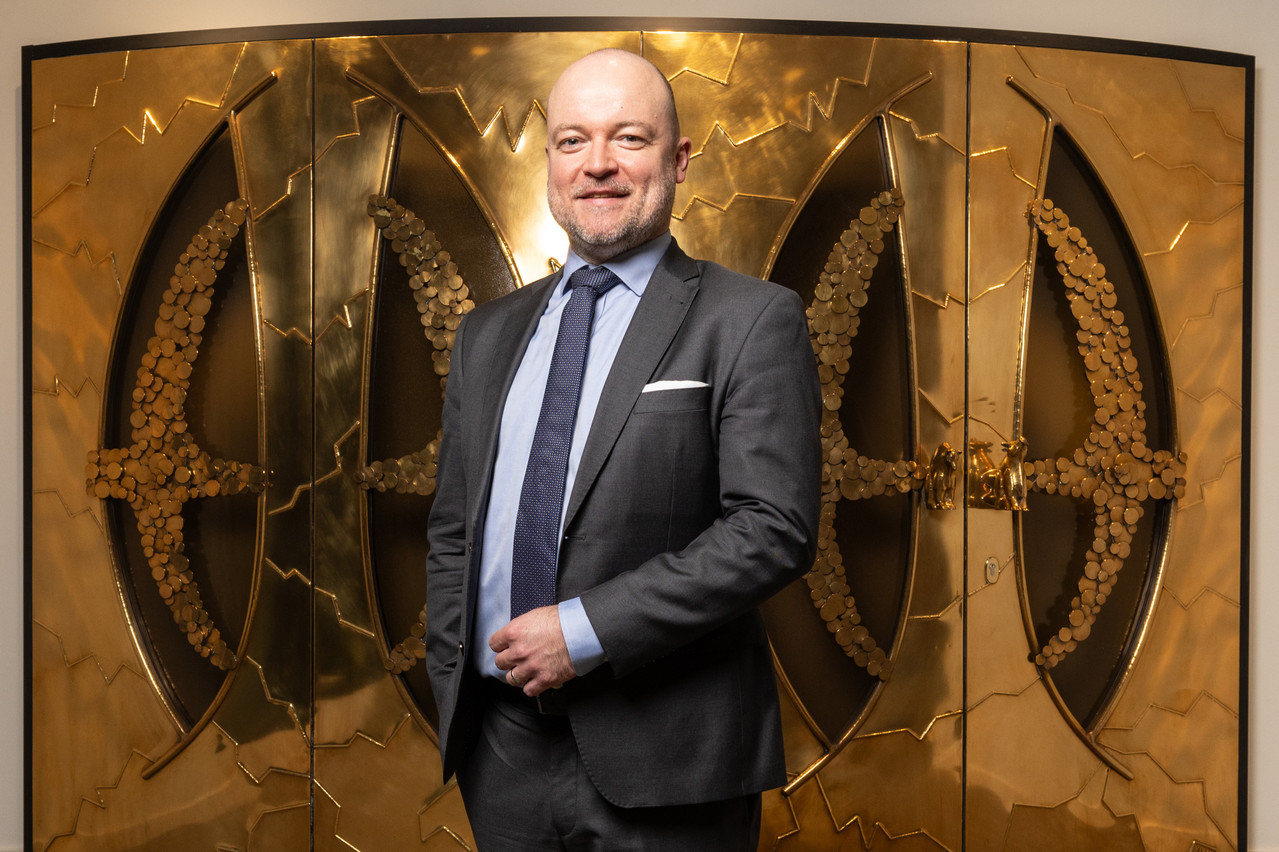
Christian Dohmen: Within the Luxembourg financial ecosystem, the Luxembourg Stock Exchange has been a pioneer in adopting sustainability criteria. We integrated a range of corporate responsibility issues at a very early stage, well before regulations were tightened around these subjects, by setting ourselves objectives internally and then vis-à-vis external stakeholders. We have been preparing and publishing CSR [corporate social responsibility] reports for many years. We have signed up to a number of charters in this area. This has led us to adopt a model role in Luxembourg in general, and in the financial sector in particular. The Luxembourg Green Exchange (LGX), created in 2016, was the first platform entirely dedicated to green, social and sustainable financial instruments.
In pursuing these commitments, what have been the main challenges you have faced?
Within the exchange, in addition to my role as legal manager, I am also company secretary. These two roles complement each other, influence each other from time to time and give me a broader view of the issue. To make progress on these issues, we first need to set internal objectives, but above all take steps to ensure that we achieve them. To do this, they need to be shared throughout the company, and the direction we’re going in needs to be known by all those in charge.
This is not just talk. To be credible, you have to do what you say, showing initiative and pragmatism. Beyond our internal objectives, the other challenge is to see how we can influence our customers and the issuers of financial products. It is this approach that led us to create this platform dedicated to green bonds, but also our academy, to help issuers understand and integrate the principles of sustainable finance. To this we can add the LGX DataHub, which aims to facilitate transparent access to structured, reliable and comparable data on sustainable bonds.
How do you see the regulatory framework for sustainability issues evolving?
In recent years, the regulatory framework has been considerably strengthened in order to support the transition process. We could mention the Sustainable Finance Disclosure Regulation (SFDR), in the area of sustainable finance, or the Corporate Sustainability Reporting Directive (CSRD) and more recently the Corporate Sustainability Due Diligence Directive (CSDDD). For the Luxembourg Stock Exchange, which is the size of an SME, these regulations do not apply directly. That’s not to say that they don’t affect us. They have an indirect impact insofar as some of our clients and partners have to meet new obligations, including reporting on the social and environmental impact of their activities.
In this context, they ask us questions about our own commitments in this area. More and more often, before entering into a contract with a customer, as a service provider, we are asked to adhere to a code of conduct on sustainability. We ourselves need to have an overview of our suppliers’ commitments and, from a legal point of view, see how this translates into the contractual relationship. On the other hand, our issuers are subject to obligations in terms of non-financial information and must share certain information, as part of a transparency drive, particularly via the stock market. So we need to work with them, starting from a clear understanding of their expectations, to provide them with better support.
So the real challenge is to get all our stakeholders to adopt a more sustainable approach...
Yes, it has to be said that this is first and foremost a real team effort, to which the legal function contributes in the same way as other departments. Within the stock exchange, for example, we have a department dedicated to regulatory analysis, which works in symbiosis with the legal team to understand all the issues and requirements involved. We also need to work closely with the operational teams, who are in contact with customers, in order to facilitate the drawing up of contracts and to be able to meet the necessary requirements in terms of corporate responsibility. We also need to work closely with the compliance and risk teams to implement good governance and controls to meet both internal and external requirements.
Discussions must therefore take place at all levels to create a coherent framework, with clear commitments, and to ensure that it evolves. Finally, it has to be said that not all players are in the same boat when it comes to these issues. The approach to transition is far from uniform. Everyone has different priorities, whether social or environmental. The pace of change varies from one player to another. So it’s a complex subject.
It is essential to put in place mechanisms to ensure that the commitments made are respected.

How are these commitments to sustainable development formalised?
Internally, we operate with a certain hierarchy of documents that include various charters, policies and procedures that will evolve in line with regulatory requirements and the exchange’s own commitments. With regard to external players, this involves the use of codes of good conduct and contracts. We do not have the power to legislate. That does not prevent us from laying down a set of principles. For example, we require Luxembourg companies whose shares are listed on the regulated market we manage to apply the “10 Principles of Corporate Governance of the Luxembourg Stock Exchange.” These principles should serve as an example and guidance for other issuers. Our aim is to act as a beacon, to encourage as many players as possible to follow these principles. At LGX level, other rules will apply to issuers who wish to be listed there. These are based on internationally recognised frameworks and standards for defining green, social and sustainable bonds.
By imposing compliance with these principles, and offering a green bond trading platform whose access is conditional on compliance with a specific framework, is the aim to act as a vehicle for transition?
That’s what we're hoping for. This obviously goes beyond the role of the legal department. It’s an objective that is supported by all our operational teams, who review prospectuses and monitor issuers’ commitments. In return, given the efforts made by these issuers, our role is to make these products attractive, by promoting them on our platform, via various channels, and by making available the data and documentation produced by our issuers. All this is a guarantee of quality and trust.
So, in addition to our commitments, we need to ensure that there is monitoring and control...
Yes, this is true for the platform we offer our customers, but also for our own internal commitments. We have to make sure that the norms and standards to which we refer are respected over time, and that we are actually contributing to the objectives we have set ourselves. When it comes to financial products, we have to ensure that we meet a set of criteria upstream, in the preparatory phases, right through to market launch. Beyond that, we also need to be able to guarantee continuity in the information associated with the security. For the good of the various stakeholders, we need to be able to act transparently.
So what is the role of the legal department? How does it ensure that the framework is respected?
From a legal point of view, this essentially involves drawing up and reviewing contracts, those that bind us to our customers as a service provider, but also those that we draw up with our partners. We operate in a fairly active environment. First of all, we have to make sure that our contractual commitments comply with the regulations in force, but we also have to ensure that they are in line with the commitments we make.
That’s where it gets interesting. Insofar as we go beyond what is imposed on us by the regulator, as a PFS and a market operator, the challenge is to be able to transpose these ambitions of ours into our relations with the various stakeholders. If the requirements are established at contractual level, it is essential to put in place mechanisms to ensure that the commitments made are respected.
To give some concrete examples, what might be required?
We could, for example, ask players to report on sustainability issues. There are subjects for which the indicators are obvious, such as CO2 emissions, training, diversity and inclusion within the company. In our CSR report, for example, we already cover a large proportion of these topics. From 1 January next year, this type of non-financial reporting will be mandatory for large listed companies. This should gradually become the norm and be extended to a wider range of players, either directly or indirectly.
When it comes to sustainable development, priorities can vary considerably from one player to another. Isn’t it complex to respond to this diversity of expectations?
The issues are indeed diverse. That’s the beauty, but also the complexity, of the subject. What’s more, they affect every aspect of society. Today, the codes of conduct to which we are asked to adhere most often include general ESG principles. Regulation helps to establish a framework that is shared by all. And while these developments raise new challenges, they also bring opportunities.
Within the bourse, our pioneering commitment has led to the creation of new products--the Luxembourg Green Exchange, the LGX DataHub and our academy--and support services for issuers wishing to become active in the field of sustainable finance. We are convinced that this commitment is also meaningful for our clients. Alongside regulation, the adoption of labels and certifications also helps to standardise expectations and requirements, as much as facilitating relations between players.
This article was written in French for the Legal Leaders supplement of the November 2024 edition of Paperjam magazine published on 23 October. The content is produced exclusively for the magazine. It is published on the website as part of the complete Paperjam archive. Click here to subscribe to the magazine.
Is your company a member of the Paperjam Business Club? You can request a subscription in your name. Let us know via club@paperjam.lu