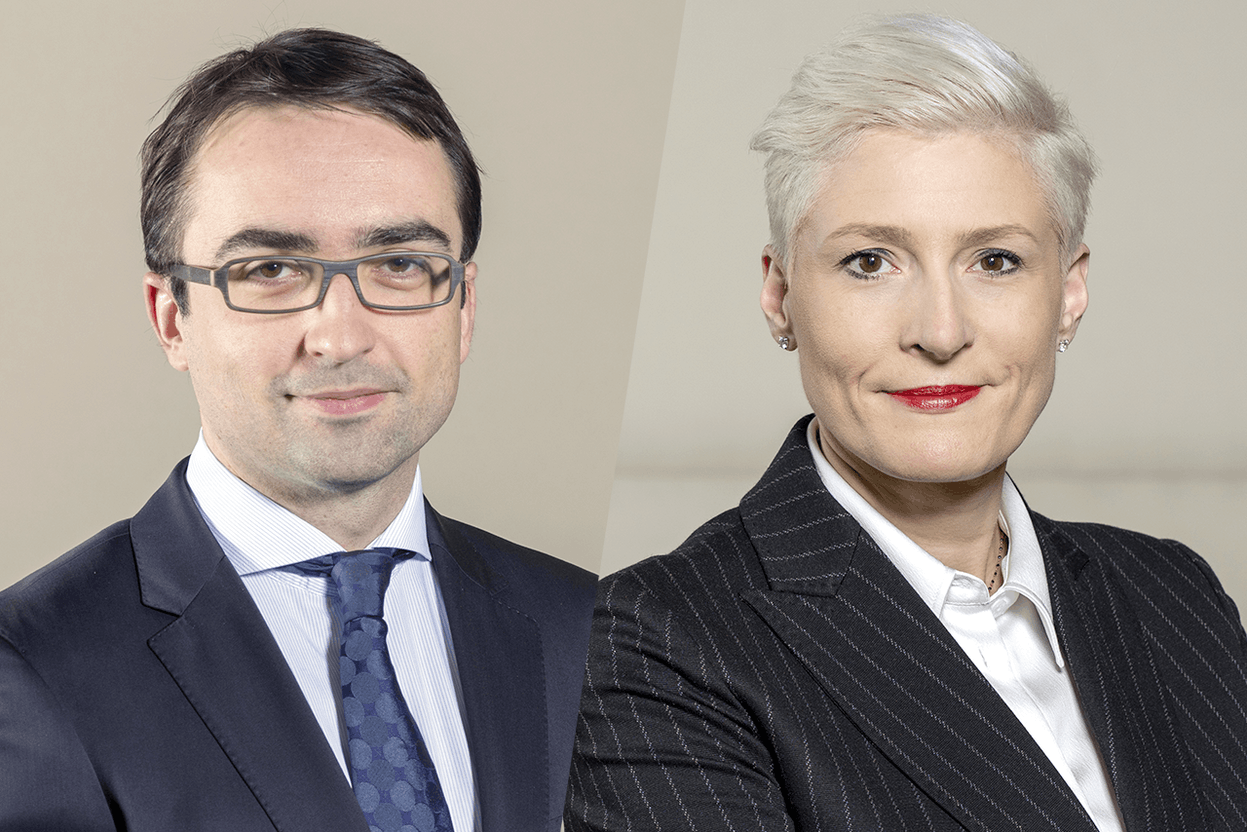
Digital transformation continues, leading companies to integrate new tools, rethink their processes and develop new services. In this context, legal managers play a key role in integrating new solutions within their organisations. “We are undoubtedly at a turning point,” Joseph Delhaye, head of the legal department at Spuerkeess, the state savings bank, said in an interview. “With artificial intelligence (AI), we are about to enter a new era. We are also seeing a sharp acceleration in the production of regulations governing the use of this technology. Examples include the AI Act, which deals with the use of artificial intelligence, and Dora, which aims to ensure the operational resilience of financial players. Against this backdrop, the legal department is being called upon heavily, in particular to provide a framework for new uses and guarantee the compliance of operations.”
AI: legal's ally
There are now many opportunities for better integration of technological solutions to support the legal function itself. In the financial sector in particular, but not only, organisations are having to meet an ever-increasing number of regulatory requirements.
These cover a wide range of subjects: the fight against fraud, transparency, solvency, information security, sustainability commitments, and many more. For legal managers, there is no shortage of work to do, and it is not always easy to get to grips with all the obligations imposed on a company. “In this context, technology provides essential assistance,” said Delhaye. “It enables us to respond more effectively to the various requirements and ensure that our activities are compliant. AI, for example, makes it much easier to search for information across all the regulations for which we are responsible. It also contributes to improving the review of the mass of documents that we have to manage, such as contracts. It should save us a considerable amount of research time.”
The legal department is heavily involved in overseeing new uses and ensuring that operations are compliant.

In this area, AI does much better than search engines, insofar as it can provide answers to precise questions by taking into account the context, by cross-referencing a range of data. “If, for example, we want to launch a sustainable investment product, we can use AI to find us an attractive name,” said Delhaye. It will be able to make proposals taking into account trademark law, sustainable finance regulations and commercial law. In particular, the aim is to avoid problems of greenwashing, to use the recent term used to describe a breach of trust. Thanks to technology, many processes can be sped up. Technology also supports organisations in meeting their obligations, particularly in the area of preventing money laundering.
Today, a bank is required to monitor all the transactions carried out by its customers, using a risk-based approach. Given the volume of transactions carried out every day by the customers of a commercial bank, such monitoring cannot be envisaged without the support of digital tools. "To monitor thousands of transactions, data analysis and even more so AI are real allies. In particular, they make it possible to identify behavioural patterns indicative of suspected fraud. The advantage of artificial intelligence lies in its ability to learn. It adapts over time, to ensure the relevance of the results", commented Delhaye.
A highly regulated use of AI
While it is interesting to use AI to assess risks effectively, certain precautions need to be taken. European legislators have clearly understood this, and have decided to regulate the use of this technology in order to prevent certain risks. The AI Act, the first regulation of its kind in the world, prohibits the use of artificial intelligence in certain cases and lays down a set of strict requirements for others. For example, all AI systems considered a clear threat to people's security, livelihoods and rights are banned.
For example, social rating by governments is banned, as is the marketing of toys that use voice assistance to encourage dangerous behaviour.
Returning to the field of banking, certain cases of use are listed as presenting a high risk. “These include the use of AI to establish a person's credit score with a view to granting a loan," stated Delhaye. “While regulations do not prohibit the use of this type of application, they do make it subject to a set of strict obligations. The aim, clearly, is to avoid abuses linked to the use of data and to prevent any biases that would penalise citizens". These obligations relate in particular to the transparency of information.
For example, it must be made clear that the bank has used AI to analyse the credit application. If the loan is refused, the citizen can then ask for the application to be re-analysed by a flesh-and-blood bank employee. "In this area, we need to be vigilant, but it is also important to make the legislator understand that the use of technology, while it must of course be regulated, is an essential part of the decision-making process. Today, we are being asked to make the best possible assessment of the risks and, consequently, the repayment capacity of people wishing to take out a loan. Technology is helping us to be more precise in this respect," said Delhaye. “In the future, we don't want these tools to be banned for the wrong reasons."
Does generative AI help in the drafting of contracts or legal documents? “It can help," according to Delhaye. “However, the technology has so far failed to convince. In particular, we have carried out tests with a view to simplifying certain contractual documents. The technology still makes quite a few amalgams and the result was no longer comprehensible. However, technology is evolving rapidly and, in this respect, we need to remain open and curious."
Facilitating interaction with customers
Interactions between customers and financial institutions are increasingly carried out via automated digital channels. It is up to the legal department to accompany and support this transformation, by ensuring that processes are adapted and operations, such as document collection and customer onboarding, are secure. Delhaye stated: "Our aim is not to become an online bank. The human dimension occupies an important place within our institution, with the desire to maintain real proximity with all our users. However, this must not prevent us from using technology to improve the user experience. If our 100% digital competitors can do it, we should be able to do it too.”
With this in mind, the adoption of the e-wallet (the digital wallet that will be available to all citizens) with the new version of the European eIDAS regulation should facilitate the implementation of entirely digital procedures. “Using their e-wallets, citizens will be able to share not only their identity data more easily, but also a range of documents, such as diplomas, pay slips and employment contracts," he said. “The other advantage is that it will be more difficult to falsify official documents or usurp an identity. This will raise the level of trust in digital technology."
The adoption of blockchain will also speed up certain procedures. In this respect, Spuerkeess was the first Luxembourg institution to digitise the granting of student loans using blockchain. Once the agreement for financial aid for higher education has been obtained from the government, the student will be able to access a loan directly without going through tedious administrative procedures. "Blockchain technology enables data to be exchanged more quickly, guaranteeing that the information shared is verified and has integrity. The technology is a vector of trust and helps to prevent legal risks or attempts at fraud", explained Delhaye.
Outsourcing: contractual issues
While relationships are going digital, the bank's IT environment is also changing. There is talk of adopting the cloud or solutions managed by external suppliers. While there are many advantages to this, it is important to be aware of the risks and limitations associated with the use of these solutions.
The European legislator has recently taken care to strengthen measures aimed at guaranteeing the security of operations (with Dora), as well as the confidentiality of data. "As part of the adoption of these solutions, our role, along with that of our colleagues in the risk department, is to support the teams. Once we have a good understanding of what the legislation requires, we take charge of the contractual and even pre-contractual aspects, to make sure that the tools we want to use and the services we sign up to meet the requirements in force," said Delhaye. “In the case of complex subcontracting, if we cannot obtain sufficient guarantees and if we are not certain of having a plan B in the event of a subcontractor's failure, certain transformation projects simply cannot be implemented."
Technology is an essential lever for competitiveness, and it needs to be understood, particularly in the light of an ever-tightening regulatory framework. With this in mind, the legal function must facilitate the adoption of new tools, but also guarantee that the technology is used correctly.
To each his own digital portfolio
Before it can be rolled out across the member states, the EU Digital Identity Wallet will be the subject of four large-scale pilot projects, launched on 1 April 2023. With European Digital Identity Portfolios, citizens across the EU will be able to establish their identity if needed and access online services, share digital documents or simply prove a specific personal attribute, such as age, without revealing their full identity or other personal data. The EU digital identity can be used in a wide range of cases. For example, to:
- use public services, such as requesting a birth certificate or medical certificate, or reporting a change of address;
- open a bank account
- complete a tax return;
- enrol at a university in your home country or another member state;
- keep a medical prescription that can be used anywhere in Europe;
- prove your age;
- hire a car using a digital driving licence;
- check in at the start of a hotel stay.
Certain services, such as electronic signatures, will be integrated into the wallet to make them easier to use.
EU first to regulate
The European Union was the first entity in the world to regulate the use of artificial intelligence. While it does not prohibit the use of this technology, the legislation aims above all to prevent abuses. With this in mind, it has classified uses according to a scale of risks, establishing what is unacceptable and therefore prohibited. These include use for manipulation or social scoring. High-risk applications, on the other hand, are highly regulated, with transparency obligations, a requirement to document how the technology works and to explain how decisions are made. A number of applications have been identified as presenting a limited risk. The obligations at this level relate to the duty to inform users.
This article was originally written in French for the Legal Leaders supplement of the November 2024 edition of Paperjam, published on 23 October. The content is produced exclusively for the magazine. It is published on the website as a contribution to the complete Paperjam archive.
Click here to subscribe to the magazine.
Is your company a member of the Paperjam+Delano Business Club? You can request a free subscription delivered directly to your home or office. Let us know via club@paperjam.lu