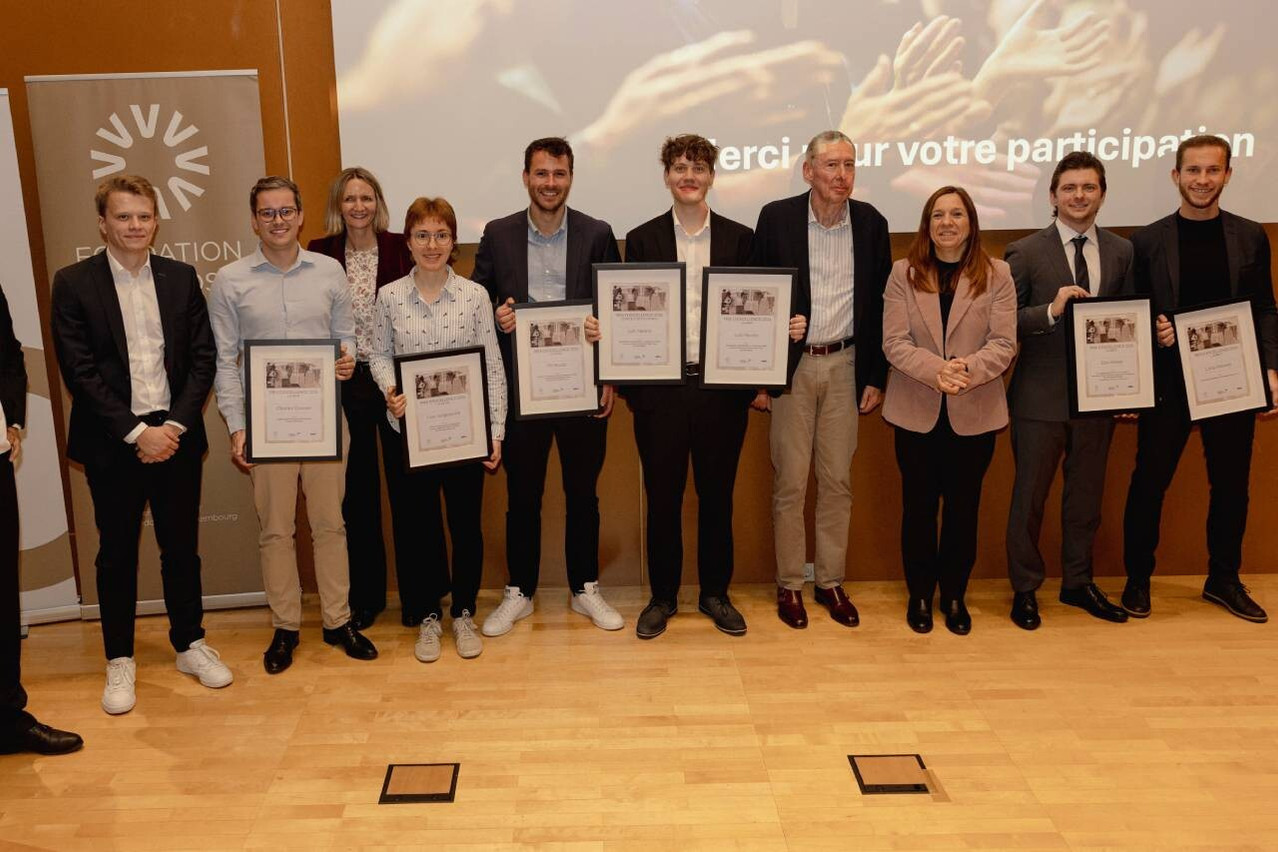
From water in former slate mines to Luxembourg’s electricity needs in 2040, the work of the six winners of the 2026 Enovos Award for Excellence explores a range of issues relating to energy, robotics and IT. Charles Donven, Dan Heiser, Lisa Jungerwirth, Loïc Nenno, Loris Wilwert and Pit Mootz feature on the list of winners for this 15thand edition.
The ceremony on 30 October, which took place at La Coque, celebrated their Master’s theses in the presence of the Minister for Research and Higher Education, 
Exploring energy resources and demand
Can water from former slate mines be used to supply a renewable energy network for non-residential buildings in Martelange-Rombach? This is the subject of the pre-feasibility study being carried out by Dan Heiser at the University of Luxembourg. At the same university, Loïc Nenno is examining how electrification and flexibility might influence electricity consumption, demand peaks and constraints on the national grid by 2040. Lisa Jungerwirth, at the RPTU in Kaiserslautern-Landau, is looking at cross-sector energy concepts, using the Neckarsulm wastewater treatment plant as a case study.
From mobile robots to hypergraphs
How does a mobile robot search for an object in an environment that is organised in a specific way? Charles Donven is exploring this question at the Technische Universität München. Pit Mootz, at the University of Innsbruck and UMIT Tirol, is focusing on the analysis and design of a battery management system for hybrid energy storage systems in autonomous mobile robots. At the University of Heidelberg, Loris Wilwert is devoting his thesis to minimum-cut algorithms in hypergraphs.
Five minutes to win over the audience
Since 2025, each winner has had five minutes to present their topic, explain their approach and share the key findings of their thesis. The aim is to “make sometimes complex topics accessible”, according to a press release from the Enovos Foundation. The audience then votes for their favourite presentation: this year, Loïc Nenno won the ‘Coup de cœur’ prize for his presentation on electrification and flexibility in Luxembourg in 2040.
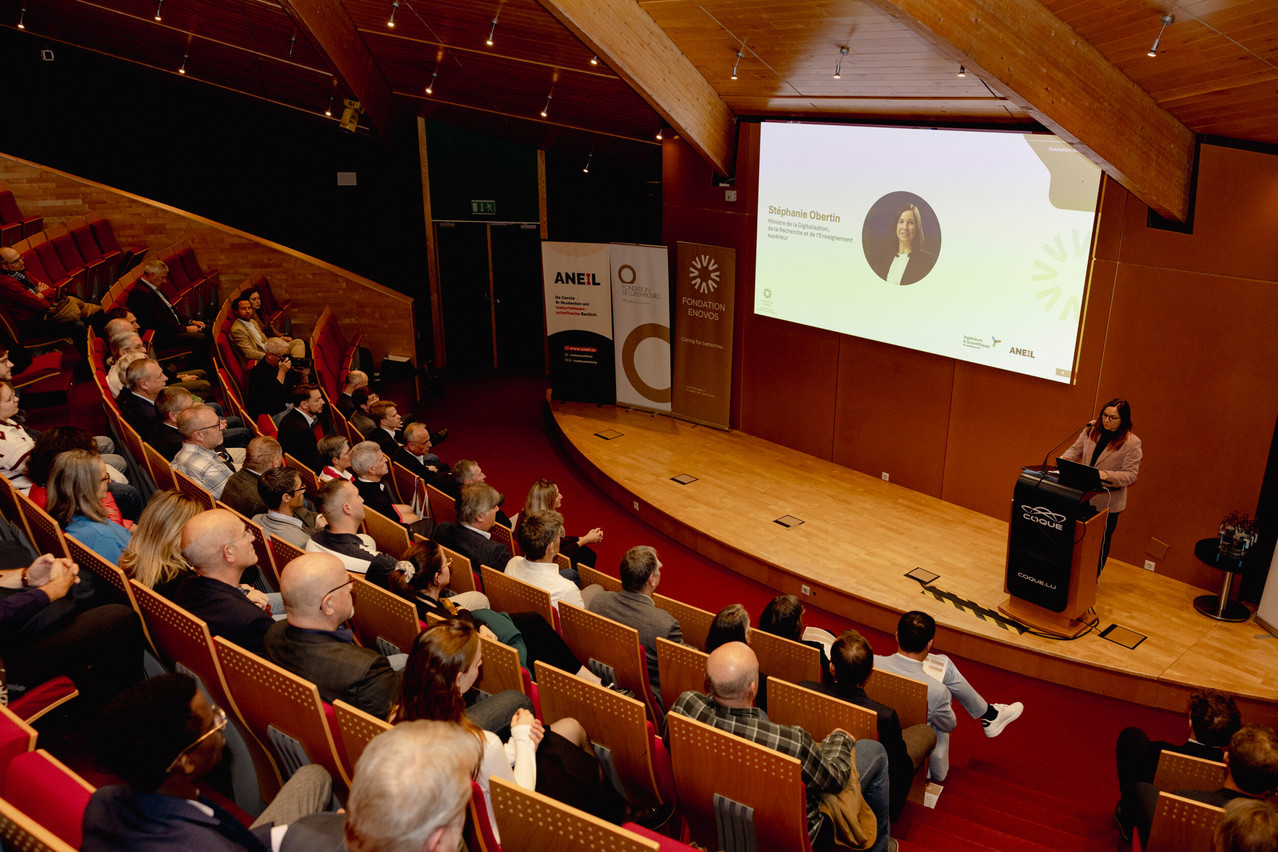
Stéphanie Obertin, Minister for Digitalisation, Research and Higher Education, addressed the audience at the Enovos 2026 Excellence Awards ceremony at La Coque. (Photo: Fondation Enovos)