Let us recall the euphoria sparked by the ‘Twitter revolution’ in Iran in 2009, and then by the Arab Spring in 2010–2011, for which Facebook served as a sounding board. Wasn’t it exhilarating to see citizens on the front line freely posting information on social media?
The wake-up call was all the more abrupt for it, however. What happens when autocrats cut off internet connections, when they throw these citizens in prison? Who continues to report on events in Iran, Egypt or Syria for the rest of the world?
We now know this: algorithms were never designed to seek the truth, and Silicon Valley quickly realised that it would make more profit by playing on anger and outrage.
It has also been discovered that malicious actors could manipulate these algorithms to spread falsehoods. As for the members of the public on the front line, they were obviously not equipped to help society make sense of a flawed information ecosystem.
A decade on, here we are once again facing a new threat to news agencies. This time, it takes the form of artificial intelligence, whose bright future is being touted to us. ChatGPT, Claude, Gemini and Grok can scan the world’s journalistic output in a matter of seconds and churn out five well-crafted paragraphs on any news story.
This is what is known as the ‘AI Overview’. But this AI-generated summary is causing a global slump in traffic to reliable news websites, whilst rarely remunerating the professional journalism – which is costly to produce – that it unhesitatingly draws upon.
And, once again, our detractors are singing the same old tune: why pay for professional journalism when news is available for free in real time? Why waste money employing journalists to gather news when it can be aggregated by chatbots, our new friends?
Part of the answer lies in the warning, displayed in small print beneath the chatbots, which cautions us that the information provided by the AI summary may turn out to be incorrect. Will you take your information with or without these ‘hallucinations’?
Establishing the facts costs money, time, expertise and effort. When the collapse of a huge glacier triggered sudden and devastating flash floods between Nepal and Tibet in late August, killing more than 1,400 people, AFP dispatched eleven journalists to the remote disaster-stricken areas.
An hour after the police confirmed that a major disaster had occurred, three of our journalists based in Kathmandu set off. Prakash Mathema, Anup Ojha and Prabin Ranabhat are Nepalese. They speak the language and know the area and its people well. They were carrying expensive cameras, video cameras and drones.
It took one of our photographers 13 hours, travelling by motorbike and lorry, to reach the disaster area. He called on his contacts and then boarded a rescue helicopter to reach a devastated village, where he took some striking aerial photographs. They have been seen around the world.
Establishing the facts costs money, time, expertise and effort.

There is almost never an internet connection in remote areas affected by a disaster. We need journalists on the ground, who are sometimes prepared to take considerable risks, to bear witness and report the facts.
We also need journalists who know the country and can draw on a tried and tested network of sources. Whilst part of our team headed for the Nepalese mountains, the rest remained in Kathmandu to separate fact from rumour as the scale of the disaster became apparent.
Much of the initial verified information and images published around the world came from news agencies such as AFP and our colleagues at Reuters and AP.
Our clients publish our images and information without hesitation, because they know that they have been gathered in accordance with ethical standards, codes of conduct and transparent principles that underpin trust and guide the work of all our journalists.
They know that we employ experienced professionals and that we train them so that they are ready when they are deployed to high-risk areas.
Our clients purchase our news knowing full well that gathering it is not cheap. They also know that our ethical standards apply equally wherever we operate around the world. Whether our news reports and images are produced in Nepal, New York or Gaza, they bear the same mark of quality.
Making things up, on the other hand, costs nothing. Whilst trusted media outlets were publishing genuine images of the disaster in Nepal, a flood of AI-generated photos and videos was pouring onto social media, showing villages supposedly destroyed or bodies allegedly lined up before burial.
The technology behind AI-generated summaries has also given anyone the power to create misleading and dangerous images. These are flooding our news feeds and spreading like wildfire across social media.
AFP employs more than 100 journalists who are entirely dedicated to verifying and debunking fake news, which is becoming increasingly widespread. Countering the avalanche of lies and exposing manipulation has become an integral part of fact-finding.
Seeking the truth and establishing the facts is costly and requires strong values. More than ever before, the global news system relies on networks of international news agencies. They are invaluable. Let us defend them.
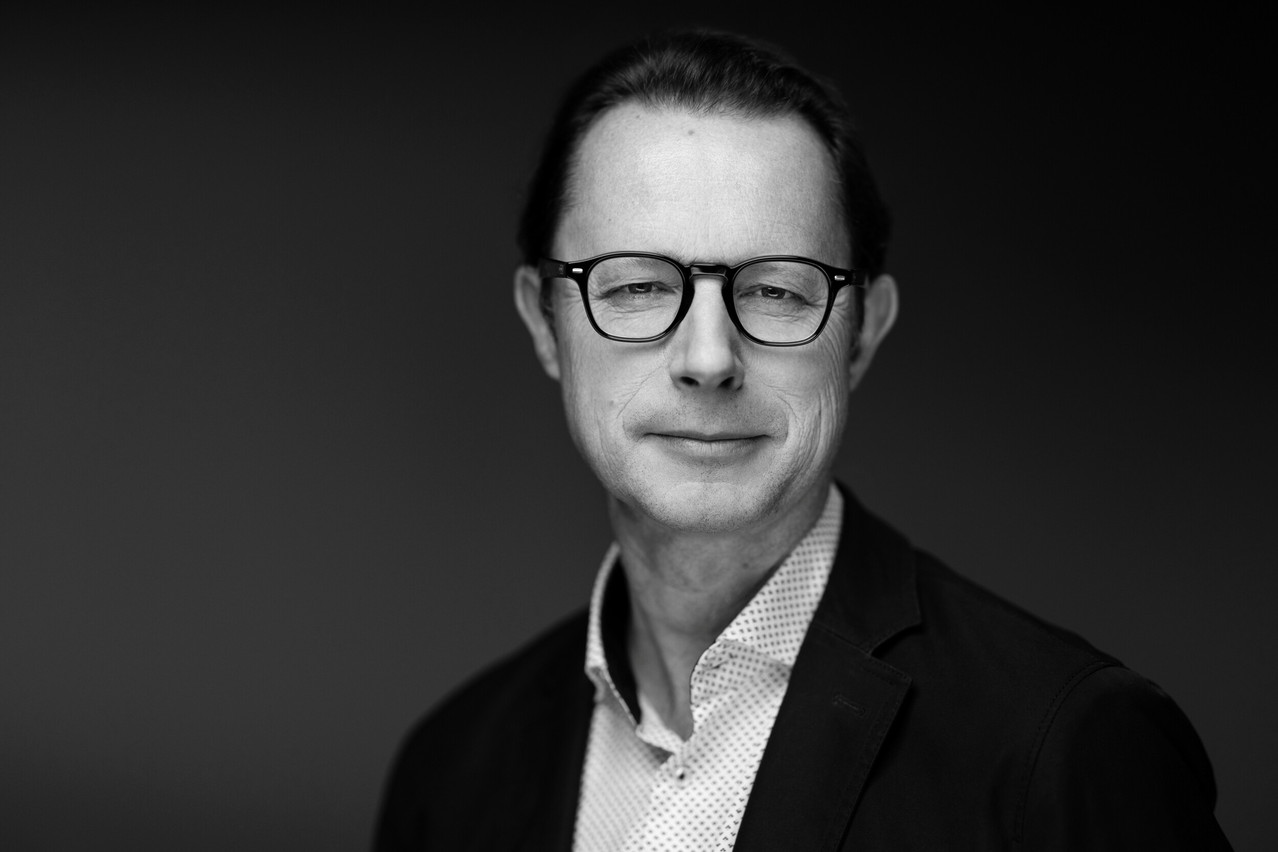
*Phil Chetwynd is the director of news at AFP.
This opinion piece was commissioned as part of the World News Day, a worldwide campaign highlighting the essential role of journalism in providing facts and clarity.