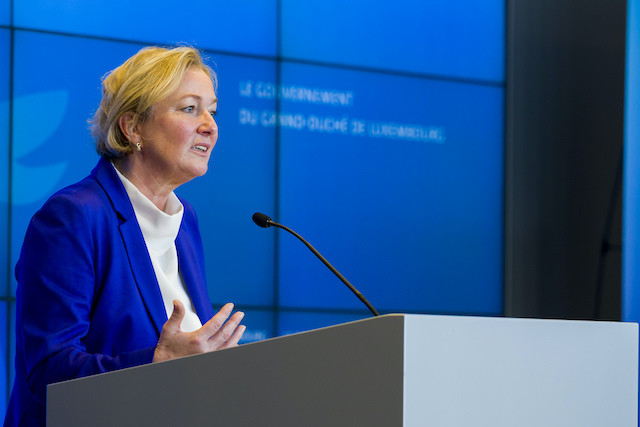
The majority parties (DP, LSAP and déi Gréng) on 15 December voted to extend restrictions--such as a curfew, closed restaurants and a rule of two--until mid-January, adding new measures for shopping malls and restaurants offering take-away food and drink.
“The general situation isn’t good,” said health minister Paulette Lenert (LSAP) during the plenary session. “We’re not where we would like to be.”
Luxembourg on Monday posted the highest ever number of patients in intensive care, with 50 people being treated for covid-19. Another 189 of those tested positive are receiving regular hospital treatment.
But Lenert also refused criticism that the measures of the last weeks hadn’t been effective, saying the exponential growth of new virus infections had stopped and there were signs of the spread of Sars-CoV-2 slowing down. “We haven’t lost this fight.”
School tracing delays
Her remarks came after more than two hours of debate between members of parliament.
“No matter how we turn the numbers, the end result is bad,” said MP Claude Wiseler (CSV). He scolded the government over its lax approach, saying neighbouring countries with fewer infections had taken more serious measures against the virus.
“We aren’t being taken seriously and the people, too, no longer believe what you are saying,” Wiseler told the government. Speaking for the biggest opposition group in parliament, Wiseler reiterated demands for a general obligation to wear masks outside and for all shops to have to limit customers, not only those larger than 400m2.
“The [legal] texts are poor, incoherent and, as a result, aren’t being followed,” Wiseler said. He cited a rule that parents of a child that tested positive for coronavirus should get tested themselves six days after their last contact. “But when is the last contact with an infected child you have at home? We are being inundated with emails from people who don’t know what to do,” he said.
Education minister Claude Meisch meanwhile responded to reports the ministry was taking days or even more than a week to inform staff and parents of infections and to prescribe tests. Meisch acknowledged delays, saying the high number of cases generally was reflected in schools and was stretching resources to their limits.
“Children have a right to education, but children also have a right to safety,” said Sven Clement of the Pirate Party, which urged the government to consider prolonging the Christmas break to help get a better grip on infections.
Take take-out home
Left-wing party déi Lénk, too, suggested that an opportunity had been missed to implement a stricter lockdown over the holiday period--when schools are closed and many people are off work--to break the current wave of infections.
While new cases were stable, a curfew and the closure of restaurants had failed to substantially decrease the infection rate, said Marc Baum (déi Lénk). “One small change to the laws isn’t enough,” said Baum, adding though that he welcomed the rules for malls to limit customers.
Shopping centres under the new rules must appoint a special supervisor and contact person for health authorities as well as presenting a concept on how they are limiting customer numbers and organising visitor flows to prevent large groups of people gathering together.
Customers can no longer consume take-away food and drink inside shopping centres, as this requires removing the mandatory mask. But customers will also need to actually take away take-out from restaurants, bars and coffee shops elsewhere, with the law prohibiting food and drink being consumed on their premises or terraces.
This rule comes in response to crowds of people gathering outside bars offering take-away drinks.
Stricter measures possible
Parliament stood united, however, against a proposal from the ADR to lift limits on gatherings for the holidays.
“We all agree that we need a decline [in virus numbers]. We need a strong decline,” said prime minister Xavier Bettel (DP).
But the premier said the government doesn’t want to regulate people’s lives from morning to night. “Trust in the citizen is important for us and the majority of people are following the rules,” he said.
The government had opted to give the country a chance to manage with less severe measures than its neigbours, Lenert said.
Neither Bettel nor Lenert ruled out that stricter measures could be implemented prior to 15 January or thereafter.
“I’m reassured when I hear that the chamber will be ready to take decisions in the coming weeks, if needed,” Bettel said. At least half of all members of parliament need to be present to vote on a law and MPs said they would convene even during the holiday period.