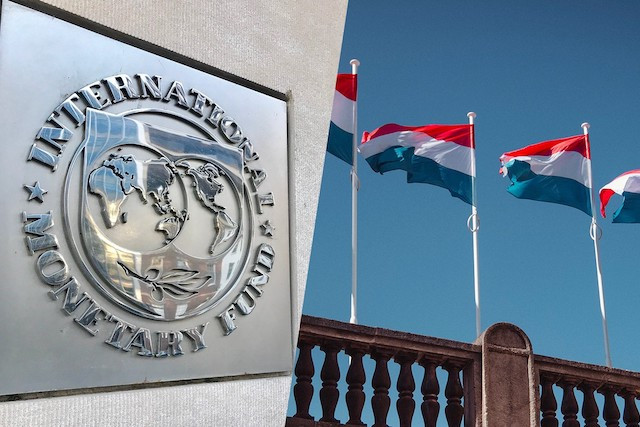
As part of an annual surveillance visit by the IMF to scrutinise Luxembourg’s economy and financial policy, the IMF said the grand duchy had resisted the pandemic relatively well so far, because of high government spending, widespread adaptation of remote working, and a comparatively rapid re-opening of the economy thanks to large-scale testing and effective monitoring.
Gross domestic product contracted just 1.3% in 2020 and the Washington-based institution expects a rebound in activity in 2021, to the tune of 4.5% growth. At the same time, production won’t return to pre-crisis levels in the medium term with the IMF anticipating labour market woes for some time to come.
The scale and speed of recovery will depend on how the health crisis unfolds, “but also more global factors such as the tightening of financial conditions, the acceleration of de-globalisation and potentially significant income losses due to changes in international taxation,” the IMF said during a press conference on Monday.
The IMF called for budgetary policy to be oriented “towards the most vulnerable in order to avoid an increase in inequalities,” which are already becoming manifest. It also said fiscal planning should return to normal when production has largely returned to pre-crisis levels.
Luxembourg is expected accumulate a €4.4bn deficit because of pandemic spending with public debt at nearly 30%.
In the longer term, the IMF said the grand duchy should be able to take advantage of its significant budgetary room for maneuver to maintain its high levels of public investment, “to fill its infrastructure gaps” and to accelerate its transition towards a green economy.
Recovery should also transition from preserving jobs--a current priority--to funnelling support to workers most affected, such as young people or low-skilled job seekers. For example, the IMF recommended spending to “upgrade skills and promote the reintegration of crisis-affected workers into the labour market.”
And while the IMF welcomed caps on bank lending to real estate investors, it said more should be done to limit household indebtedness and make property more affordable and the market more inclusive.
Property could also be an avenue to raise more revenue though by levying additional taxes, the IMF said. It also suggested an environmental tax to boost income and protect nature. The IMF urged Luxembourg to diversify revenue as a changing landscape of tax rules for international companies could diminish income.
The financial centre’s wellbeing is decisive for that of the economy. Nationally oriented banks remain resilient, the IMF said, nonetheless calling for vigilance because of structural profitability problems in the sector. On the investment funds side, the IMF called for deepter macroprudential supervision and regulation, more particularly internal methodologies for liquidity stress tests.
This article was first published in French on Paperjam.lu and has been translated and edited for Delano.