Bäcker is a first responder in Luxembourg’s fire and rescue corps (CGDIS), which means he works in the fire brigade but also in the ambulance service. The CGDIS counts around 4,000 active firefighters although many, unlike Bäcker, are volunteers.
“There was a lot of uncertainty,” Bäcker told Delano about the start of the pandemic, when there was little knowledge about the coronavirus, its transmissibility and dangers. But it was only when the first patients died, and friends and family members contracted the virus that Bäcker said he felt afraid of catching it himself.
“You don’t know what the long-term effects are,” he said. A colleague who was diagnosed with Sars-CoV-2 has not fully recovered his sense of taste or smell two months since the diagnosis, he said.
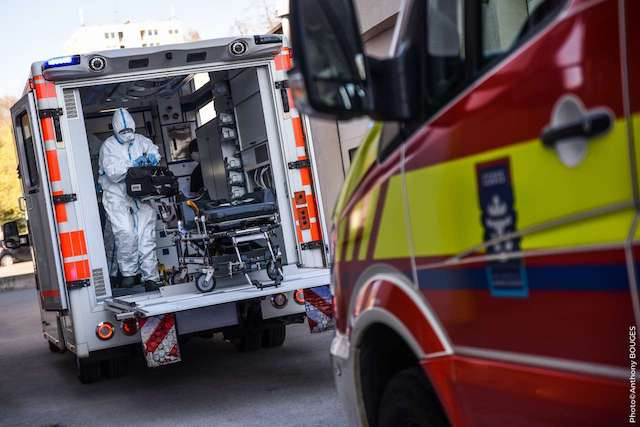
The 29-year-old has learned to respect the virus but also feel sympathetic towards the patients he treats as an ambulance driver and technician. “It’s as though they feel ashamed,” Bäcker said. Wearing a protective suit, mask and goggles for the first responder doesn’t help reassure them. “You feel like an alien. It’s difficult to speak to a patient normally.”
Life at the Luxembourg City emergency station where he is based has also changed. Throughout their 12-hour shifts, staff wear masks. Contact between colleagues is limited. In periods between being called out, Bäcker used to enjoy exercising on site but this also has been curbed.
Despite the restrictions, the camaraderie in his team of 35 first responders hasn’t suffered. “People are good at adapting and we’re making the most of it,” he said, “but it’s a situation you will never really get used to.”

Firefighter Kim Bäcker (Photo: CGDIS)
Bäcker said only three or four people in his team have become sick since the start of the pandemic. “The CGDIS is taking the right measures to get everyone through this as safely as possible,” Bäcker said. “We take this seriously because we see how badly people are doing, young and old.”
The first responder said older people are generally more affected because they have pre-existing conditions or lungs and a heart weakened with age. But he has also seen younger people, in their 40s or even their 20s, struggling.
Ambulance services are especially affected by the new safety measures. Vehicles are fumigated after transporting a covid-19 confirmed patient, leaving them out of order for several hours. More thorough disinfection takes place after a suspected case. “Everything takes a lot longer,” Bäcker said, but there have been no shortages of available vehicles and staff.
“It’s not easy. It’s been a long time, a year,” said Bäcker about pandemic fatigue creeping in. To balance the stress at work, he enjoys going out into nature, made easier now that the weather is turning to spring. “Of course, I’m looking forward to doing stuff with friends, going out, getting back a sense of normality,” he said.
Until then, he said the rules in place are there to protect everyone. “It’s important to stick together and stick to the measures.”