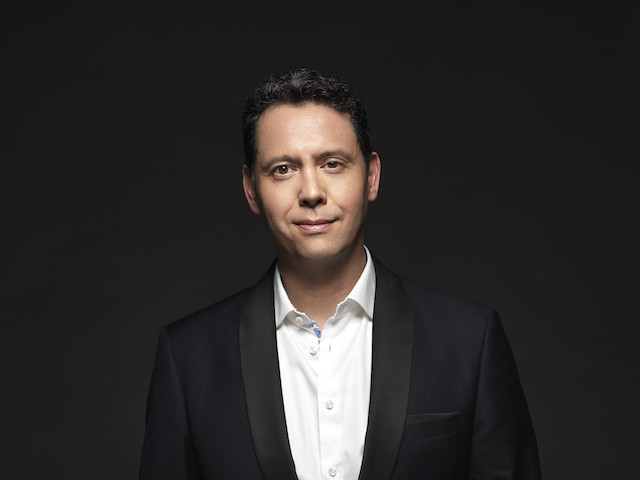
There is no denying that the covid-19 pandemic has put a strain on society as a whole. Reduced social contacts, face coverings and other measures are difficult to deal with for the majority of us, but they have made life particularly hard for those that live with a disability. The Info-Handicap association has been offering special support and help to those affected, director Olivier Grüneisen says.
What is Info-Handicap and what exactly do you do?
Olivier Grüneisen: We are a non-profit founded in 1993, because, at the time, a number of organisations for disabled people started to pop up and for normal citizens as well as different institutions it was very hard to get proper information. So the ministry started to think about centralising information, which eventually initiated the idea to create Info-Handicap in order to provide all kinds of material regarding disabilities in Luxembourg. This can range from information about disabled parking spots to state support or assistance at work, so it is really versatile.
Info-Handicap has developed and grown quite a bit over time, increasingly becoming a reference point, so that we also started providing training. For instance, we train bus drivers, teachers and all sorts of people to teach them how to properly communicate and interact with people with different disabilities. Additionally, we now also focus a lot on accessibility, collaborating with the ministry of the economy in order to work on accessibility criteria.
Another activity we have taken up that is really important is our legal service. This is primarily concerned with work, but also with school. The aim is to support people when they don’t know what kind of aids or benefits they can apply for, but also to give employers advice. This is actually still a big problem in our country, because a lot of employers do not want to hire people with disabilities. Our legal service...gives advice on accessibility requirements, benefits, etc. But it can also go further. For instance, if a disabled person experiences bullying or discrimination at work or school, they can come to us for advice and, in a worst case scenario, we will support them in going to court. So we really try to provide a maximum of communication to people in the sector and all those that are concerned or interested in how to interact or support disabled persons.
Approximately how many people in Luxembourg live with a disability?
Olivier Grüneisen: It is difficult to get a precise number, because we do not have centralised statistics on this matter in Luxembourg. However, that doesn’t mean that we don’t have any idea and the government, in the new action plan, is also working on providing us with the tools to get more precise statistics. But in general, we believe that roughly around 15% of the population in Luxembourg have a disability of some kind, so around 80,000-90,000 people.
Looking more specifically at the past few months, with all the measures and restrictions that have been put in place in order to fight the covid-19 pandemic, how has everyday life for people with a disability changed during this time?
Olivier Grüneisen: I mean, it is a global pandemic, so it is a situation that, for society as a whole, was a real shock, not just for people with a disability. It wasn’t easy because everything went very fast and information didn’t always come through very well. Something we noticed, and historically this has always been the case, as soon as there is a crisis, the most vulnerable, people with a disability, the elderly, the unemployed, are always those that struggle the most. During the first few press conferences, the different kinds of disabilities weren’t taken into account enough. People with a cognitive disability for instance have trouble understanding the extended vocabulary of politicians, therefore it is important to also provide information in simplified language that is understandable to everyone.
Another issue was the lack of subtitles during the first press conferences, they were later on added online but there was also no sign language translation for the hearing impaired and this was a really big issue. One of the first things that happened during lockdown was the closure of schools, which was very anxiety-inducing, especially for parents with disabled children, who were wondering what to do. There were inevitably situations where the individual needs of disabled people and their relatives were not always respected. Lots of questions came up during this time, especially for people in very specific situations, for instance those that needed specific therapy or medicine from abroad. It wasn’t clear whether they were still able to get this, as borders were closing. And obviously the uncertainty was really difficult for these people to deal with.
Joanne Theisen - The needs of people with disabilities are the same, but the strategies to respond to them are more specific. And so problems arose that we hadn’t even thought about before. It was a very educational experience I think, for the government as well as for us as an organisation, because we were suddenly confronted with situations for which there were no solutions yet, because they were never needed before. We conducted a survey to get feedback and heard back from some people on how the measures have changed their every day. People with a psychological disability for instance, experienced an increase in their symptoms. People with autism are in need of a set routine to get their ticks under control, but during lockdown some of them fell back into their old habits. Those with visual impairment also struggled. We heard back from someone who said taking public transport was almost impossible, because bus drivers weren’t allowed to open the front doors of the bus anymore, but someone with a visual impairment is dependent on talking to the bus driver to make sure they are on the right bus.
Olivier Grüneisen: I think that for someone with a disability, who is often very depended on a set daily routine, this sudden change was really difficult. Obviously, it is a situation that was difficult for everyone but as I’ve said before, for the vulnerable it was even harder. Also, for people with a hearing disability masks are a big problem. We’ve heard from affected people that the mask was a real communication hurdle, as they weren’t able to read lips anymore or express themselves properly, so the feeling of isolation increased significantly.
Looking at all of these challenges, what do you think can be done in order to facilitate the everyday experiences of disabled individuals during this time?
Olivier Grüneisen: I do think it is important, as with everything, whether we’re in a pandemic or not, to think of everyone and include everyone in discussions. And this is really crucial, so even on a government level, when the government takes decisions, it should also consult with organizations like ours in order to consider special needs of certain people and offer maximum support. I think the only way to include those people is by talking to and with them and consulting them when decisions are taken, because if you include someone, naturally you are not forgetting them. As a result, people will also be more accepting of the measures, because they have been part of the decision-making process.
In honor of the international day of persons with disabilities and in order to showcase the everyday experiences of individuals with special needs, Info-Handicap has launched its “Action! Our year, our life" campaign. It is a digital advent calendar consisting of short videos that showcase the personal passions, experiences and challenges people face in their everyday with and without a disability. Between 3 and 24 December a new video will be broadcast every day on Info-Handicap’s website.