Moreover, that also represents a cost of some €900,000 to merchants--not to mention the environmental impact in terms of resources.
TiQuest hopes to change that.
The startup launched in January 2020, the team having worked in Italy previously on the concept’s R&D before setting up in Luxembourg. While Marquet hesitates to say what’s in store for 2021, given how 2020 has turned out, he says the end goal is “a big ambition: we want to make Luxembourg the first country in the world to stop printing paper receipts. As Luxembourg is a small country, it would be easier than in a big country, because it’s matched with the government roadmap to make Luxembourg a digital and sustainable economy.”
Marquet adds that he’s working on a large-scale pilot project with a financial institution, expected to launch in 2021, but for now “it’s too early to disclose it.”
Helping restaurants in hard times
With TiQuest’s hardware and service, Marquet says merchants “can have a digitised shop in less than five minutes.” While merchants can gain quick insights--in real time--over their operations and sales. With the ability to check receipts through a smartphone, consumers also benefit from not having to deal with paper receipts, plus it can help them streamline their personal finance.
Marquet recognises how restaurants had to readapt in light of the health pandemic, and he sees over the coming year how TiQuest’s work could benefit restaurant and café owners. He says previously digital menus aren’t always adapted to an ideal user experience, hence TiQuest’s digital menu solution.
“We developed a digtal menu solution, we want to deliver for free to all the restaurants in Luxembourg [so] users can order, pay directly from the table.”
Forward looking, Marquet says TiQuest is also developing a solution which would allow retailers to see, in real time, the positive impact their digitalisation is having in terms of sustainability.
Web Summit participation
Although Marquet missed the live, physical aspect of this year’s Web Summit, he says the communication by the event organisers was excellent nevertheless, and the largest tech summit still presented nice opportunities for him and the team, given that they met with eight investors over the three days.
TiQuest also participated in a roundtable event, which gave the team a chance to share their work with the community there.
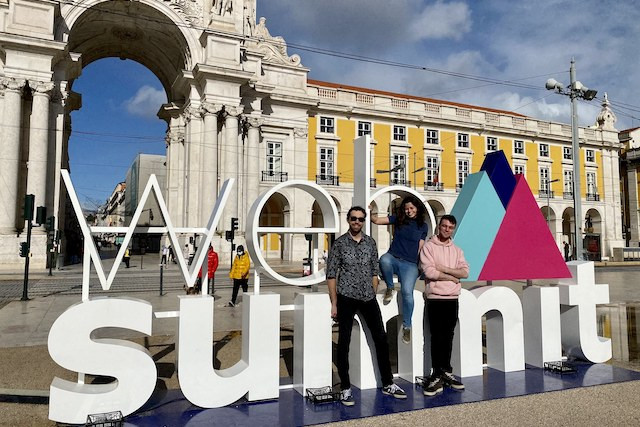
While most of the over 104,000 participants from 160 countries to the summit joined digitally this year, TiQuest was among those to head to Lisbon for the event.
Marquet says he enjoyed the “mingle” function of this year's Web Summit, which was a feature specifically designed to virtually replicate those bump-into-people interactions that happen at summits. A sort of professional speed-networking, Web Summit participants could decide to “mingle” and be immediately connected with another participant virtually over three minutes--just enough time for brief introductions and for participants to determine whether there was an avenue for future collaboration.
“As our startup members are from three different countries and we work remotely, it was super nice to spend together good quality time in Lisbon,” Marquet told Delano. “The digital event was okay, but we are definitely looking forward to go back to physical event.”