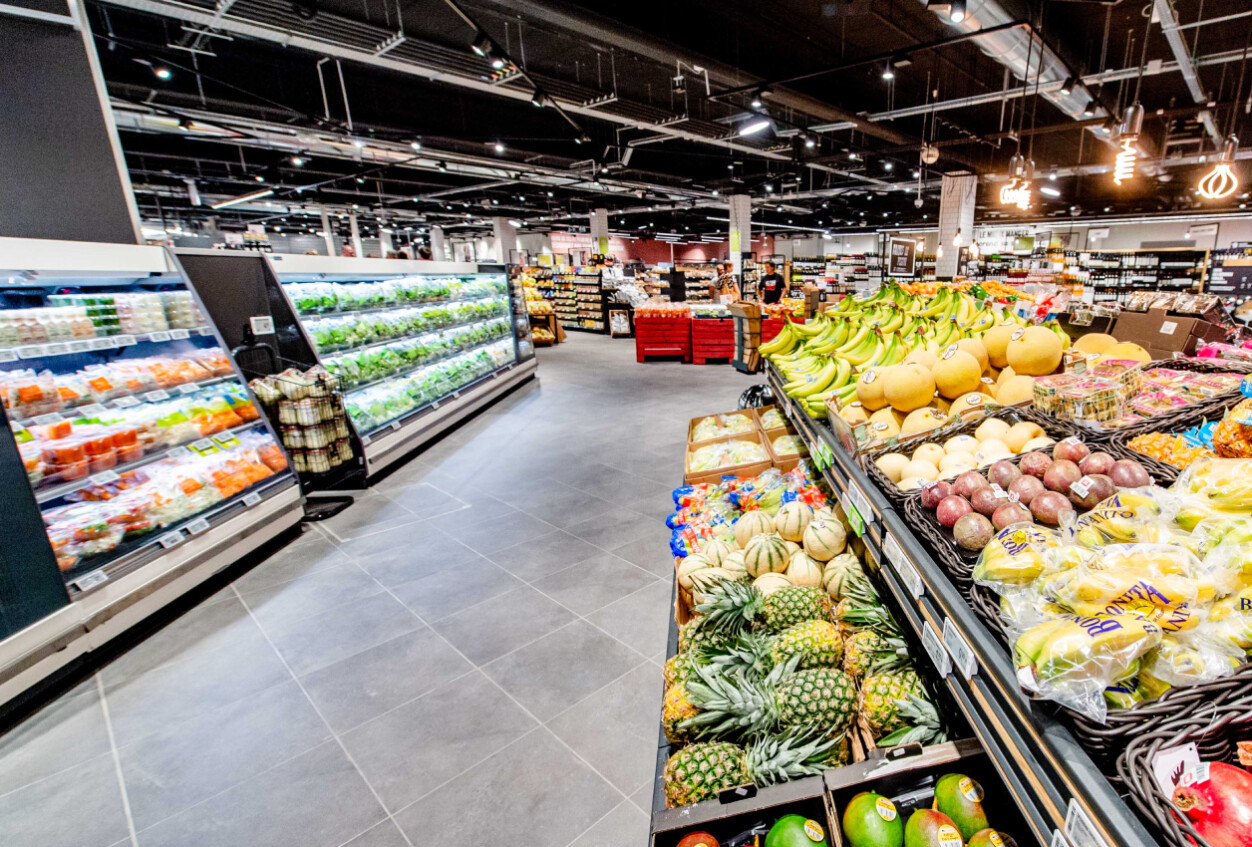
The freezers have been running non-stop. They have been instructed to turn up the heating.
In a supermarket, refrigerated display cabinets, freezers and cold stores are connected to a control system. This system regulates the temperatures. It triggers alarms. It also keeps a record of the readings. The same system controls the defrost cycles. This function heats the evaporators intermittently to remove ice. It is normally activated for a limited period. The attackers hijacked this mechanism. They triggered or extended the defrost cycle remotely. The systems then blew out hot air instead of keeping the food cold.
The manager of a Delhaize Proxy shop in Overijse, Belgium, said he was alerted at around 3 am. When he arrived at his shop, all the refrigeration units were in defrost mode. He estimated the temperature of the air being blown out to be around 40°C. The stock had to be removed. Sabcobel, a Belgian company specialising in commercial refrigeration, was called out to several shops. Its director, Stephan Moelans, said that technicians had been mobilised as early as 1 am. In particular, they disconnected the affected systems from the mains supply.
Four shops affected in Luxembourg
The attack mainly affected Belgium. “On Monday 2 November, we identified an IT incident affecting the refrigeration systems in several dozen shops, including four shops in Luxembourg,” a company spokesperson confirmed. “We immediately took the necessary steps to keep our shops running and enable our customers to continue shopping as normal. In the shops affected, the range of fresh and frozen products is temporarily somewhat limited. Our distribution centres are operating as normal and there have been no disruptions to deliveries to our shops. We are, of course, ensuring that our products are stored and displayed under optimal conditions, so as to guarantee our customers the quality and freshness they have come to expect.”
Remote access to refrigeration systems meets an operational need. It enables a technician to receive an alert during the night. They can check the temperatures and adjust certain settings without having to go to the shop straight away. This arrangement also creates a point of entry for cyberattacks. An attacker may search for a controller that is directly exposed to the internet. They may exploit unpatched software. They may also use compromised credentials or gain access via a service provider’s remote maintenance account.
The method used in Delhaize stores has not been made public. Nor are the manufacturer and model of the affected controllers in Luxembourg known. There is, however, a lead. A similar attack affected several hundred French stores during the night of 11 to 12 October. Hackers had taken control of refrigeration systems. They had extended the defrost cycles and altered the temperature settings.
Some French shops were using controllers manufactured by the Danish company Danfoss. The company had already issued several security alerts. In 2023, a critical vulnerability affecting the AK-SM 800A could have allowed remote commands to be executed. In 2025, Danfoss had patched a new vulnerability that allowed authentication to be bypassed, followed by two further vulnerabilities.
Danfoss had stated that the majority of the devices affected in France were old or had not been properly updated. However, other attacks in France had targeted controllers marketed by Dixell. The problem is therefore not necessarily limited to a single manufacturer. In Luxembourg, Sabcolux states that it installs, refurbishes and maintains refrigeration equipment for Delhaize and Proxy Delhaize. The company was founded with the support of Sabcobel. It also offers a permanent after-sales service.
Its projects provide an insight into the technical infrastructure of certain shops in Luxembourg. In Niederkorn, Sabcolux has installed Costan refrigerated display units, a CO₂ refrigeration system from Teko Refrigeration and Güntner evaporators. Danfoss is listed among the technical partners for this project. Sabcolux also mentions Danfoss in connection with the refurbishment of the Delhaize in Belval. In Belgium, Sabcobel also documents the use of a Danfoss temperature monitoring system in a Delhaize AD in Ternat.
These findings prove that Danfoss technologies are used in Delhaize’s refrigeration systems. However, they do not prove that the Luxembourg shops that were attacked were using the vulnerable models. No technical link has yet been publicly established between the French wave of attacks and the incident reported in Luxembourg.
Yet another cyberattack in Belgium on 12 October
The questions are all the more pressing given that Ahold Delhaize was already investigating another cyber-attack. The group had detected suspicious activity within its IT infrastructure on 12 October. It had taken several systems offline as a precaution.
On 19 October, Ahold Delhaize confirmed that this incident was the result of malicious activity. The majority of its stores in Europe and the United States had been affected to varying degrees. The shops remained open, but websites, apps and e-commerce services had been unavailable. The group had filed a complaint with the Dutch police.
No link has been established between this intrusion and the attack on the refrigeration systems. The scope of the two incidents appears to be different. The first incident concerned the group’s IT network. The second appears to have targeted technical equipment installed in the shops and possibly managed by external refrigeration contractors. However, the proximity of the two events has prompted Ahold Delhaize to clarify whether refrigeration management tools, maintenance access points or the contact details of its service providers were within the scope of the first intrusion.