How would you summarise the role of ESG in Nextensa’s strategy?
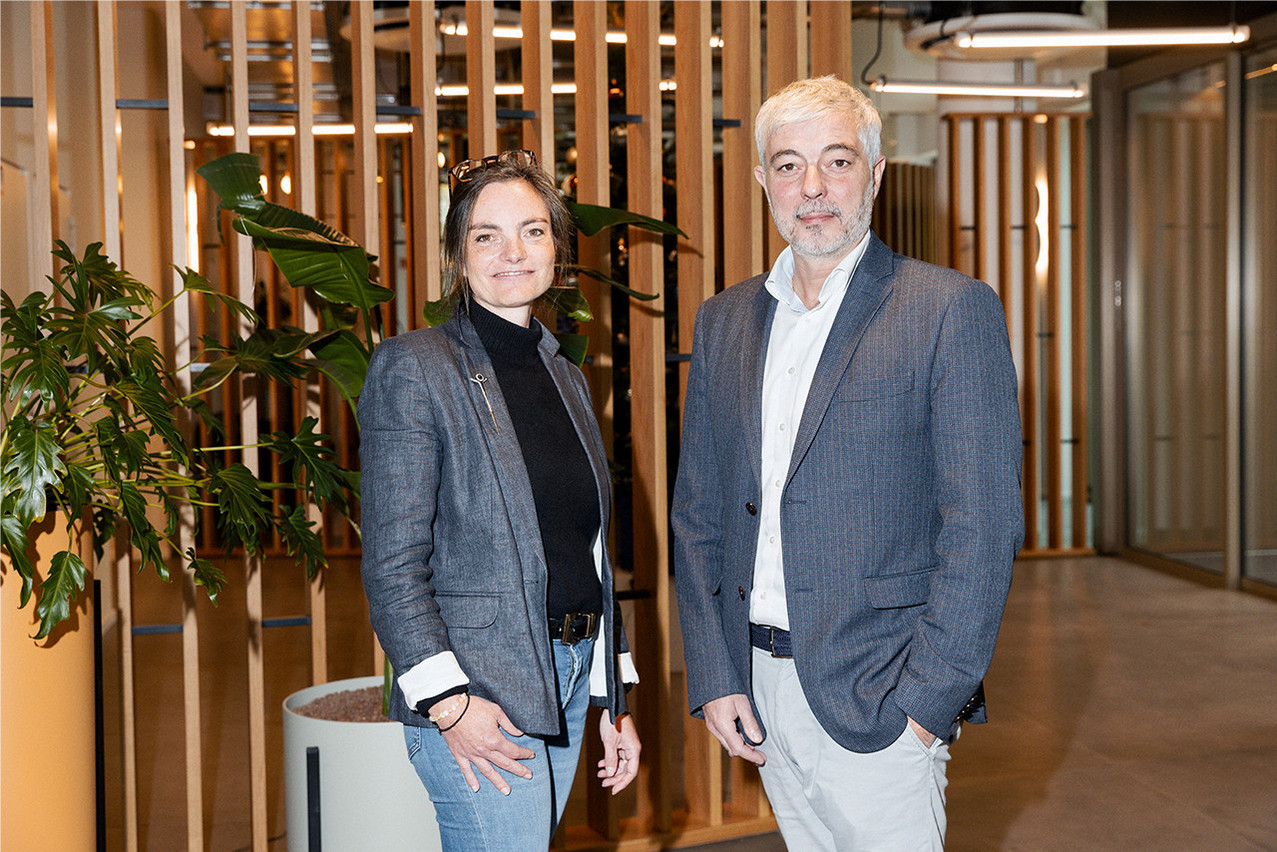
Valérie Vanderveken, ESG Project Manager: We observe a clear willingness among investors, clients and tenants to integrate these environmental, social and governance criteria. Beyond regulatory requirements, ESG is a strategic decision-making tool. Planet, People and Prosperity form a single, coherent reasoning - indispensable for building a long-term sustainable vision.
How do these three pillars influence your projects?
V.V.: Buildings and their immediate surroundings form a whole. Our mission is to develop assets that are resilient to climate challenges while fostering social cohesion and the project’s economic viability, thereby contributing to sustainable and shared prosperity. These three dimensions are balanced according to the constraints and opportunities specific to each project.
We involve the ESG team very early in the design phase; financial considerations and sustainability go hand in hand.

How does your ESG team intervene in practice?
V.V.: Our ESG team is made up of four people. This committee advises internal management on strategies and objectives. At the same time, the ESG team plays an operational role by overseeing data-collection tools, which allow us to analyse the impact of our actions within projects.
William Moulin, Head of Luxembourg: We involve the ESG team very early in the design phase; financial considerations and sustainability go hand in hand. This component is now central to the way a real estate project is developed, as it profoundly shapes its typology.
Beyond the regulatory framework, ESG is a valuable strategic decision-making tool.

How are current usage patterns transforming the way buildings are designed?
W.M.: Analysing today’s usage is essential in order to anticipate - and sometimes influence - the usage of tomorrow. Behaviours have changed significantly in recent years: flexible hours, remote work, exercising during breaks… Workspaces must adapt to these new habits. Whereas tenants used to remain in their private offices, they now open up, move around and cross paths, encouraging more dynamic interactions. We are witnessing a real paradigm shift in the way professional environments are conceived.
V.V.: Our aim is to support this change by integrating facilities such as secure bike rooms and showers to encourage soft mobility, and by designing ground floors with leisure areas that promote social interaction among users.
What concrete results have you observed in your recent projects?
W.M.: On the Moonar campus, our office complex in Findel, we carried out four years of renovation. We did not lose a single tenant - in fact, we attracted new ones. Feedback has been very positive. Users are increasingly appropriating the social spaces, integrated services and landscaped areas.
V.V.: For Moonar, the objective was to reduce primary energy consumption by 30%, which has been achieved. Thanks to a combination of solutions - such as optimising the envelope’s insulation and improving the efficiency of technical installations - a coherent sustainable renovation translates into measurable results.
How do you combine sustainability, mobility and quality of life?
V.V.: When designing our projects, we create spaces based on the urban model of the 15-minute neighbourhood. This concept aims to provide access on foot or by bike to essential needs, thereby reducing dependence on cars. The impact is positive on several levels: reduced emissions, preservation of natural areas, and enhanced quality of life through the creation of shared spaces.
Proof through example
Moonar, Luxembourg
Located in Findel, the Moonar office complex reflects Nextensa’s ESG vision: environmentally, a 30% reduction in primary energy consumption; socially, the integration of facilities that enhance quality of life at work.
Tour & Taxis, Brussels
In the heart of the Belgian capital, the Tour & Taxis site combines industrial heritage with new developments. It aims to become a model of sustainable urban redevelopment by creating “climate-adaptive” buildings and healthy, inspiring places to live and work. A clear governance structure guides Nextensa’s vision and actions, positioning real estate as a driver of long-term value creation.
Avenue Monterey, Luxembourg
Nextensa is currently developing an ambitious project: the first timber-structure office building in downtown Luxembourg, located on Avenue Monterey. The choice of material results from a carbon analysis and aims to reduce the project’s total emissions.