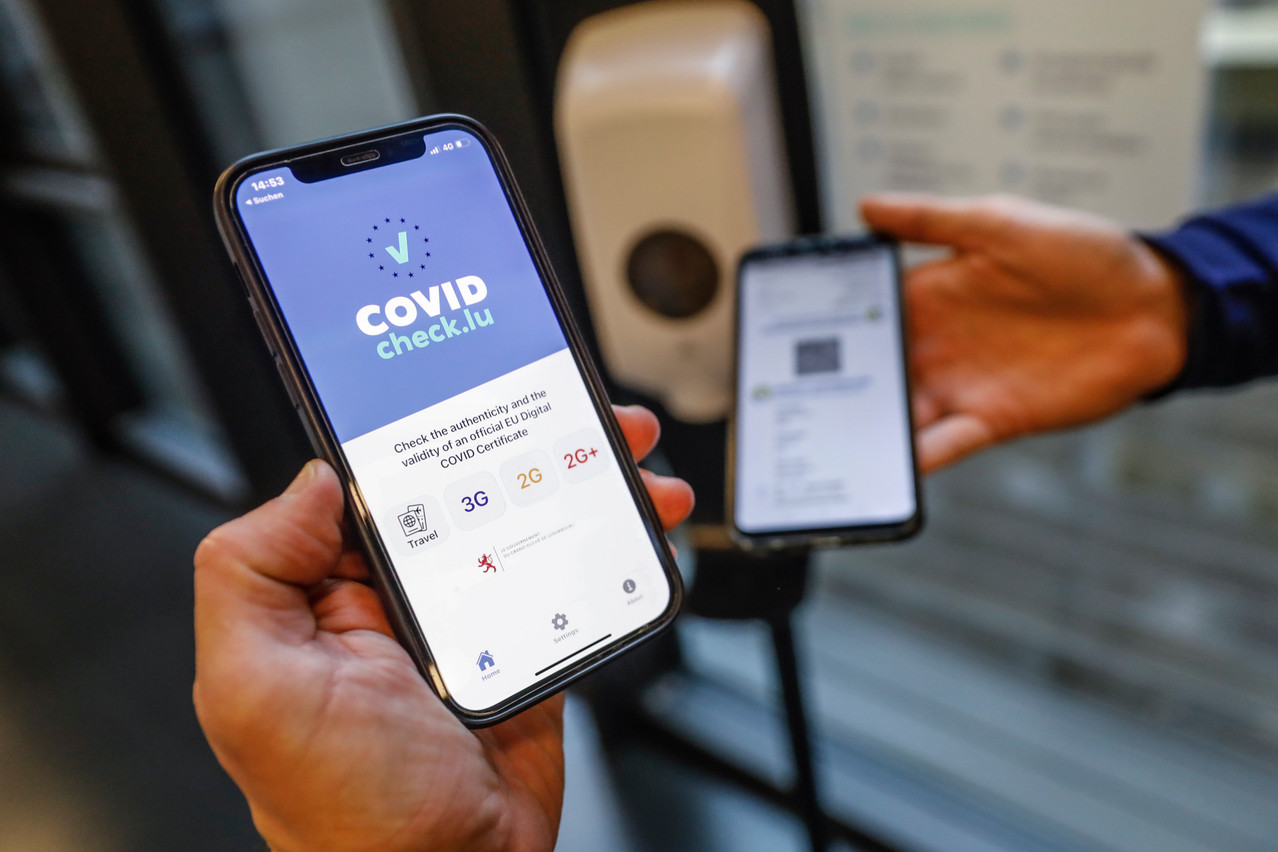
The CovidCheck regime has been compulsory in companies for three weeks, but will now become optional again, the government announced last Friday. Companies have had to implement a change in organisation with some even investing in specific control terminals.
However simply not keeping the CovidCheck regime in place is easier companies like hairdressing salon Ferber. "No, we are not going to keep it", says junior partner Lionel Ferber. “It's a relief for the organisation. And for the 7% of employees who were not on the list of those vaccinated or recovered. Of the company's 165 employees, one had taken six hours of unpaid leave per week to reduce attendance and thus testing costs.
The other concern, as in many companies, came from absences linked to people having to quarantine due to being in contact with someone who had tested positive for covid-19. Ferber stated he was pleased that the quarantines for the people in those situations have come to an end.
The return of negotiations
“Keeping 3G as an option is not a solution because the company does not have the power to implement it," says Luxair CEO Gilles Feith. He had wanted to implement it when it was optional, but did not succeed in obtaining the agreement of the trade unions. “We saw that we had 93% of people vaccinated outside of cargo. I think that we should now give them more freedom.” It remains to be seen whether the unions will agree. In the cargo sector, where 69% of those vaccinated or recovered are on the list, "it is still difficult to implement 3G," admits Feith. He says he is “happy with the help of Cargolux”, which has taken over the testing of the non-vaccinated.
For many other companies the course of action is still under discussion. “For us, it's not very important,” says Céline Seré de Lanauze, head of human resources at System Solutions, an IT company with 56 employees. “We have a list and everyone is on it.”
The topic of the moment in internal meetings
“As long as the law is not passed, we remain under CovidCheck. We don't have a directive yet," explains ArcelorMittal. “Generally speaking, we comply with the law.” The steel company admits that its implementation represented a significant investment of time, particularly in explaining the measures to the 3,660 employees.
The Banque Internationale à Luxembourg (BIL) had invested in terminals at each entrance to check the QR codes of its 1,890 employees. The bank says that “it is still being discussed” whether that system will be abandoned.
At CFL, “a consultation is taking place internally”, explains the railway company of 4,580 employees. It is waiting for the date of entry into force the scaled-down restrictions announced by the government. Even if it recalls that “the organisation of CovidCheck was complex in view of our form of organisation and the geographical distribution of our activities”.
The same goes for Post, which is waiting for “the final vote on the law” before taking a decision concerning its 4,620 employees.
Companies that want to continue to implement the CovidCheck regime will be able to do so and “add security, avoid social distancing rules and wearing masks", says the director of the Union of Luxembourg Companies (UEL), Jean-Paul Olinger. While others will "perhaps stop because it is more complicated to do so at an organisational level”.
This story was first published in French on Paperjam. It has been translated and edited for Delano.