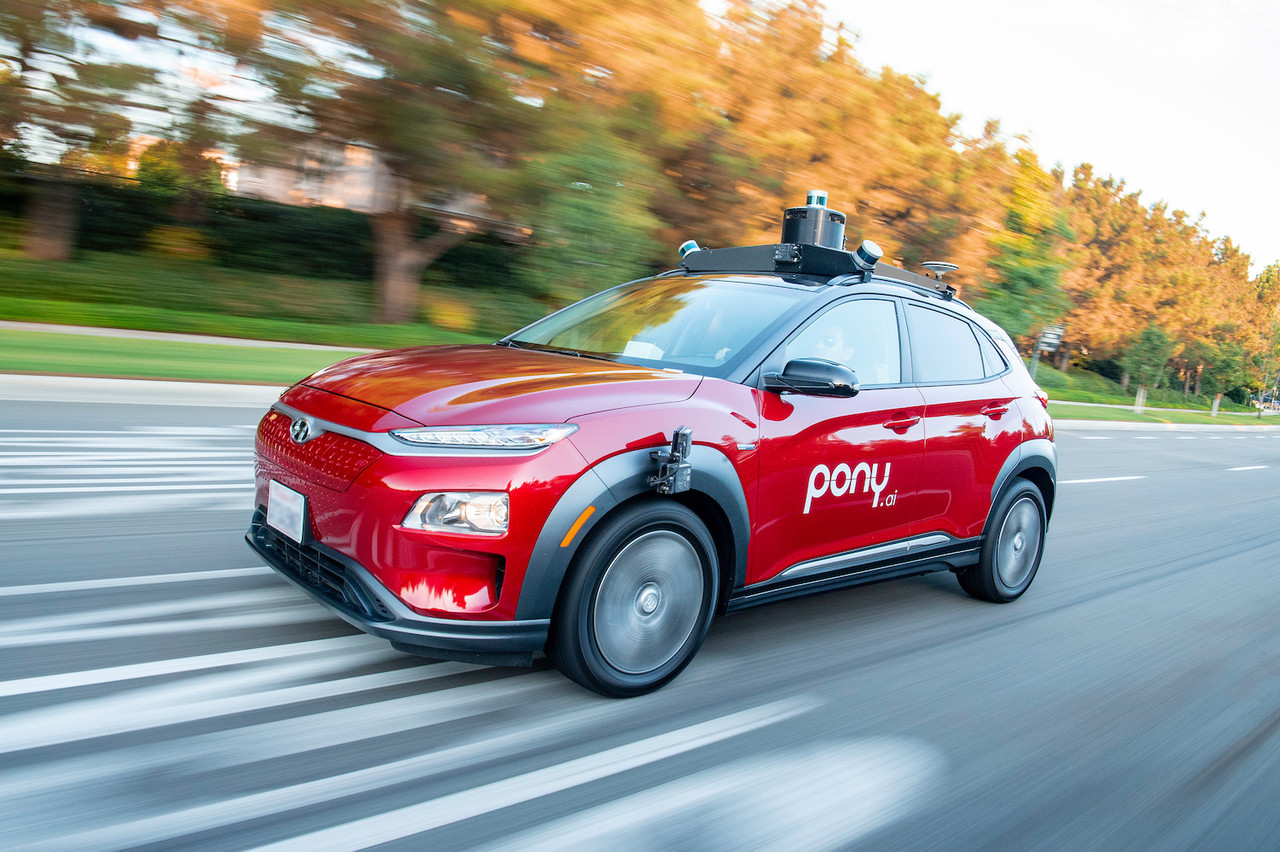
The building is starting to look like a building, although the story goes that Pony.ai CEO James Peng seemed to be expecting something more spectacular last week. In Bissen, on the 14-hectare Automotive Campus that succeeded the Goodyear plant eight years ago, the ribbon should be cut before the end of the summer. The American startup Pony.ai is due to officially open its European research centre here. It’s also worth noting that Technoport will be responsible for developing this campus, which has been virtually at a standstill since the covid and inflation crises.
In fact, since the announcement on 7 March of an agreement with the Luxembourg authorities, things have really moved forward quickly. Last week, during a European roadshow, the startup’s CEO included a much-vaunted slide on the future of his company in Luxembourg, leaving no doubt that the move was imminent. And yet, the commercial register has not yet recorded the establishment of any of the company’s subsidiaries or holding companies in the grand duchy. The reason for this is the European green light for investor control, which should not be long in coming. Two sources suggested that a decision will be taken within a week, and that the application will finally be submitted in the correct form.
Towards adapting German legislation
The Luxembourg authorities have removed another doubt: Pony.ai will be able to operate its autonomous vehicles on certain roads for two years for research purposes. This exception will make it possible to get round the current legislation until European legislation emerges... or until Luxembourg copies the German legislation.
In May 2021, the Bundestag passed legislation authorising the circulation in public spaces of vehicles with level 4 autonomy (out of 5; 5 being the ultimate degree of autonomy for a car), which provides for a whole system of prior registration of the cars, recording of driving data and insurance to supervise their circulation as far as possible and avoid an accident having dramatic consequences. Although the media, especially in the US, regularly report accidents and incidents, researchers have established that the results of autonomous driving are clearly better than those obtained by humans.
“Europe is a large market that we cannot ignore. Europe has enormous potential in terms of autonomous mobility. Luxembourg is a small country with an open-minded government, so we can use it as a starting point in Europe,” commented Pony.ai CEO James Peng at Move, a mobility event in London. He also reiterated that he wants the company to grow as fast as possible, which has led him to negotiate further deals in Saudi Arabia, the United Arab Emirates and South Korea.
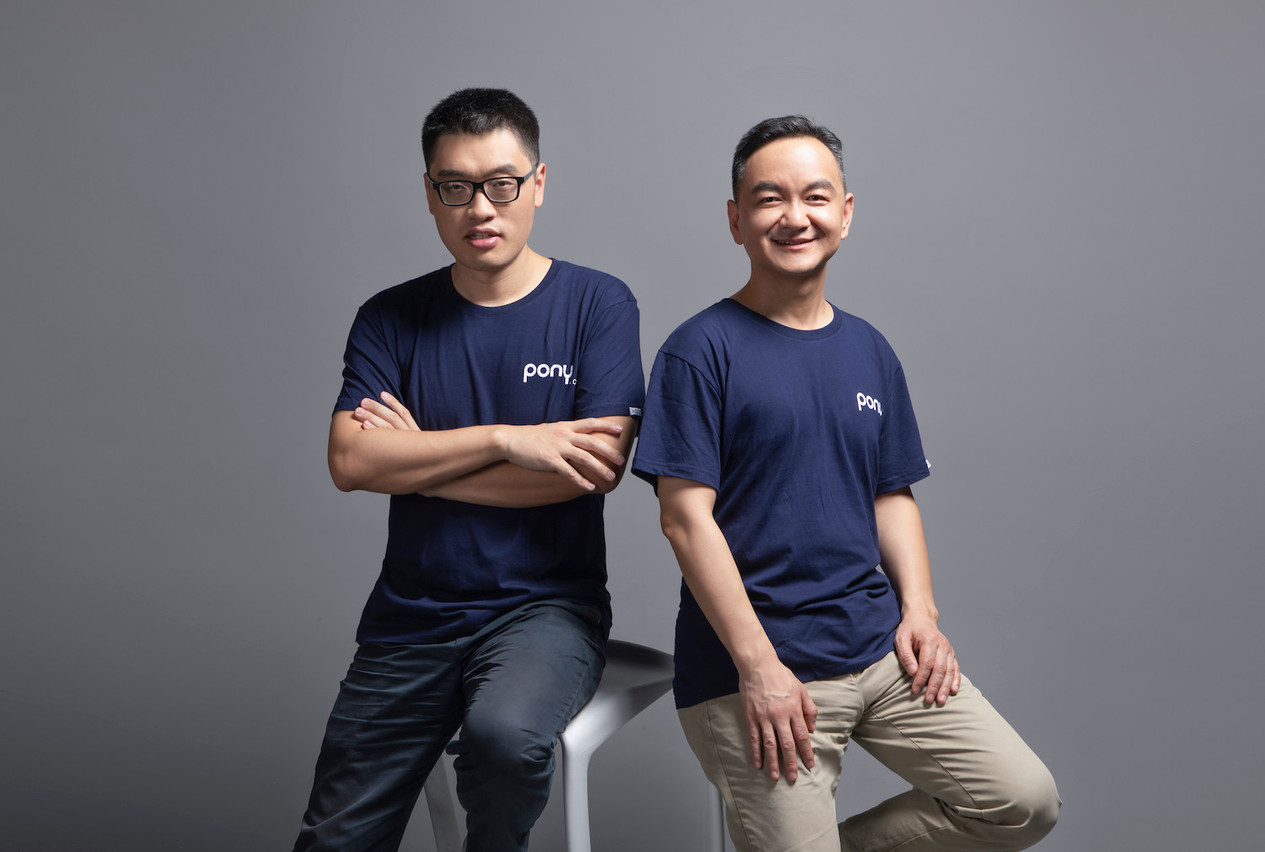
Tiancheng Lou and James Peng, the two co-founders of Pony.ai. Photo: Pony.ai
Two months after announcing the arrival of the European research centre in Luxembourg, the company announced a partnership with Toyota and its joint venture in China to accelerate the arrival of autonomous cars in four Chinese cities (Beijing, Guangzhou, Shanghai and Shenzhen). Today, more than 200 robot taxis, based on the Lexus RX450h and Toyota Sienna models, carry out passenger transfers between a Beijing railway station and an area to the south, in 40 minutes, journeys that are currently supervised by human drivers.
In total, the vehicles of this company, which was founded in 2016 in Silicon Valley, have already clocked up more than 32 million kilometres.
Pony.ai is valued at more than $5.3bn after raising more than $1bn in financing, including from Toyota, its most committed industrial partner. According to some American sources, the company decided not to go public via a Spac in New York in October, so as not to upset either its American or Asian partners.
Originally published in French by Paperjam and translated for Delano