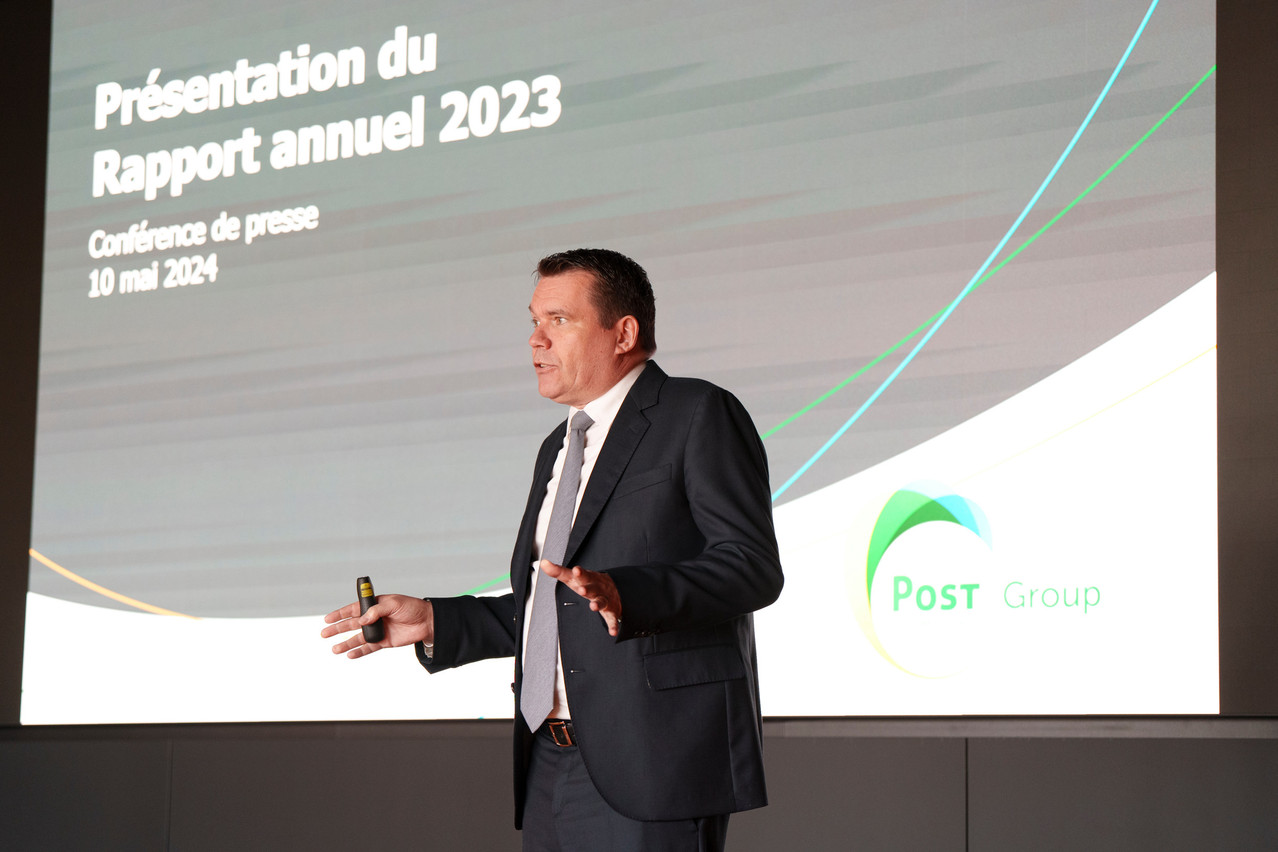
“Post is increasingly becoming an IT company. That’s a fact of life,” said Post Group CEO 
Because in absolute terms, the ‘Telecom’ business line has exceeded half a billion euros for the first time, up by almost €15m year on year. With postal services more than holding their own and the subsidiaries continuing to make their contribution, profits reached €57m, almost as much as in 2022 (€30.95m) and 2021 (€28.74m) combined.
“It’s interesting to see how Post’s results have evolved,” said the chairman of the board, 
As he does every year, Allegrezza emphasised the context of the public establishment--an international context with the remaining effects of covid, the crisis in Ukraine, rising energy prices and inflation, but also a national context with the Post group, “a creator of value for society”: €426m of purchases, €2.142bn in investments, mainly in broadband and 5G; €7m in income and wealth tax; and €15m in dividends.
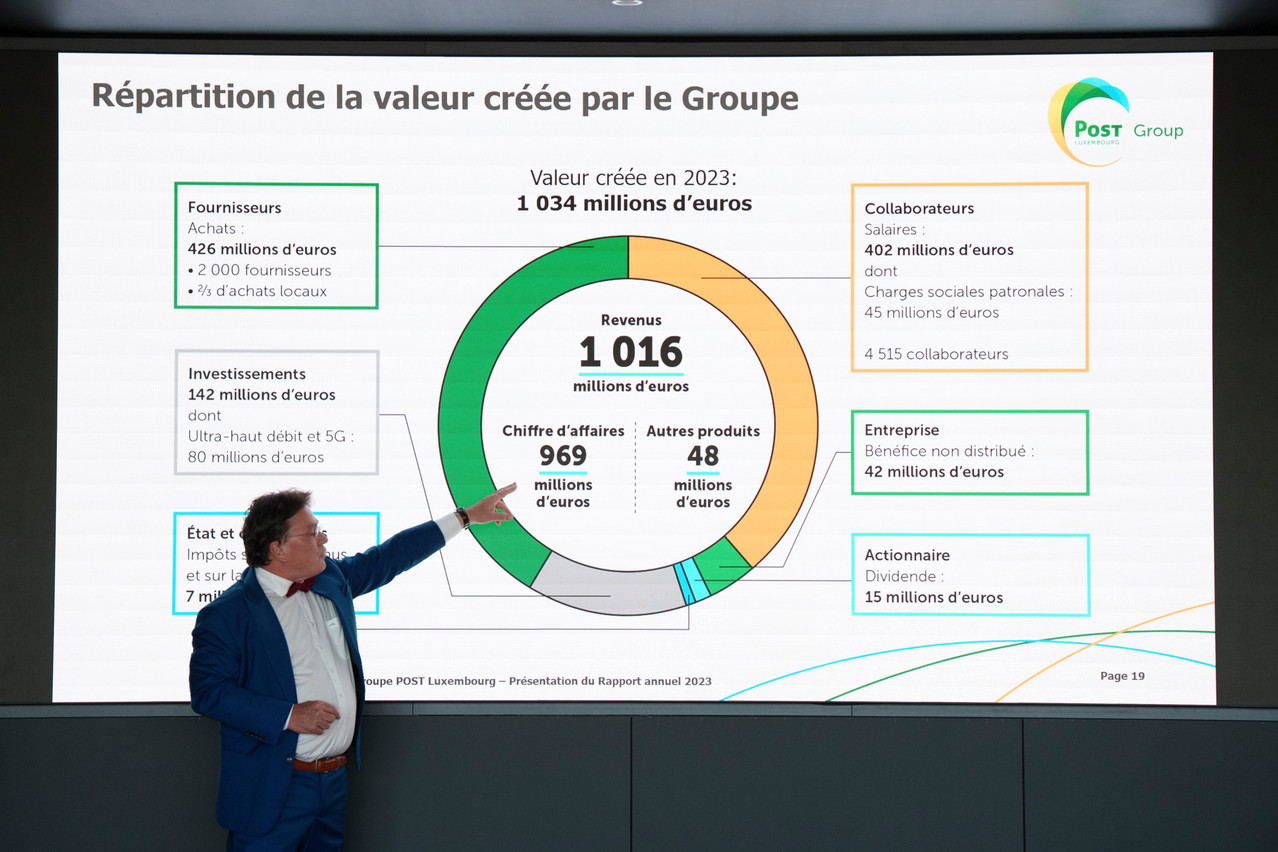
“It’s interesting to see how Post’s results have evolved,” said chairman Serge Allegrezza, “since sales have increased by 4.6% with a stable workforce, which shows rising productivity,” 10 May 2024. Photo: Post Group / Anthony Dehez
Ahead of its ESR report, Post will be “compliant with the CSRD directive from 1 January 2025 for its first annual report in 2026,” said the CEO, with particular focus on energy sobriety and efficiency and on diversity and inclusion.
As part of the “Eis Post, eis Zukunft” (Our Post, Our Future) strategy, covering the years 2023 to 2027, Strasser announced a change to come before the summer for the benefit of businesses and a level of investment of €100m per year, excluding property, including €25m to €30m for the continued development of fibre optics. “There is a need for housing, so we will have to connect new areas, but our ambition remains to cover 99% of the territory by 2030,” 84% of which is covered today, with more than two-thirds of eligible customers having switched to fibre to improve connectivity. “If not a record in Europe, at least in the leading pack.” 5G, meanwhile, is taking 30% of traffic. “It’s been a long time coming, but now it’s catching on,” said Strasser.
“Our approach has evolved,” he said, “what we implement must meet the criteria of responsibility and profitability without us having to make trade-offs between these two notions.” Where does Post’s responsibility lie? In reducing our environmental footprint, in responsible digital transformation and in the digitalisation of society and the economy.
Originally published in French by Paperjam and translated for Delano