You know Luxembourg well and, at the same time, you observe its evolution mainly from abroad. Does its success surprise you?
Philippe Schaus. - The most remarkable thing is the continuity of its success and the country's ever-renewed ability to get through the crises it has encountered along the way, by managing the consequences of these crises, but above all by transforming itself thanks to new growth axes. This dynamic is remarkable and relatively unique in Europe.
This description does not seem unusual to residents...
Yes, but we must not stop questioning ourselves. Nothing is more dangerous than continued success. Over the last hundred years, Luxembourg has been able to maintain this state of mind of questioning and continuously exploring new opportunities. I hope the country will never take its success for granted.
In what area of activity could Luxembourg continue to grow or what area could it exploit, given its strengths?
Luxembourg will always have opportunities in sectors related to knowledge, technology and services, and then everything related to trade and international relations. It is one of the BCFL's missions to identify and promote these opportunities by connecting Luxembourg and French companies and decision-makers who are active in these sectors.
Today we are more into epicureanism than into reckless consumerism.

To return to your field of activity, wines and spirits, do you consider that purchasing behaviour has fundamentally changed since the beginning of the crisis?
A first aspect to note is that our online sales have been growing strongly since the first lockdown and are now four to five times higher than they were four years ago. So the restrictions have led to an increase in home consumption. In addition, we have seen a move upmarket by consumers who have wanted to treat themselves. This was accentuated when restaurants and hotels reopened and we saw a form of catching up in all our markets, the first being the United States. This phenomenon can be explained by a desire to rediscover pleasure and an ability to spend because of the savings accumulated during confinement.
Are you anticipating a surge once the pandemic is behind us?
Today, one hundred years after the last Roaring Twenties, we can consider that a certain desire to “live again” is being expressed. On the other hand, we are now more into epicureanism than into reckless excess of consumption. World consumption of alcoholic products is tending to fall, while the top of the range continues to grow, to the point of running out of stock on certain products whose production process requires time and know-how.
Epicureanism, catch-up effect, online sales... how do you see the future of consumption of your products?
The wine and spirits sector was one of the least present online. This crisis has led to a catch-up effect on this level and online purchases are here to stay. This does not prevent the need to go to the shop for advice. As for the move upmarket, I think that this trend will also continue. It's always difficult to go back when you have discovered new experiences, new pleasures, for example tasting a bottle of Veuve Clicquot's La Grande Dame. We are therefore going to deal with a more reasonable, more epicurean, more digital consumption that is very focused on quality.
How do you integrate public health notions into your approach?
We all know that alcohol has harmful effects that can be significant depending on the quantity and frequency of consumption, as well as the profile of the consumer. Our objective is that each bottle from one of our Houses should delight as many people as possible, in a spirit of tasting and epicureanism and a sharing of experience and conviviality, while remaining within the health and safety thresholds that everyone must take into account.
More generally, what about your corporate “social responsibility”? What is your strategy in this area?
Our strategy is based on a platform entitled "Living Soils, Living Together", with our environmental responsibility on the one hand and our responsibility towards women and men on the other. The latter covers responsible consumption as well as diversity and inclusion in our teams.
As for the soils we use to create our products, we continue the long-term approach of their founders. These entrepreneurs all wanted to leave their businesses with the precious asset of soil in the best possible condition. We have enhanced this approach over the past 20 years by adhering to best practices in soil management and controlling our impact on the environment. For the past two years, we have acted directly on the preservation of biodiversity by creating, for example, dedicated corridors within the vineyards, as at Ruinart. We have also invested some €30m in Champagne in a research centre dedicated in particular to studying the links between the use of soil for our vines and biodiversity or the impacts of global warming. All of this is being done in a spirit of sharing with our colleagues and competitors. The planet belongs to all of us, but it is also up to all of us to take care of it. It is in this spirit that I am organising our first “World Living Soils Forum” in June this year in Arles, where we will bring in experts from all over the world to discuss and exchange views on these issues.
Are you aiming for 100% organic?
Rather than focusing on 'organic', which remains a rather imperfect standard in many respects, we focus our strategy on researching and using the most environmentally friendly methods adapted to the different regions, soils and microclimates in the world, with a particular emphasis on soil protection and regeneration. In all cases, our approach is rigorously scientific.
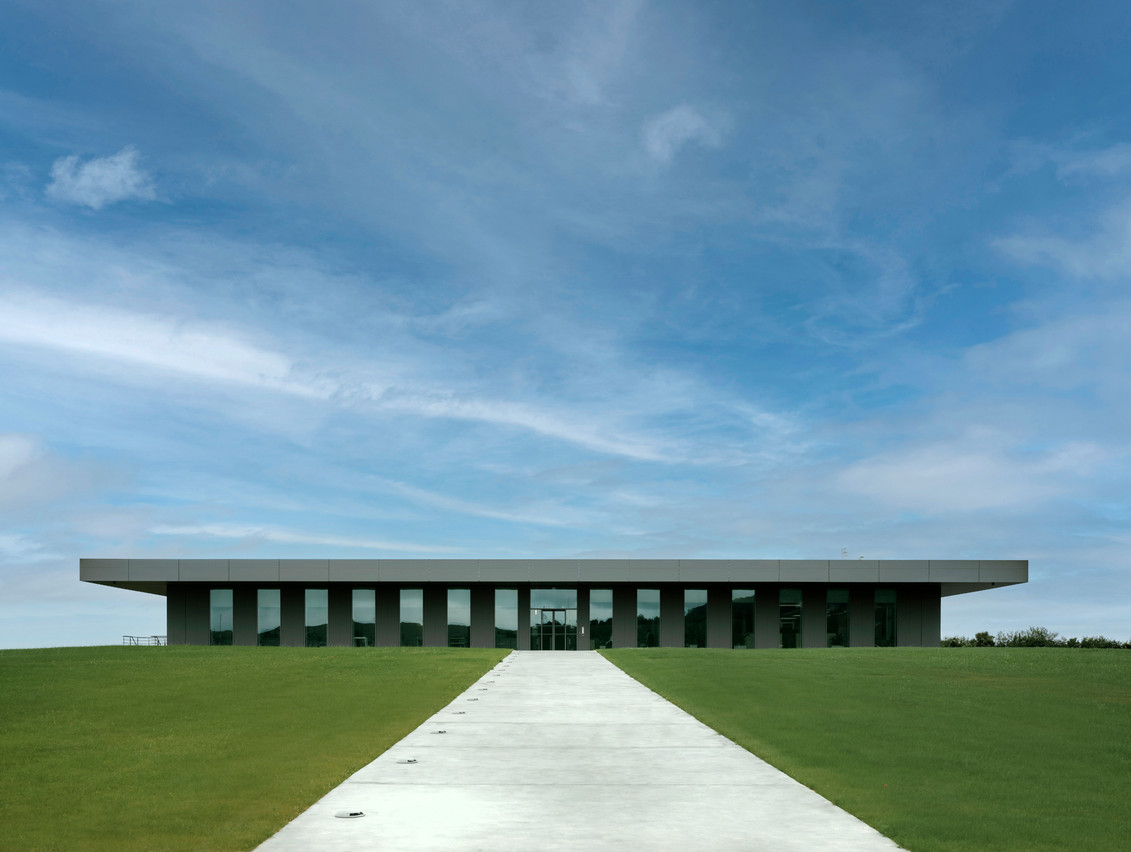
As part of its social responsibility strategy, Moët Hennessy has invested some €30m in Champagne in a research centre devoted in particular to the study of the links between the use of soil for vines and biodiversity or the impacts of global warming. (Photo: Moët Hennessy)
What is the breakdown of your sales worldwide?
As I said, the United States is our largest market. Europe is also very important for us. The same goes for China, which is a growth market for Cognac and a growing market for wine. We are also present in other Asian countries, each with its own specificity. For example, Japan is a large market for champagne and whisky for us. In luxury goods, in general, we are also spearheading the sector in Africa where Nigeria, Kenya and South Africa are important and very promising markets. In Latin America we are distributors, but also producers of quality sparkling wines and spritzes, including “Chandon Garden Spritz” which we are launching this year in Luxembourg.
What ensures success, the intrinsic product or its brand and what it reflects?
I would say that, like Champagne Krug, first of all, the product has to be of a level of excellence approaching perfection. Then, it must tell a story, its history, which can sometimes go back to the 18th century, as for example for Moët & Chandon. Furthermore, the product--its brand and its bottle--must be a marketing tool in itself, hence the continuous effort on the design of the bottles. Our best sales argument remains the “liquid to lips”, the liquid on the lips as word of mouth, thanks to our partners in restaurants and bars. In addition, we have entered into long-term collaborations such as the one with the rapper Jay-Z by buying 50% of the shares of the top-of-the-range champagne brand Armand de Brignac, which he used to operate, in 2021, or the current partnership with Lady Gaga for Dom Pérignon.
So the acquisition strategy is also and above all about the product?
Absolutely. Two years ago, we became interested in rosé wine by focusing on rosé from Provence, which is for this category what champagne is for sparkling wine. First of all, we acquired Château du Galoupet, a classified growth in Provence, which we are going to re-launch this year. Secondly, we invested in the Château d'Esclans estate with Sacha Lichine, who has made it the flagship rosé in the premium segment in the US. Mr. Lichine still runs the brand and we now help him with distribution and global development through our teams and network.
This form of partnership is a model for the future?
The founder has always played a major role in the history of the brands that are in our portfolio today. When you have the opportunity to work with a founder who is still active, you can't afford not to. I'm thinking of two entrepreneurs, Orlin Sorensen & Brett Carlile, who in 2010 created an exceptional whisky in the Seattle area, Woodinville whisky. We bought the brand five years ago, but they are still in day-to-day management. We've brought our method of international development to them, but above all we've been careful not to change the DNA of the brand and the spirit of how the product is made, with a view to sustainability.
On a global scale, there is truly a notion of luxury that is not only French but also European.

An approach specific to the LVMH group, a family group…
LVMH has always wanted to develop through the most independent brands possible, with their own vision, DNA and image. But understanding the vision of the brand's creator is fundamental, even 200 or 300 years later. I worked for Louis Vuitton for eight years. Louis Vuitton was in our minds every day. When we had to make a strategic decision, we often wondered how the founder would have reasoned in such circumstances. Keeping the balance, this positive tension, between the two axes of know-how and tradition on the one hand, and innovation and creativity on the other, allows us to maintain the magic of a brand over the long term.
Furthermore, being a family group allows us to have a long-term horizon and investment, which is fundamental for a luxury brand.
We often talk about luxury “à la française”, does this really mean anything?
On a global scale, there really is a notion of luxury that is not only French but also European. You can't find this culture anywhere else. Luxury can be defined as the transition from a high-end, artisanal product to a certain form of industrialisation and magnification, accompanied by the development of quality distribution. In fact, we can observe the birth in the 19th century, during the industrial revolution, of a large number of the brands that are still present today. Afterwards, French brands obviously carry the French art of living before and after in a unique and legitimate way.
Should Luxembourg assert itself more in this niche?
Luxembourg can shine internationally in many areas, including the one in which I am active, namely wines and spirits. By developing a discourse around the experience and a certain form of luxury that combines creation, tradition and conviviality, Luxembourg can rely on its gastronomic culture and its sense of hospitality to attract visitors and customers from all over the world.
How would you present the country in one minute, like a pitch?
If we reason in concentric circles, we can speak of the historic heart of the capital, which was a fortress, shaped in its time by all the European powers. In its tradition, the country therefore has an intrinsic European anchorage. If you move on to the second circle, you see a city on a human scale that has all the advantages of a large city, in terms of services, cultural offerings, etc. Then, the third circle is located at the gates of this regional metropolis, where you can enjoy a great nature, preserved and quickly accessible, contrary to other large European capitals. A capital and a country that are located at an easily accessible distance from most European capitals and big cities. We are ultimately a microcosm of Europe and I hope that every European feels comfortable here. At the BCFL, we will continue to contribute to transmitting the richness and diversity of what Luxembourg has to offer.
What do your interlocutors say to you when you mention that you are a Luxembourger?
I have to say that, for example in Paris, many people simply do not know Luxembourg. So I have to introduce it, explain it or broaden their perception, which would be limited. On the other hand, I see a positive appropriation in the neighbouring regions, whose inhabitants feel at home in Luxembourg.
What impact will the crisis have on society as a whole?
This global pandemic has shown that national borders are of little consequence. In the end, there is an analogy between a virus that had no borders and the other problems we will face in the future. I hope that this crisis has helped us to finally understand that we live on one planet and that it is in our interest to truly collaborate on a global scale to address our real global issues.
This story was first published in French on Paperjam. It has been translated and edited for Delano.