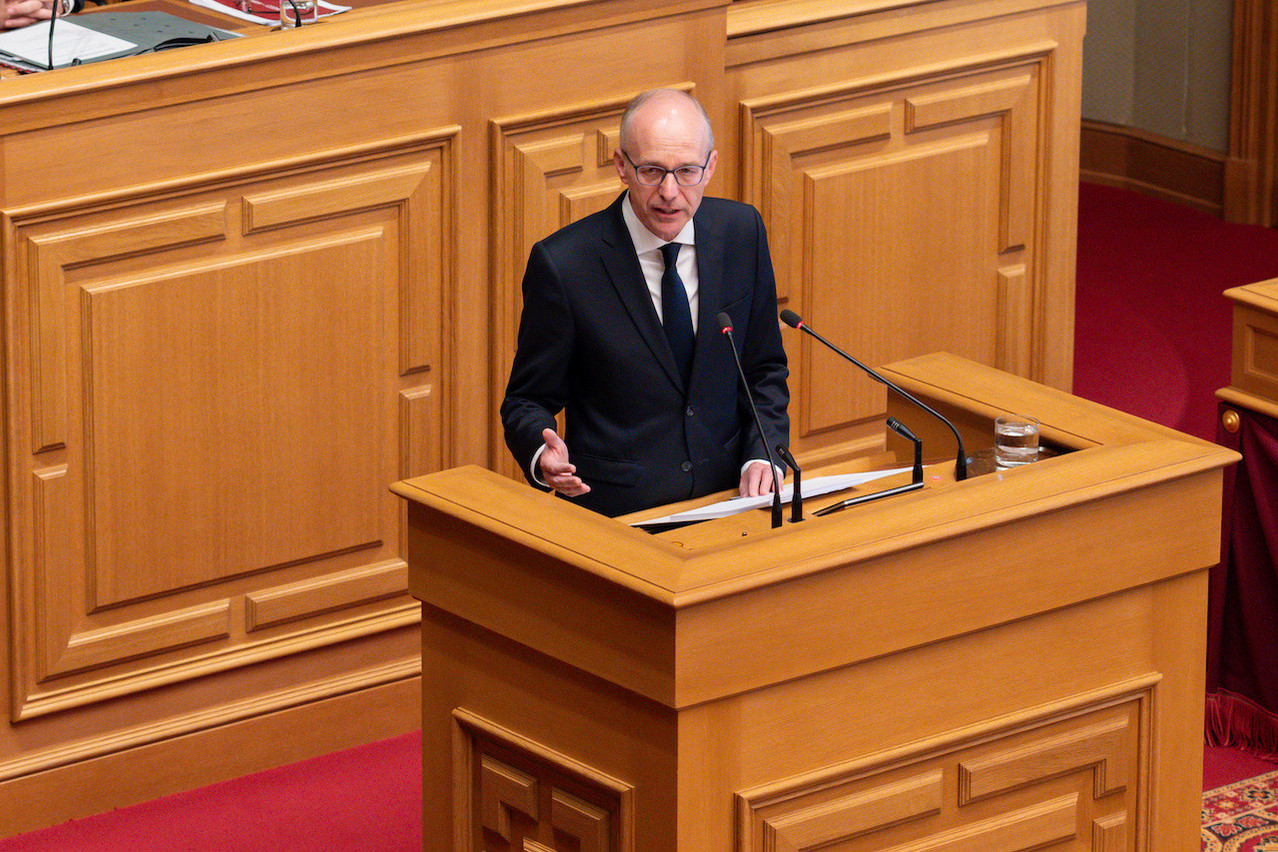
“Without a functioning economy, without dynamic growth, there can be no social policy and no ecological transition. So we need to support economic development in order to achieve social and ecological development. These are the principles on which this government was elected. That is the philosophy of my action,” stated the prime minister, 
Frieden said: “To renew our competitiveness, we need two things above all: a competitive legal and fiscal framework and strategies for ecosystems in specific sectors.” The government will lighten the administrative burden on businesses. Several bills will be tabled between now and the end of the year. The “once only” principle, of digitally providing data a single time that is then used for all administrative functions, will be generalised. On the tax front, the government will reduce the corporate tax rate from 17% to 16% starting 1 January 2025.
New measures for housing sector
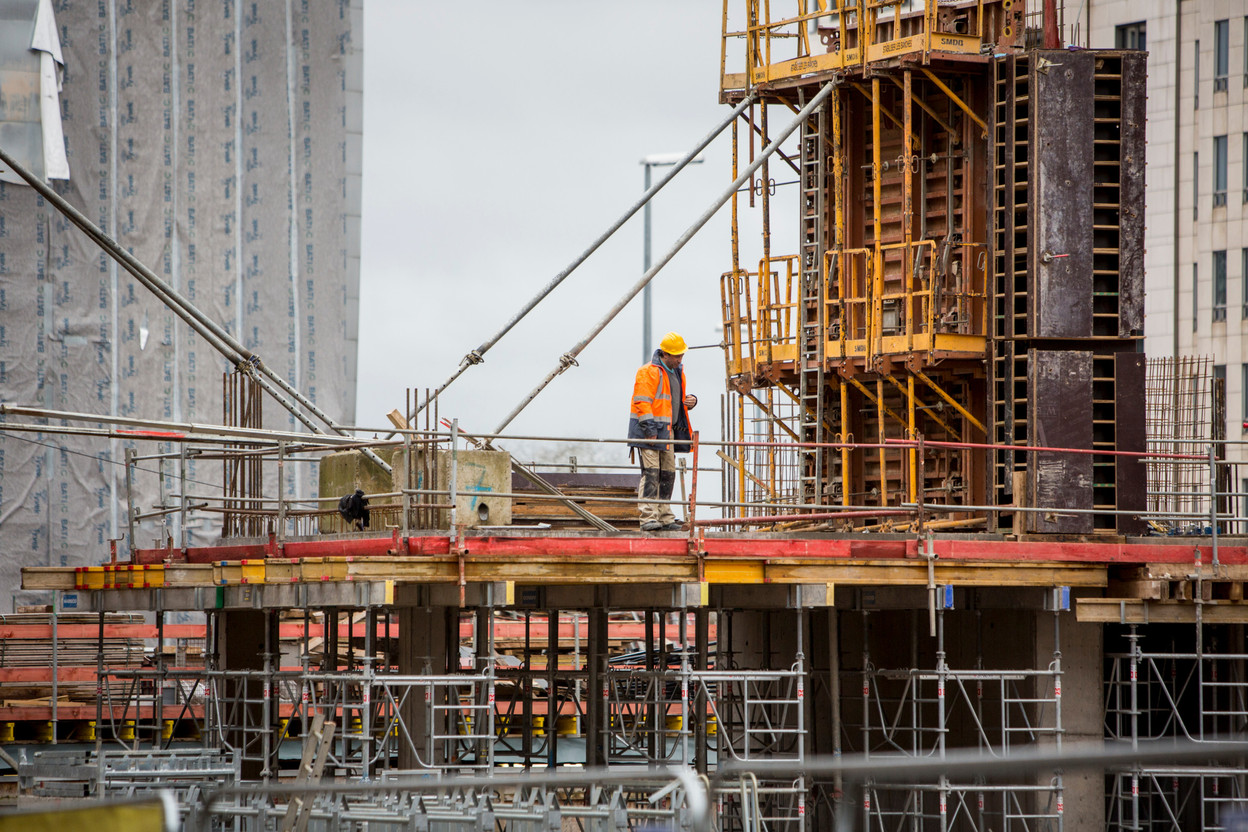
On housing, the prime minister announced ten measures arising from the working group on procedures, set up following the national housing summit (Assises nationales du logement). These measures complement the extension of the lifespan of planning permission to two years.
- The introduction, “in the medium term”, of the “silence means agreement” principle at national level, prior to the extension of this principle to local authorities. In the meantime, minor works will be exempt from the need to make a declaration or apply for authorisation.
- The merger of the general development plan (PAG) and special development plan (PAP) procedures. Legal deadlines will be shortened to a maximum of eight months. For small-scale works, a special PAP will be created, with a maximum timeframe of six months.
- Standard national building regulations with uniform rules will be created by 2025. “The communes will continue to be able to define urban details to take account of the image of their localities”, Frieden explained.
- To put an end to conflicting standards, a new commission will be set up involving the Inspectorate of Labour and Mines (ITM), the Grand Ducal Fire and Rescue Corps (CGDIS) and the Ministry of Family Affairs, with the aim of becoming the single point of contact for developers. With this in mind, the National Health and Safety Service of the Civil Service (SNSFP) will be integrated into the ITM.
- All authorisation procedures will be centralised and digitised on a single platform based on the “once only” principle.
- A bill will be tabled in parliament to reform expropriation procedures so that a single landowner can no longer block a property project indefinitely.
- The management of construction debris will be made more flexible.
- The government will also simplify environmental procedures. In return, 10% of the surface area of any new residential area will have to be reserved for green spaces or green roofs. Finally, the threshold above which all new construction projects must undergo an environmental impact assessment will be raised from 2 to 4 hectares. “We’ll save months in terms of procedures,” Frieden claimed.
- The bill concerning the taxation of unused land will be presented to MPs by the end of the year. The quid pro quo for the new tax will be a reduction in capital gains tax on the sale of existing homes.
- The government will amend the Affordable Housing Act and, more specifically, article 29bis of the Municipal Development Act, in order to create smaller housing units.
Fight against poverty
In addition to housing subsidies, “the pillar of the fight against poverty”, a national plan to prevent and combat poverty “which will adopt a cross-cutting approach” is currently being drawn up by the Ministry of Family Affairs. Access to social assistance will be simplified and harmonised by incorporating the “once only” principle. “All the information and documents already available to the state are to be collected by the administration itself. This will drastically reduce the number of refusals due to incomplete files”. A major advance is that citizens entitled to assistance will no longer have to apply for it. The state will proactively send the correct form to the citizen, who will simply have to sign and return it.
The current school health system will be reformed to “proactively promote a healthy lifestyle among students and provide all our children with adequate access to preventive medicine,” said Frieden. “We will be giving top priority to the social environment and the mental health of our children. A plan for universal healthcare coverage will be put forward for consideration in the autumn.
The government sees safety as a social policy. A pilot project for local police units will be launched this summer in Luxembourg City and Esch-Alzette. Municipal police forces will not be just another police force. Each unit will be an integral part of the Grand Ducal Police. Following the controversy over aggressive begging, the criminal and criminal procedure codes will be reformed, “to enable the police to act within a clear legal framework”. In addition, the government will increase the number of candidates in each police academy training group from 160 to 200: “A sufficient police force means visibility and a regular presence on the ground”.
Social policy also means preserving purchasing power. From 1 January 2025, to compensate for inflation, the tax scale will include 2.5 additional rate brackets. “This will give everyone more purchasing power. This measure makes economic and social sense”, said Frieden. Depending on family composition, this adjustment could mean up to €1,100 more in a household’s pocketbook per year, according to the government.
Energy transition
While most energy price caps will end on 1 January 2025, the electricity price cap will remain in place until 2025. After 2025, households will receive assistance to cover half of the increase in tariffs scheduled for 2025. For people on modest incomes, the energy bonus will be tripled for current recipients, before gradually decreasing. The energy tax credit for social inclusion income (Revis) recipients will be increased to €90, and the government will cover part of the energy costs of retirement homes by 2025. €50m will be allocated to these measures.
To speed up the energy transition, €2.5bn will be allocated to implementing the National Energy and Climate Plan.
A new climate bonus scheme has been announced for October. Financial support for the energy renovation of dwellings--the housing climate bonus--will be maintained, and 50% of the financing of photovoltaic installations will be covered.
The mobility climate bonus will be adapted on 1 October 2024. Support for the purchase of an electric vehicle will be capped at €6,000 and adjusted according to fuel consumption. The car will now have to be kept for three years to qualify for a subsidy.
Finally, the climate aid scheme will now include a pre-financing component.
Originally published in French by Paperjam and translated for Delano