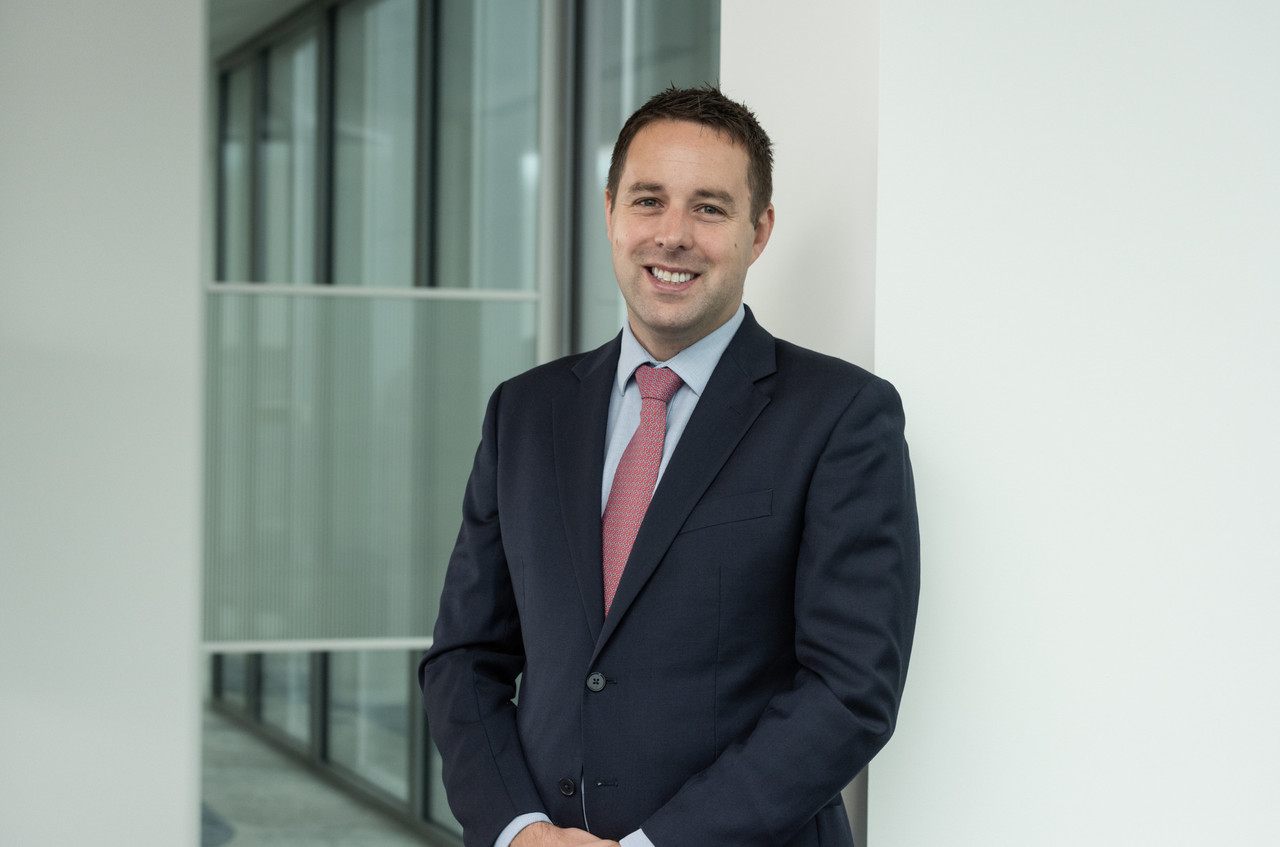
Recently adopted legislation in the US has just started to materialise, Tom Riley, head of global thematic strategies at Axa IM, said in a recent interview.
Riley thinks that only 10% of the money voted in the Chips and Science act, the Infrastructure, Investment and Jobs act ($110bn of new funds for roads, bridges, and major projects) or the Inflation Reduction Act have translated into real spending so far. He expects the benefits from the acts to peak in 2026.
US: manufacturing key components closer to home
Riley think that the semiconductor industry will lead the charge with some large “eye-catching” investments in the US by the likes of TMSC and Intel on the back of an onshoring trend to add robustness in the supply chain. That will be a boon to the robotic and automation industries as labour costs are considered “more expensive,” while there often a lack of competencies in a “quite tight market.”
Energy transition: strong undercurrents for chips
Despite the reduced affordability of electric vehicles on the back of high interest rates, Riley nevertheless sees some opportunities for semiconductor companies--NXP, Infineon--that are supplying chips for electric vehicles.
We continue to see more and more autonomous functions being embedded in modern vehicles

Reflecting on a study from Infineon published last year, it was reported that a combustion engine car had $750 of semiconductors, whereas it was $1,300 for electric vehicles and it is expected to reach $2,000 by 2030. The study supported ASML projections of semiconductor growth of 14% per year over the coming decade driven by electrification, connectivity and infotainment.
Autonomous cars: innovation to assist better driving
After Uber some years ago, Apple also decided to leave the self-driving car business in recent days. Another failed revolution? “We continue to see more and more autonomous functions being embedded in modern vehicles,” said Riley.
He noted some developments, such as driver safety systems, advanced emergency braking (crash avoidance system without human intervention) and lane departure warnings. All these advanced driver assistance systems rely on semiconductors and are relevant when the Euro NCAP assigns its five-star safety ratings.
He thinks that the bar is very high for full autonomous driving as “you need a 99.999% accuracy.” With human assistance, he noted that Tesla’s “full-service capabilities are very functional… enabling you to do an awful lot at the moment.”
Industrial sector: moving from a “structured to an unstructured environment”
No revolution is expected in the industrial sector, but Riley expects greater intelligence to be integrated in various machines to “operate somewhat independently.” For instance, he sees potential in vision systems that are being embedded on robotic arms. In front of boxes of components that are not prearranged, the arm can interpret the steps to be taken or the tools required to achieve a certain task.
Robotic surgery: cheaper competitors may not make the cut
With its “massive market share,” Intuitive Surgical may have the economic moat that Warren Buffett is generally looking after. According to Riley, its tool, the DaVinci machine, is used in almost 2.3m surgical procedures using robotic assisted surgery annually, a rate that is growing at “20% a year.”
Riley explained that surgeons coming out of universities today are trained on the standard of care, “which is that machine.” He explained that robot-assisted procedures have been around for more than 20 years and helps in making incisions smaller and make recovery time much quicker. He concluded that competition in the business is challenging “because you need a device that is better rather than a device that is cheaper.”
He reported that robot surgery is in its infancy with a “very low penetration” of 4% in the US and 2%-3% globally. Interestingly, the next generation will be launched next summer, a first after many years for the company.
3D printing: A promised industrial revolution that became a targeted tool
3D printing, also known as additive manufacturing, “tends to be used in certain very specialist applications,” said Riley. He specified that the technology is “useful in relatively low volume, highly specialised or customer applications such as getting a hearing aid that perfectly fits to your ear” or in lightweight products in the aerospace or industrial sector.
He observed that the focus on consumer applications “never really materialised” and the number of use cases has narrowed from the excitement of earlier days.
This article was published for the Delano Finance newsletter, the weekly source for financial news in Luxembourg. Subscribe using this link.