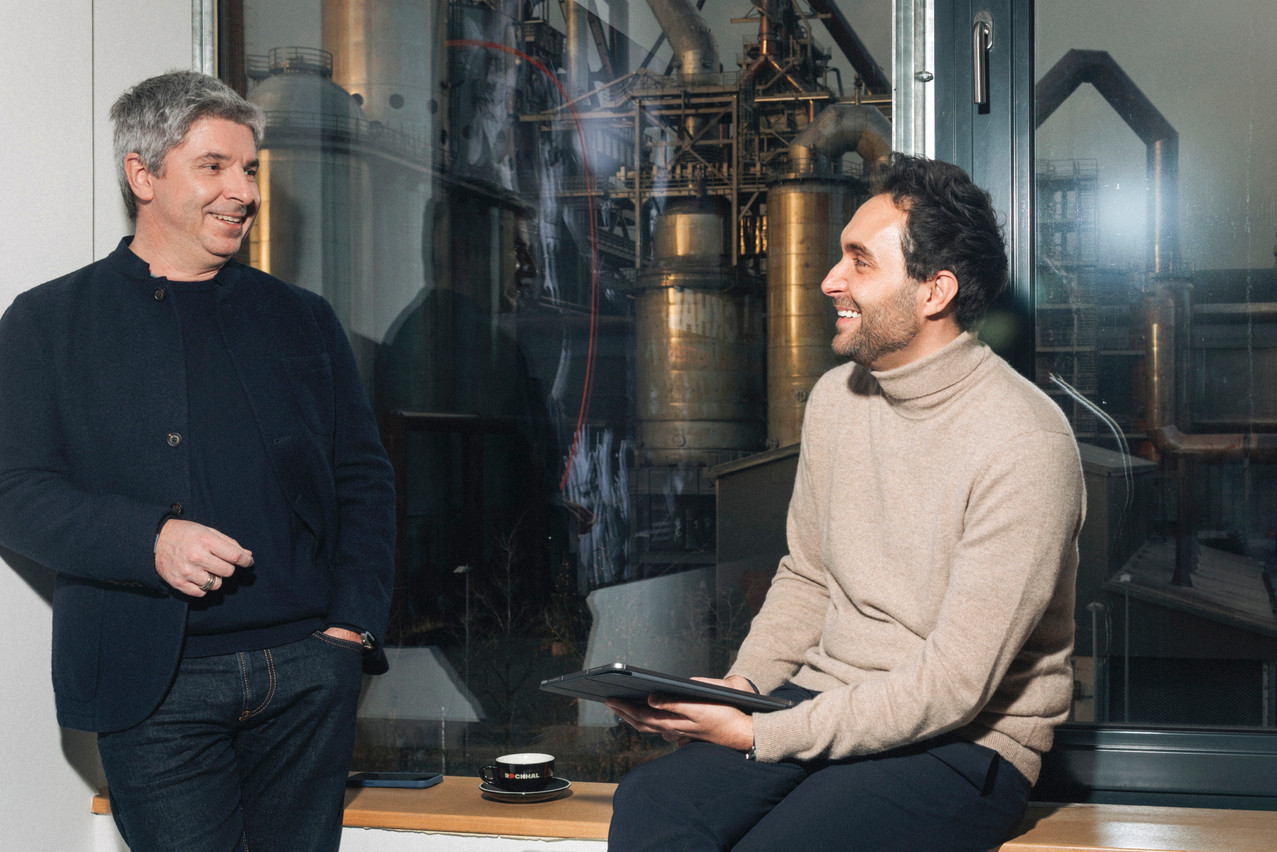
How is the entertainment industry – especially concerts and live shows – faring in Luxembourg and the Greater Region?
Olivier Toth: The entertainment industry is undergoing a profound shift. Audience reactions are changing, artists are touring differently, and expectations around the live experience have become more demanding. Yet Luxembourg and the Greater Region are showing remarkable vitality: demand is strong, audiences are curious, and the market is becoming increasingly professional.
Mathieu Rosan: This momentum is reflected in our 2025 attendance figures. Nearly 310,000 spectators recorded throughout the year, Rockhal is reaching a historic milestone, a clear indicator of the market’s strength and the appeal of live entertainment in the region. This attendance boosts the local economy, strengthens cultural activity, and gives Belval increased visibility. We are extremely proud of it!
From a European perspective, how does Rockhal position itself?
M.R.: Rockhal stands out in a very particular category: the smallest of the big venues, and the most influential of the small ones. Within the European Arenas Association (EAA), we are the network’s smallest member, yet our voice carries far. The fact that Olivier served as its President for many years certainly played a role.
O.T.: Our peers are essential benchmarks that fuel our thinking, help us stay agile, and allow us to adapt our model to shifting audience expectations. Thanks to Rocklab and Liveurope, we can welcome emerging talent from across the continent and open the doors of Europe’s best clubs to Luxembourg artists. It’s a concrete way of transforming our local roots into an international springboard.
Commercial activity fuels culture; culture enhances Rockhal’s attractiveness: it’s a virtuous circle!

Rockhal is a leading cultural institution, but it is also a successful business. What is its business model?
O.T.: It’s a balance between solid commercial activity and an ambitious cultural mission. By hosting major productions and external promoters, we secure part of the financial stability needed to support all our activities. By operating as both promoter and producer, we diversify our revenue streams. The other pillar is Rocklab, our incubator dedicated to developing the Luxembourg music ecosystem. We don’t just fund talent: we help it professionalise, we mentor it, and we provide opportunities to connect with audiences.
M.R.: The strength of the Rockhal model lies in how these dimensions reinforce one another. Commercial activity fuels culture; culture enhances the venue’s appeal. It’s a virtuous circle!
Rockhal is also a brand with strong recognition. How do you build a branding strategy like yours?
M.R.: For a long time, the Rockhal and Rocklab brands were defined through the artists. Gradually, artists began to define themselves through them as well. The rebranding launched in 2024 formalised this evolution: a strong, clear identity that embodies and synthesises our programming.
O.T.: Our branding also rests on diversification and innovation. Major shows drive visibility upwards; emerging concerts broaden our scope; and artist development through Rocklab reinforces our role as a cultural player.
All our efforts converge toward one goal: ensuring that every spectator enjoys an experience that goes beyond the concert itself!

Looking ahead, what challenges will Rockhal face?
M.R.: Our institutional mission is built on cultural accessibility. We are therefore committed to offering affordable tickets for all audiences. This requires developing new revenue streams and, as a result, further strengthening our attractiveness.
O.T.: The live market is evolving fast, European venues are constantly innovating, and we must keep up – or stay ahead. Whether related to comfort, services, immersive technologies, or audience flow, all these efforts converge toward one goal: ensuring that every spectator enjoys an experience that goes beyond the concert itself.