The objective: climate neutrality by 2050. With the update of the integrated national energy and climate plan (plan national intégré en matière d'énergie et de climat or PNEC), the Bettel (DP)-led government has revised its actions and ambitions upwards.
In fact, a great deal has been achieved in five years. Among the measures were a new CO2 tax in 2020 and aid for businesses in transition (though without enough support for SMEs, critics have said). Also accomplished, points out 
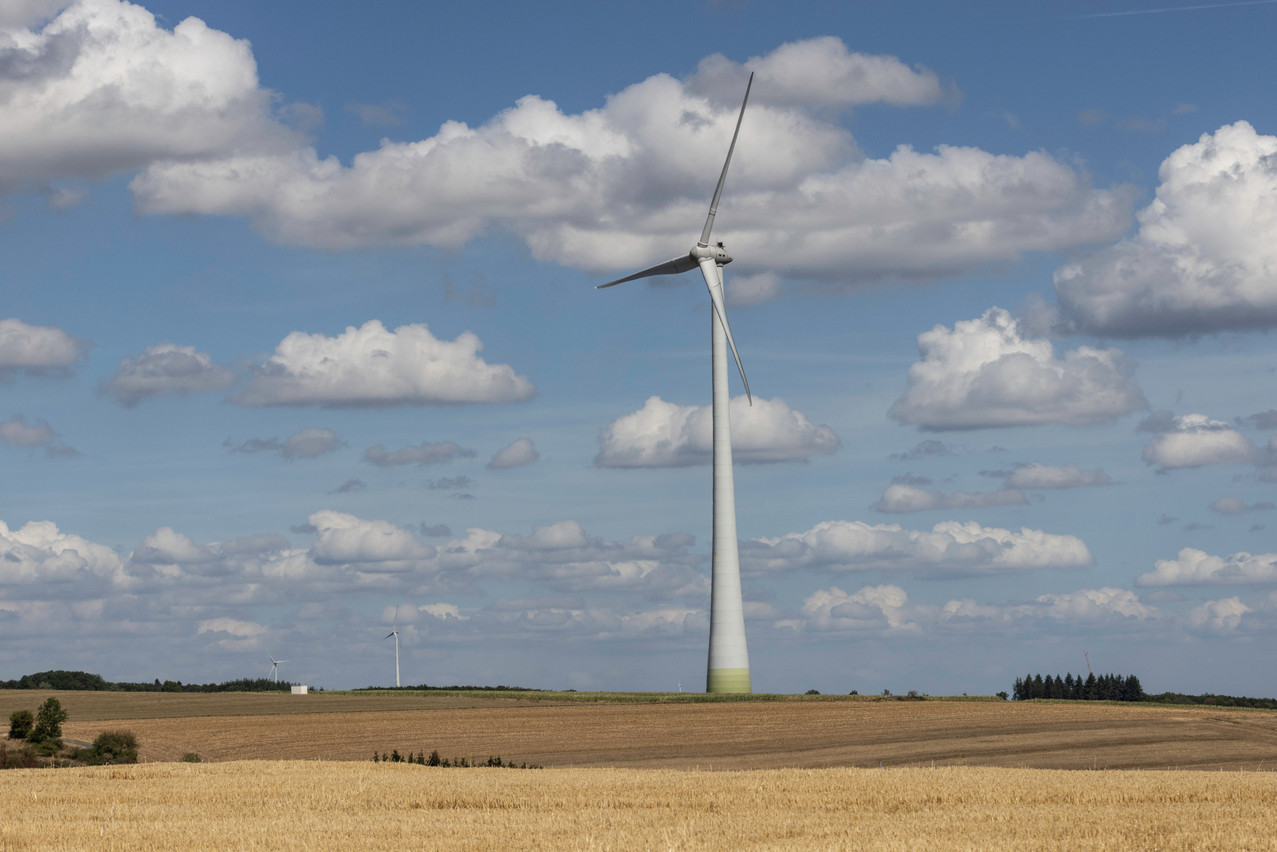
Renewable energy production needs to at least triple.

Support for green energy features prominently in most of the parties’ programmes. The DP wants to invest in solar and wind power, speed up authorisation procedures for energy projects and make photovoltaic panels compulsory on new buildings.
“Renewable energy productions needs to at least triple,” says the CSV’s 
While the CSV and DP are focusing more on reducing administrative constraints, déi Gréng is pulling out all the stops by proposing a Luxembourg “Green New Deal,” i.e., major investment in climate-neutral technologies, public transport, soft mobility, the circular economy and energy efficiency. The climate would become “an absolute priority” in the state budget, the party has said.
ADR alone for nuclear power
Still on the left side of the spectrum, the LSAP and déi Lénk emphasise the link between the ecological transition and the wellbeing of the population. Changes must not be made at the expense of the most vulnerable, says the LSAP, part of whose programme is also “active citizen involvement” that starts at school.
The ADR stands out for its openness to nuclear energy. The party considers the goal of 100% renewable energy supply to be “illusory.” Instead, to reduce greenhouse gas emissions, it suggests modernising old--and particularly the high-polluting--power stations, but ones that are abroad. The Pirates, true to their DNA, want to harness the transformative power of digital technology to support the ecological transition.
The digital transition
Alongside the ecological transition comes the digital transition. On this subject, the coalition’s objective has been to maximise benefits while minimising dangers. The 2018 agreement places particular emphasis on the digitalisation of state services, which was to be continued and intensified “with the aim of reducing bureaucracy and making administrative processes more efficient.”
Five years on, there’s no denying that digitisation has accelerated, very much boosted by the pandemic, which (among other things) put teleworking into high gear. A digitalisation ministry has also been created, though its resources remain limited. And artificial intelligence has rocketed into public relevance, but not much has been done, policy-wise, beyond the presentation of a strategy in 2019.
The European commission’s European innovation scoreboard shows a decline in Luxembourg’s level of innovation between 2021 and 2022, although the country remains fairly well ranked.
Productivity gains are the only way to reduce working hours.

Digitalisation is another recurring topic in party campaign materials. The DP has proposed several related measures such as teleworking (which it supports instead of reducing the 40-hour workweek). On the other side of the spectrum are déi Gréng and déi Lénk, both of whom emphasise the need to regulate digitisation as well as AI, while encouraging research in these areas.
The LSAP, CSV and Pirates have prioritised training workers for new digital professions. The Pirates--like the ADR--see AI as a way of increasing labour productivity, but whereas 

Finally, for both the ecological and digital transition alike, a consensus seems to be emerging in favour of greater support for businesses and households--however, the sticking point will be funding.
This article was originally published in Paperjam. It has been translated and edited for Delano.